



Global Chemical Giants Ignite: TDI/MDI Price Storm Sweeps Asia and Europe, Who Is Fueling This Cost Frenzy?
On December 1, 2025, what seemed like an ordinary price adjustment actually stirred up a massive wave in the global polyurethane industry chain.BASF announced a price increase of $200/ton for TDI products in Southeast Asia and South Asia; Wanhua Chemical simultaneously raised the prices of polymeric MDI and pure MDI by $200/ton; Hungarian BorsodChem increased the prices of all MDI products by 300 euros/ton (approximately $325) in one go.In November, Covestro and Huntsman quietly initiated a new round of price increases. Within just one month, almost all of the world's top five isocyanate manufacturers "opened fire," creating a rare occurrence.Cooperative Price Hike。
Is this ultimately a helpless move forced by rising costs, or a profit harvesting scheme under oligopolistic collusion? On the surface, companies are pointing fingers at the "continuous rise in transportation, energy, and regulatory costs"; however, a deeper examination of the underlying logic of the industry chain reveals...The essence of this wave of price increases is a carefully calculated game of supply and demand rebalance, and it is also a key signal of the quiet shift in the global chemical power structure.。
Cost pressure? Or return of pricing power?
Official statements are all too similar: "Due to the continued rise in transportation, energy, and related regulatory costs." This statement is not incorrect, but it seriously sidesteps the main issue. Since the second half of 2025,The price of natural gas in Europe has fallen from its peak, but is still 40% higher than the average value in 2020.The Red Sea shipping crisis continues to escalate, causing severe fluctuations in freight rates on the Asia-Europe route; the European Union's Carbon Border Adjustment Mechanism (CBAM) has officially entered its transitional phase, leading to a sharp increase in hidden costs for chemical exports. These are indeed real sources of pressure.
But the problem is:Why are actions concentrated in December? Why is the rate of increase highly similar? Why is the focus on Southeast Asia and South Asia?
The answer lies in the subtle changes in the supply and demand structure. In the first three quarters of 2025, the global MDI/TDI market is in a state of "weak recovery + high inventory," with prices under pressure. However, entering the fourth quarter,Several facilities in Japan and South Korea are entering planned maintenance, Covestro's US plant has not completely recovered from its malfunction, and combined with low load on some MDI production lines in Fujian and Ningbo, China, the global effective supply has contracted by approximately 5%–7%.At the same time, infrastructure investment in Southeast Asia increased by 18% year-on-year, and India's "trade-in" policy for home appliances stimulated demand for refrigerators and freezers, driving up the usage of rigid polyurethane MDI.The market is shifting from loose to tight balance—this is the "window period" that the giants have been waiting for.。
More importantly,Wanhua Chemical, as the largest MDI producer in the world (with a capacity of 3.5 million tons per year), has shifted its pricing behavior from "follower" to "leader."In the past, BASF and Covestro held the pricing power; nowadays, Wanhua not only took the lead in raising prices three times in January, May, and November, but also acted in sync with BASF in December, forming a de facto "price alliance." This is not a coincidence, but ratherChina's leading chemical company has achieved a substantial breakthrough in gaining pricing power in the global basic chemicals sector for the first time.。
Regional Focus: Why Target Southeast Asia and South Asia?
The recent price increases are almost entirely aimed at the Southeast Asian and South Asian markets, and this is no coincidence. This region is becoming the "last blue ocean" for global chemical consumption growth.
-
In 2025, the implementation of large-scale equipment upgrades and consumer goods subsidies led to a year-on-year surge in household appliance production. - Vietnam, Thailand, Indonesia
The manufacturing industry is undertaking the transfer of industries from China, with strong demand for insulation materials, adhesives, and shoe materials. - Middle East Capital
Accelerate the layout of new energy and infrastructure in Southeast Asia to drive the application of polyurethane rigid foam.
But this area is alsoThe market with the highest price sensitivity and the weakest local production capacity.There are almost no large MDI/TDI facilities locally, and the region relies entirely on imports. The giants raise prices here to maximize profits, and due to the lack of alternative supply, they can do so.Almost never leads to customer churn.In other words, this is "low risk, high return" precision harvesting.
In contrast, the European and American markets have limited room for price increases due to economic weakness, stringent environmental regulations, and domestic overcapacity.The giants tacitly shift the pressure of cost transfer onto emerging markets.A typical "global cost, regional payment" strategy.
Oligopoly collusion? Or market rationality?
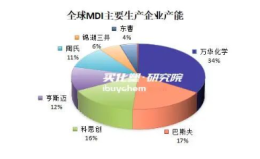
Some people question: with the five major manufacturers almost simultaneously raising prices, is there a possibility of collusion and monopoly? From a legal perspective, there is currently no evidence to suggest direct collusion.In a highly concentrated oligopolistic market, tacit coordination is the norm.The top five global MDI production companies (Wanhua, BASF, Covestro, Huntsman, Dow) together account for over 85% of the market share, with an even higher concentration in TDI. In this structure, if any one company takes the lead in raising prices and others do not follow suit, it risks losing market share; if they follow, it collectively boosts industry profits."The prisoner's dilemma is reversed into a win-win alliance."。
What is particularly noteworthy is,BorsodChem, as the third largest MDI producer in Europe (under Wanhua), has increased its prices by 300 euros per ton, which is significantly higher than its peers.This may seem radical, but it is actually clever: on one hand, it tests the market's tolerance, and on the other hand, it creates space for the overall profits of the Wanhua system. After all, Baoside's products are mainly sold in Europe, while Wanhua primarily targets Asia.The same group, dual-line operation, maximize global profits.。
Downstream pressure: Small and medium-sized manufacturers may exit in batches.
For downstream polyurethane companies, this price increase is like adding insult to injury. MDI/TDI accounts for more than 60% of the cost of rigid foam, flexible foam, and adhesives.Irreplaceable in the short term.Small and medium-sized manufacturers, lacking long-term contracts to lock in prices and the ability to pass on costs due to a lack of technological premium, can only passively endure profit compression or even losses.
Taking a small to medium-sized refrigerator insulation materials factory in East China as an example: If 1,000 tons of polymer MDI are purchased at the current price of 19,000 yuan per ton, the cost will increase by approximately 700,000 yuan compared to October. However, due to intense competition, terminal appliance customers cannot accept a price increase at all."The squeeze of 'upstream rising, downstream pressing' is accelerating the reshuffling of the industry."。
It is foreseeable that in the first half of 2026,A large number of small and medium-sized polyurethane product enterprises with weak risk resistance capabilities will be forced to exit or be merged.The industry's concentration is further enhanced. And this might just be the "by-product" that the giants are happy to see.
How long will the wave of price increases last?
In the short term, supporting factors remain:
-
In the first quarter of 2026, several facilities in Japan, South Korea, and Europe still have maintenance plans. -
Logistics are tight before and after the Chinese New Year, and supply is tightening in phases. -
The expectation of a Federal Reserve interest rate cut is rising, enhancing the financial attributes of commodities.
However, medium- and long-term risks cannot be ignored.
- Wanhua's new 1.5 million tons MDI capacity in Fujian is expected to be put into production in mid-2026.
It will release an incremental increase of 700,000 tons. -
BASF's Chongqing base has expanded its production capacity to 530,000 tons per year, and the efficiency of its Shanghai facility has been improved. -
If the global economy falls into a deep recession, the collapse of demand will quickly reverse the supply and demand dynamics.
Therefore,This round of price increase resembles more of a "pulse-like correction" rather than a trend reversal.The real key to victory lies in who can accumulate enough cash during this market trend to withstand the price war following the next round of capacity release.
Price increases are not the end, but a ceremony of power transfer.
The recent price surge of TDI/MDI sweeping across Asia and Europe appears to be cost-driven on the surface, but in reality, it is...A Microcosm of the Reorganization of the Global Chemical Industry OrderThe pricing power once monopolized by Western giants has now been strongly intervened by Chinese companies, represented by Wanhua Chemical.The collective price adjustment on December 1 is not just a simple business action, but a silent coronation.China National Chemical Corporation is transitioning from a "world factory" to a "rule maker."
However, beneath the carnival atmosphere, there are undercurrents. When all players are raising prices, true competitiveness is no longer about cost control, but rather about...Technical Barriers, Customer Loyalty, and Global ResilienceOtherwise, today's "price winners" may become "capacity prisoners" tomorrow.
After all, in the chemical industry, which is cyclical like a pendulum,There is no perpetual rise, only eternal competition.。
【Copyright and Disclaimer】The above information is collected and organized by PlastMatch. The copyright belongs to the original author. This article is reprinted for the purpose of providing more information, and it does not imply that PlastMatch endorses the views expressed in the article or guarantees its accuracy. If there are any errors in the source attribution or if your legitimate rights have been infringed, please contact us, and we will promptly correct or remove the content. If other media, websites, or individuals use the aforementioned content, they must clearly indicate the original source and origin of the work and assume legal responsibility on their own.
Most Popular
-
Dow, Wanhua, Huntsman Intensively Raise Prices! Who Controls the Global MDI Prices?
-
Clariant Unveils Cost-Cutting Plan Details, Plans to Shut Down Multiple Plants
-
[Today's Plastics Market] General Materials Weakly Fluctuate, Engineering Materials Steadily Rise
-
Daily Review: Polyethylene Prices Under Weak Consolidation, Sellers Face Significant Pressure to Move Inventory
-
U.S. Appeals Court Officially Rules: Trump Tariff Unlawful and Void!