



AI+ Full-Process Automation: What Insights Has This Foreign-funded Modified Materials Company Offered China?
In the field of modified plastics, conductive plastics have always been recognized as a tough challenge.
It not only imposes stringent requirements on the quality of the fillers, but also makes the dispersion and shear control during the compounding and pelletizing process critical to the material’s success or failure.
There is a family-owned business in Finland that has been quietly working in the field of conductive polymers for nearly 45 years.
Recently, they have made a big splash: they built a modern mixing plant in North America that represents the pinnacle of the industry in terms of "digitalization and high automation."
This company is Premix.
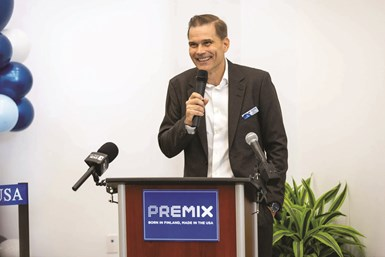
General Manager of Premix America CompanyIlkki Taiminenwelcomed guests attending the opening ceremony of the new conductive compounds plant in North Carolina in June. Source: Premix Oy
What caught the industry’s attention was that this new plant in Dallas, North Carolina, was backed by as much as $80 million (about RMB 580 million) in post-pandemic special funding from the U.S. government.
A Finnish company, what gives them the ability to receive such a large subsidy from the U.S. government? What "black technology" hidden in their new factory makes their competitors envious?
Today, we’ll take an in-depth look at the new digital blueprint of this conductive plastics giant.
01
Background: How Did a Tiny Pipette Choke the Supply Chain?
The story still has to begin with that pandemic that swept across the globe.
During the pandemic, the global demand for medical pipettes and tips surged explosively, increasing by 3 to 5 times due to the rapid rise in nucleic acid testing and laboratory research.
At this moment, the entire medical community was shocked to discover that laboratories around the world were actually facing...No “pipes” availablean awkward predicament, with the supply chain breaking down directly and shortages lasting as long as a year.
The core compound used to produce high-quality conductive pipette tips is precisely the strategic material designated by the U.S. government as a “critical material.”
“At the time, the whole world was scrambling for what little pipette raw material there was,” recalled Jyrki Taiminen, General Manager of Premix’s U.S. business.
Amid this major supply chain turmoil, Premix, relying on the steady output of its Rajamäki plant in its home base of Finland, managed to keep delivery accuracy firmly at around 98%. Not only did its business volume double, but its reputation also spread among major global manufacturers.
With the recommendation of global major clients and the urgent need for localized supply chains by the U.S. government, Premix has naturally secured this substantial overseas factory investment.
02
Hardcore: Twin-Screw + Fully Automated Closed Loop, Keeping “Metal Contamination” Completely Out
For conductive plastics, one of the biggest pain points is consistency in quality and the prevention of metal contamination. Premix’s new plant in Dallas can be said to have taken automation and process control to the extreme.
They brought in their old partner—German extrusion equipment giant Coperion—and customized a complete turnkey project.
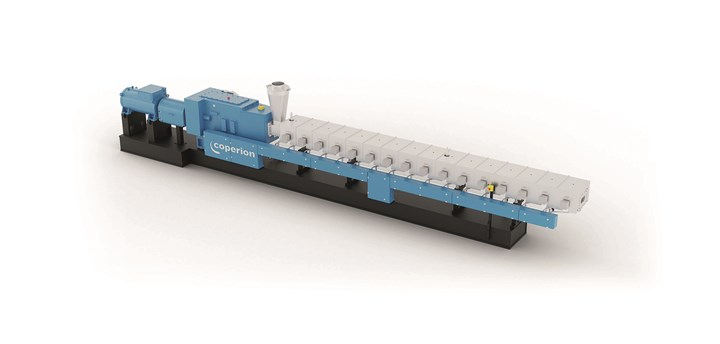
Coperion supplies Premix’s North Carolina plant with two ZSK twin-screw extruders, along with material handling, conveying, and feeding systems to meet high-volume production needs. Source: Coperion
1. Hardware configuration: dual-line parallel and precise feeding
The factory currently has two identical extrusion production lines deployed, with the core being the Coperion ZSK twin-screw extruder and the Combiflow mixer.
The material is continuously conveyed by vacuum to the top floor of the building, then measured with ultra-high precision by a loss-in-weight feeder and fed directly into the extruder.
Subsequently, the melt enters the underwater pelletizing system, and finally undergoes product screening through a centrifugal dryer and a grading screen.
2. Software Brain: Seamless Synchronization of PLC + MES
Scenes of workers sweating as they carry bags of materials, common in traditional factories, are almost nowhere to be seen here. The transfer of everything from base polymers and carbon black to various functional additives is fully automated and dust-free. A PLC-based control system fully synchronizes conveying, feeding, extrusion, quality control (QC), and packaging systems.
3. Online Quality Inspection: Monitoring Plastic Melt Like a CT Scan
Traditional modified plastics often require “post-production inspection,” whereas Premix has deployed sensors and spectroscopic tools online.
Key indicators such as electrical conductivity, resistivity, and material density are all captured online in real time. Once even slight fluctuations occur in the data, the system immediately makes fine adjustments during processing. Meanwhile, these data are directly connected to the factory’s MES (Manufacturing Execution System), enabling true end-to-end traceability and compliance.
4. Ultimate Error Prevention: Relentlessly Tackling Metal Contamination
In the conductive plastics industry, even a trace amount of metal foreign matter contamination can lead to the failure of the conductive network in the material, or even result in scrapping.
To this end, Premix has not only established a dedicated powder blending room to prevent cross-contamination, but also deployed a comprehensive advanced metal detection and rejection system at both the raw material intake and finished product discharge points.
If top-tier hardware can be bought with money, then Premix’s self-developed PERTTI 3.0 platform is a “moat” that competitors can never copy.
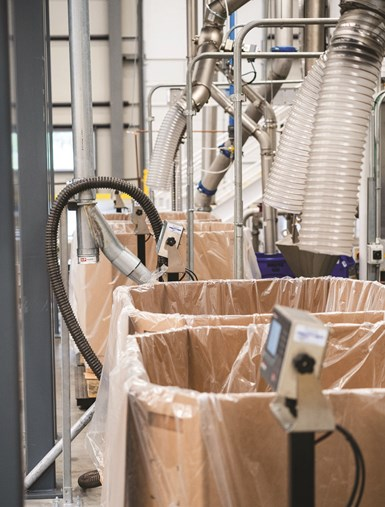
Automation is a core component of the operations at PreMix's North Carolina plant. The entire process of packaging granular composite materials for shipment is fully unmanned.
Source: Premix
This is an internal AI/machine learning platform. Premix fed all the records of thousands of compound formulations and their performance accumulated over 45 years into this AI.
In the traditional modification industry, engineers often rely on experience and continuous...Prototyping-Testing-Failure-Prototyping Againa cycle that was time-consuming and labor-intensive. But PERTTI 3.0 demonstrated a terrifying capacity for evolution:
Performance God Prediction (Data Retrieval)Even when faced with entirely new raw materials that have never been tested before, AI can instantly predict their key material properties as long as the target formulation is input.
Eliminate ineffective overtime (formula ranking):Intelligently assess the existing formula library and directly recommend the most suitable existing solutions for customer needs, rejecting ineffective redundant development.
Virtual Recipe Factory (Recipe Generation):Based on comprehensive indicators such as tensile modulus, impact strength, processability, cost, and electrical conductivity proposed by the customer, AI can simultaneously simulate thousands of virtual formulations in the virtual world and accurately screen them.
Jyrki Taiminen proudly stated:"With PERTTI, our formula development cycle has been shortened from several months to just a few days. The speed of trial iterations, candidate screening, and pilot scale-up has been exponentially increased."
What’s even more impressive is that this is a self-evolving closed-loop system. The formulations generated by PERTTI are automatically converted into control setpoints on the production line for pilot testing; meanwhile, data collected in real time by factory sensors and laboratory test results are fed straight back into the AI database. The more data it accumulates, the smarter the AI becomes, and the more accurate its next prediction will be.
The future of modified plastics is the second half of digitalization.
Currently, the Premix plant in the United States is focusing on mass production of high-volume PE (polyethylene) and PP (polypropylene) based conductive compounds.
"High automation + AI empowerment"The combination of these measures undoubtedly demonstrates the future development direction of modified plastics to the industry.
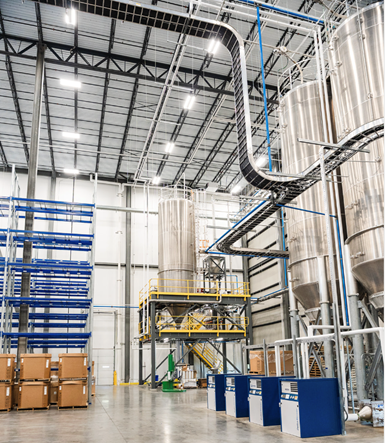
Premix’s new U.S. plant is equipped with storage silos both inside and outside. Source: Premix
In the past, many believed that modified plastics belonged to traditional manufacturing, relying on "secret recipes" and the experience of skilled workers.
But Premix’s case tells us:
Transforming traditional formulation expertise into massive digital assets (AI) Closed-loop automation of the entire hardware implementation process in the workshop.The productivity and rapid response capability it unleashes will deliver an overwhelming, dimension-reducing blow to traditional factories.
As the world’s largest modified plastics market, China is not only competing on scale and price, but is also undergoing a major transformation toward high-end and specialty development.
How to delve deeply and thoroughly into digitization and intelligence, Premix's "hardcore operations" may provide valuable insights for Chinese modified enterprises that are currently navigating their transformation period.
【Copyright and Disclaimer】The above information is collected and organized by PlastMatch. The copyright belongs to the original author. This article is reprinted for the purpose of providing more information, and it does not imply that PlastMatch endorses the views expressed in the article or guarantees its accuracy. If there are any errors in the source attribution or if your legitimate rights have been infringed, please contact us, and we will promptly correct or remove the content. If other media, websites, or individuals use the aforementioned content, they must clearly indicate the original source and origin of the work and assume legal responsibility on their own.
Most Popular
-

A Look at the Material Suppliers Behind SpaceX
-

Government's Triple Action, Enterprises' Three Arrows in Five Days, Semiconductor Reshuffle! What Signal Does Japan's Chemical Industry Release?
-
Name change without tax change: POM Anti-Dumping Duty Rate Inheritance Implemented
-
Fire breaks out at jiangsu meiside!
-
Ethylene: Production Capacity Accelerates Expansion, Global Industry Landscape Is Being Reshaped