



BASF Cuts Jobs Again!
On May 20, BASF announced a new...The “CoreShift” program includes streamlining the business portfolio, divesting non-core assets, spinning off the agricultural business, and implementing workforce reductions. It covers BASF’s four core business segments—Chemicals, Materials, Industrial Solutions, and Nutrition & Care—with combined annual sales of approximately €40 billion (about RMB 316.3 billion).
BASF CEO Dr. Kaehler said that the project is one of the company’s largest optimization initiatives.
It is reported that the goal of this project is to reduce net cash fixed costs in the core business by up to 20% by 2029 compared with 2024. The project will establish a new Core Transformation Office, led by Julia Raquet, President of the Europe, Middle East and Africa region, who will report directly to the CEO.
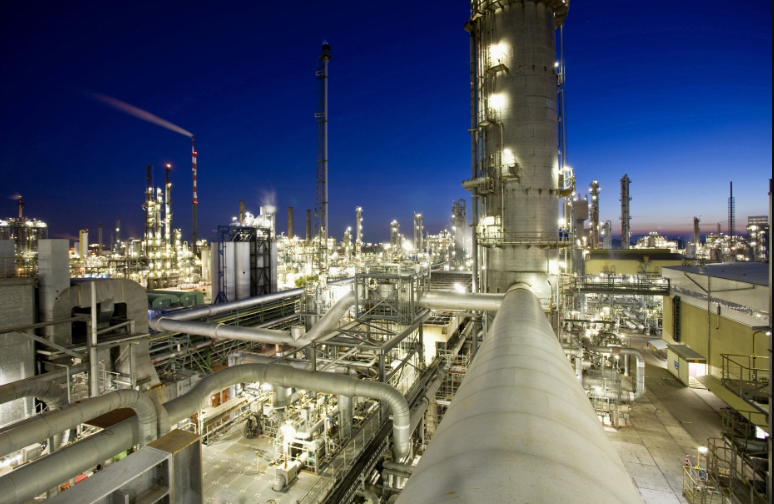
Sale of silicate business
On the same day, BASF announced the sale of its silicate business, including the related assets at the Düsseldorf/Holthausen plant, to PQ Corporation.The transaction is expected to be completed in the second half of 2026.
For the time being, the operations of BASF’s silicate business will remain unchanged. Following the completion of the transaction, the two companies expect a seamless transition for customers and partners.
It is understood that PQ Company is a global supplier of silicates, silica, and their derivative products. Silicates are a versatile inorganic material widely used in both everyday and industrial fields, including the rubber and “green tire” industries, paints and coatings, geotechnical engineering applications, as well as laundry detergents and cleaning products.
In addition, in January this year, BASF initiated a strategic review of its subsidiary trinamiX GmbH, which focuses on biometric imaging and mobile near-infrared spectroscopy solutions and has about 200 employees worldwide.
Ludwigshafen will also be reorganized.
It is understood that BASF has long faced the problem of insufficient capacity utilization at its plants, especially at its headquarters site in Ludwigshafen.Since the beginning of 2024,BASF's series of cost-saving measures has resulted in the loss of about 2,800 jobs at the Ludwigshafen plant.
According to the agreement reached between the union and management at the end of 2025, there will be no compulsory redundancies at the Ludwigshafen plant for operational reasons until the end of 2028.At the same time, BASF will continue to invest in the Ludwigshafen plant, with plans to invest annually.About 2 billion euros (at least 1.5 billion euros) will be invested in the modernization and expansion of infrastructure and production capacity, as well as the sustainable transformation of the plant. The Ludwigshafen site remains BASF’s largest plant, with around 33,000 employees.
However, Julia Raquet said,Simplifying the operating model of our core businesses is essential to ensuring top-tier competitiveness and driving profitable growth. To achieve this goal, related efforts are already underway in full, including the restructuring of our largest integrated production site in Ludwigshafen and the reshaping of our global services division.
The cost reduction plan for the Antwerp production base has been implemented.
It is worth mentioning that BASF.Belgium, the world's second-largest production baseThe Antwerp production site also announced cost-saving measures in October 2025, aiming to reduce fixed costs by EUR 150 million per year by the end of 2028 and cut around 600 jobs, equivalent to one-sixth of its workforce.By the end of 2025, BASF employed around 3,600 people in Antwerp.
On May 20, a BASF spokesperson explained that the cost-cutting plan in Antwerp is consistent with existing initiatives.
According to BASF, the company had a total of 106,428 employees worldwide in the first quarter of this year, about 5,000 fewer than in the same period last year.
In addition, BASF had previously announced a target of achieving annual cost savings of €2.3 billion by the end of 2026. By the end of March 2026, €1.9 billion of these savings had already been realized.
【Copyright and Disclaimer】The above information is collected and organized by PlastMatch. The copyright belongs to the original author. This article is reprinted for the purpose of providing more information, and it does not imply that PlastMatch endorses the views expressed in the article or guarantees its accuracy. If there are any errors in the source attribution or if your legitimate rights have been infringed, please contact us, and we will promptly correct or remove the content. If other media, websites, or individuals use the aforementioned content, they must clearly indicate the original source and origin of the work and assume legal responsibility on their own.
Most Popular
-
A Look at the Material Suppliers Behind SpaceX
-
Government's Triple Action, Enterprises' Three Arrows in Five Days, Semiconductor Reshuffle! What Signal Does Japan's Chemical Industry Release?
-
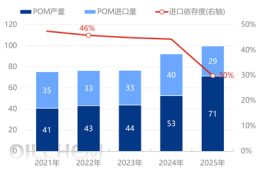
Name change without tax change: POM Anti-Dumping Duty Rate Inheritance Implemented
-
Fire breaks out at jiangsu meiside!
-
Ethylene: Production Capacity Accelerates Expansion, Global Industry Landscape Is Being Reshaped