



China's hybrid technology is reverse "harvesting" the world
Ten years ago, we were still debating whether hybrid technology was merely a “transitional technology.” Ten years later, China’s hybrid systems have begun feeding back into the global market.
At the 6th International Forum on Automotive Power Systems, executives from Geely, Haosi Power, Hyundai Motor, and industry organizations almost unanimously concluded: hybrid power going global has transitioned from an option to a necessity. More noteworthy than vehicle exports is the systematic solution of hybrid powertrains, which is penetrating the global market under the hood.
This is the “reverse export” of hybrid technology. It is no longer just about selling cars abroad, but about integrating China-defined powertrain architectures into models from major automakers around the world.
Vehicle exports pave the way, and hybrid powertrains expand overseas accordingly.
The hybrid system is set to go abroad, and complete vehicle exports are the pioneers on this path.
Wang Ruiping revealed a set of data at the forum: "Last year, our export volume was 7.1 million units, which has been the first for three consecutive years. The growth rates for pure electric and plug-in hybrid vehicles are over 60% and 200% respectively." The export growth rate for plug-in hybrids at 200% far exceeds that of pure electric vehicles.New energyGoing abroad accelerates, and hybrid is the fastest engine for that acceleration.
Behind the data, overseas consumers are voting with their wallets. BYD’s Qin PLUS DM-i has repeatedly topped monthly sales charts in Thailand, while the Song PLUS DM-i has entered multiple European markets. Chery’s Tiggo 8 Pro Kunpeng e+ hybrid has continued to gain traction in Brazil, Chile and other regions with high altitudes and large temperature differences. Hybrid models from Geely’s Lynk & Co and Zeekr have also been launched in Europe and multiple countries across the Asia-Pacific region. The strong overseas sales of these models have turned “Chinese hybrid technology” from specs on paper into tangible product strength.
If the whole vehicle sells well, the reputation of the assembly will naturally be established.
The market environment is also pushing hybrid powertrains into the spotlight. Zhao Fucheng, CTO of Hygee Power, said bluntly: “The profit margin on exports is still relatively attractive, around 43%, or even higher.” By contrast, the net profit margin of China’s auto industry has fallen from 7.8% in 2017 to 3.2% in the first quarter of this year. He further stated, “Overseas expansion is a necessity for Chinese automakers’ survival, not an option. If a company can’t make money domestically and still can’t make money overseas, it may be in trouble.”
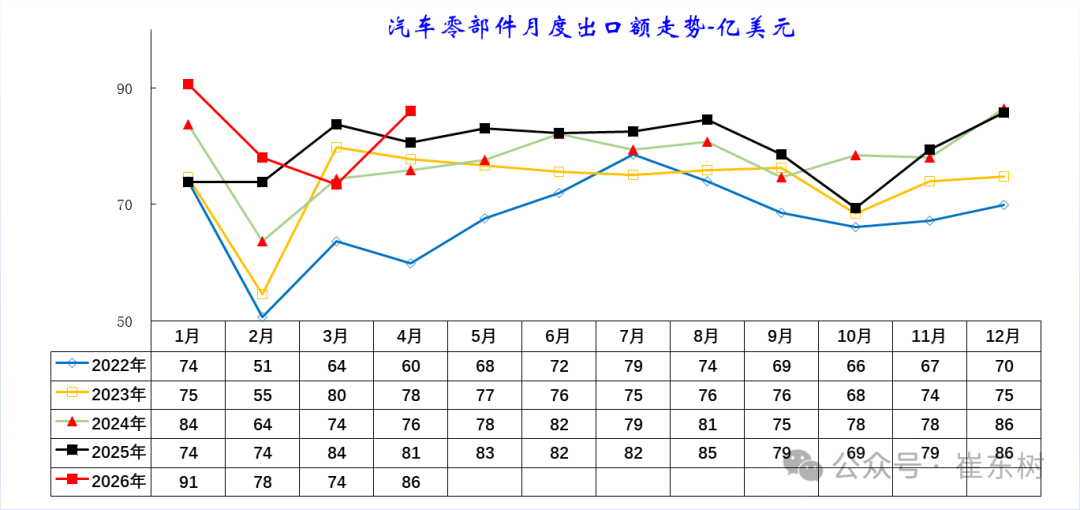
Image source: Cui Dongshu
Behind this lies a harsh and clear logic: the price war in the domestic market has already squeezed profits to the limit, and going overseas—especially exporting hybrid vehicles—is one of the few remaining areas with profit potential right now. Simply selling complete vehicles can easily trigger tariff barriers and local content restrictions; selling hybrid powertrain systems as a technical solution can both bypass some trade barriers and open up a new source of revenue.
The demand landscape in the global market also supports this judgment. Wang Ruiping analyzed that North America will see the fastest growth in hybrid power, expected to reach 26% by 2030; in South America, due to insufficient charging infrastructure, hybrids will become the main force in electrification, "there will be significant development space for hybrids here"; in ASEAN, the penetration rate of HEVs is expected to rise from 6% to 15%, while the proportion of PHEVs remains very low, "PHEVs are not developing as quickly as HEVs." Different regions have varying demands for hybrid technology, which provides Chinese companies with the opportunity to offer differentiated powertrain solutions.
Zhao Fucheng pointed out the trend changes from a global OEM strategic perspective: "Globally, the judgment on future power trends has shifted from pure electric to the diversified development of xEV; the hybrid route remains one of the core development directions for the passenger car market." Major Western automakers are turning towards hybrids, which means that the market demand for high-quality hybrid powertrains is rapidly expanding.
Vehicle exports provide the opening, profit pressure provides the impetus, and surging global demand for hybrids provides the tailwind. With these three forces converging, the window for Chinese hybrid powertrains to go global has opened. The hybrid technologies of BYD, Chery, Geely and their peers are shifting from helping Chinese car owners save fuel to empowering automakers worldwide.
Let Hard Power Speak: How Efficient Hybrids Measure Up to Global Standards
Going global takes more than just cost-effectiveness as a selling point; true technological strength is the real passport.
Chinese hybrid powertrain makers hold several strong cards: high-thermal-efficiency engines, high-voltage hybrid platforms, and the ability to meet stringent emissions requirements. These technologies have not only forged strong competitiveness in China’s fiercely competitive market, but also stand up well to global standards.
First, let's look at the heart—the engine. Zhao Fucheng revealed that the hybrid-specific engine produced by Haosi Power last year has achieved industry-leading thermal efficiency, with the methanol version's bench test thermal efficiency reaching as high as 48.7%. However, he also maintains a clear awareness of costs: "You need to understand the relationship between the price of increasing thermal efficiency from 45% to 50% and battery prices. If it costs an additional 2,000 yuan, and that only buys you 10 kWh of electricity, it could just be a technical study. Therefore, how to achieve 50% thermal efficiency without significantly increasing costs is the challenge our industry faces." This statement highlights the core weapon of China's hybrid technology: it's not about blindly stacking single parameters, but achieving high performance at controllable costs.
Now let’s look at the high-voltage systems. Hozon Power has implemented a 900V hybrid architecture on Zeekr models, with a 145 kW P1 motor and a 290 kW P3 motor, ensuring that acceleration performance does not drop even in a low state of charge. BYD’s DM-i system takes a different path, relying primarily on a high-power electric motor for propulsion, with the engine playing a supporting role. Its Xiaoyun engine, with thermal efficiency exceeding 43%, is paired with the EHS hybrid system to deliver low cost, smooth operation, and excellent fuel economy, making it well suited to markets in Southeast Asia and Europe. Chery’s Kunpeng DHT, by contrast, features a 3-speed hybrid transmission and enables direct engine drive across the full speed range, offering clear efficiency advantages in high-speed driving scenarios.
Technological pathways are flourishing in great variety, but the real test lies in global emissions regulations.
Wang Ruiping reminded: "The EU is the first to achieve O7, which is set to be realized by November 29 of this year, while North America will reach it by 2027. At the beginning of next year, the next phase of the Tier 4 new regulations will be implemented in the U.S., and the difficulty of this is quite significant." Both the Euro 7 and the U.S. Tier 4-Bin 30 impose almost stringent requirements on the original emissions and after-treatment of engines, which is a threshold that China's hybrid powertrains must overcome.
Zhao Fucheng then revealed a ready trump card: “For the current U.S. Tier 4 Bin 30, which we believe is the most challenging emissions regulation, we have also made technological preparations. Our CSC cold-start catalytic technology delivers results and performance superior to electric heating, and this technology is now ready for mass production at any time to meet market demand.” In addition, the NOx control solution for lean-burn aftertreatment does not require extra urea, while precious metal usage has been reduced to the industry’s low end. These technology reserves mean that China’s hybrid powertrain is no longer a follower in emissions compliance.
In addition to emissions, the specific use scenarios in different markets also present challenges for technical adaptation. Wang Ruiping gave the example of towing: “In Europe and the U.S., towing requirements demand very high torque at the output end so that the vehicle can pull a trailer, even one weighing more than two tons. This means the engine development is different, and so is the development of the transmission and the entire driveline system.” This requires that, from the very beginning of development, the hybrid powertrain incorporate torque output, heat dissipation, durability, and other wide-range operating conditions into the design, rather than adding fixes afterward.
Vice President of Hyundai's Electric Drive R&D Division, Won Sang-hoon, echoed this viewpoint from a global OEM perspective. He pointed out that Hyundai is developing hybrid systems ranging from 100 horsepower to over 500 horsepower to meet different market demands, and emphasized that "these challenges are not uniform; they are dispersed across different global market regions. For a global company like us, this localization brings complexities that must be addressed." This indicates that whoever can provide flexible adaptations on a standardized platform will secure a position in the global supply chain.
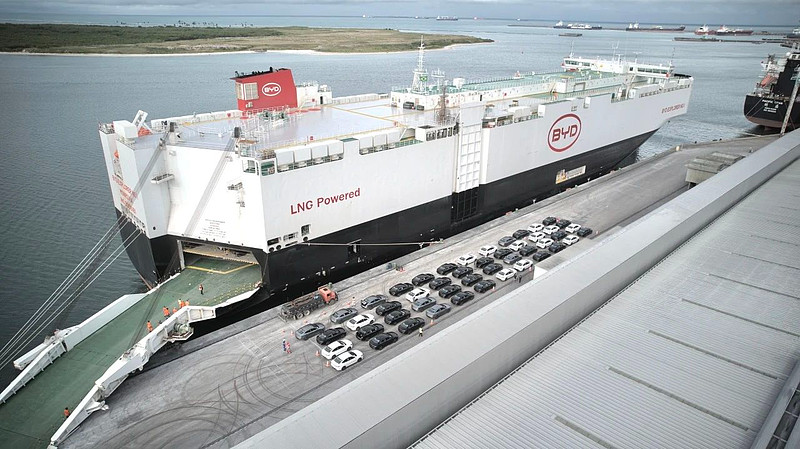
Image source: BYD
China's hybrid powertrain is responding to these complexities with engineering capabilities. BYD's DM-i architecture is naturally suited for the Southeast Asian market, which has heavy urban congestion and inadequate charging infrastructure; Chery's Kunpeng DHT achieves lower fuel consumption on unlimited-speed highways in Europe through its multi-gear direct drive; Geely's Thor Hybrid covers all scenarios from urban to highway with its three-gear DHT Pro. These differentiated technological reserves allow Chinese hybrid powertrains to no longer be a single solution output, but rather a modular capability that can be combined as needed.
Ultimately, global expansion in technology is not a competition of specs on a parameter sheet, but a matter of who can achieve efficiency, compliance, and scenario adaptability all at once at a reasonable cost. On this path, China’s hybrid technology has already accumulated enough snow and found a long enough slope.
Localization: From Selling Complete Assemblies to Putting Down Roots
Technology is the spear; localization is the shield. A spear sharp enough can open up the market, but if the shield is not thick enough, the position cannot be held.
Zhao Fucheng described ESG compliance as “a mandatory question — even a buzzer-beater question — that must be answered. No matter how well you understand it, once you go global, every region and country has different regulatory requirements.” Europe’s carbon footprint declarations, battery passports, and supply chain due diligence, Latin America’s local production ratio requirements, and ASEAN’s data sovereignty regulations — any one of these can shut out players who are unprepared.
A deeper challenge comes from the supply chain. Drawing on Hozon Power’s cross-border experience, Zhao Fucheng said candidly: “Supply chain management is not as simple as just asking suppliers to go overseas. It is absolutely not like that. Over the past two years of cooperation, within the joint venture, we have discussed extensively issues such as trade barriers, geopolitical risks, and the proportion of localized procurement—how to meet customer needs in a reasonable, compliant, and lawful way while also offering the lowest possible prices. This is an enormous systems engineering project.” His remarks break down the real difficulty of localization: it is not enough to simply set up an assembly plant overseas; rather, it requires rebuilding a competitive supply network in the target market, covering everything from raw materials, components, and system integration to testing and validation.
Wang Ruiping added from a fiscal and tax perspective: "Different regions have varying localized additional requirements for the entry of Chinese enterprises, including extra consumption taxes or luxury taxes that can reach 45%, 55%, or even 75%. For instance, North America requires local components to be sourced from local suppliers, and so on. Don't focus solely on tariffs." Some countries may have low nominal tariffs, but various hidden tax types and localization rate requirements can cumulatively erase the cost advantages of imported assemblies.
How to break through? Wang Ruiping offered six systematic recommendations: adhere to long-termism and avoid chasing quick profits; build a regionalized operating system in which headquarters provides broad support while local teams respond with agility; downplay targeted competition and emphasize industrial synergy and win-win cooperation; respect and integrate into local culture to build trust; plan ahead for local talent development to meet labor ratio requirements; and sustain technological innovation to make up for the gap in understanding overseas regulations compared with established automakers. At the core of these six recommendations is one central idea: make going global about putting down roots, not reaping and leaving.
Zhao Fucheng responded with an action-oriented approach: “To achieve the two essential skills for Chinese companies going global: first, localized and in-country market insight, as well as global localized services; second, mastery of regulations, different road conditions, and different driving preferences. We must keep researching and definitely have a database—this is crucial. This includes our understanding of fuel quality in different countries, because we have a global database to support it.” Relying on R&D and manufacturing bases in China, Sweden, Spain, Brazil, and Romania, along with 19,000 global employees, Haosi Power is turning the model of “Chinese strength + global services + localized deployment” into a replicable one.
At the level of industrial practice, different players have already delivered their own localized answers. BYD is building vehicle and battery plants in Rayong, Thailand, to radiate across the ASEAN market while also driving the regionalized supply of hybrid powertrains. Chery has formed deep ties with local partners in Brazil, optimizing engine calibration for the local flex-fuel characteristics of ethanol-gasoline blends. Geely, meanwhile, is using Horse Powertrain, a joint-venture platform, to supply 1.5T hybrid engines in volume directly to international customers such as Mercedes-Benz, reducing geopolitical suspicion by operating as a third-party supplier.
At a higher level of the industry landscape, Zhao Lijin, Deputy Secretary-General of the China Society of Automotive Engineers, pointed out the trend: “Taking into account geopolitics and global division of labor, it is possible that the core powertrain systems will need to achieve regionalized, shorter-supply-chain collaboration. Our regional markets must form a united force and a pattern of coordinated development in mutual response.” In other words, going abroad on a solo basis has become outdated; what comes next is competition in regional ecosystem coordination.
When BYD has cultivated a local supply chain in Thailand, when Chery has mastered flex-fuel adaptability in South America, and when Horse Powertrain is supplying European automakers with engines that meet Euro 7 standards, China’s hybrid powertrain is no longer just a “cheap and practical” alternative, but a systems-level partner with fully localized delivery capabilities.
Closing Remarks
The “reverse output” of hybrid technology is not a story that can be accomplished by a single export boom.
It requires the whole vehicle to open up the market, strong technology to withstand the tests of global standards, and the need to establish roots and grow local branches in different markets.
As Zhao Fucheng said, “Amid pressure on profits in the domestic market and overseas markets becoming profit centers, global automakers’ strategies are shifting from pure electric to hybrid. Going global and adopting hybrid technology have become the twin imperatives for Chinese automakers to break through.” The need is there, and so is the window of opportunity. But that window will not stay open forever.
Whoever can win orders through technological superiority and defend market share through localized adaptation will, amid the restructuring of the global hybrid industry chain, rise from a follower to a rule-maker. The reverse export of China’s hybrid powertrain technology has only just reached the starting line; the real long-distance race is only just beginning.
【Copyright and Disclaimer】The above information is collected and organized by PlastMatch. The copyright belongs to the original author. This article is reprinted for the purpose of providing more information, and it does not imply that PlastMatch endorses the views expressed in the article or guarantees its accuracy. If there are any errors in the source attribution or if your legitimate rights have been infringed, please contact us, and we will promptly correct or remove the content. If other media, websites, or individuals use the aforementioned content, they must clearly indicate the original source and origin of the work and assume legal responsibility on their own.
Most Popular
-

Layoffs, Divestments, Plant Closures While Pouring Billions: BASF Undergoes Major Transformation!
-

Ascend Adipic Acid Hit By Force Majeure, Market Expects Supply Resumption In Mid-September
-

Raw Material Supply Shortage! INEOS Phenol Declares Force Majeure on Phenol and Acetone Businesses
-
South Korea initiates anti-dumping investigation against Chinese PVC suspension resin! The target is Tianjin Bohua and Wanhua Chemical. How to break through?
-

Sixth national procurement set to be implemented: A “Reshuffling” Moment for the $10-Billion Medical Device Market