



Environmental Groups Criticize Unilever’s Plastic Recycling Targets For Failing To Address Root Problems
Greenpeace, the international environmental organization, recently issued a statement criticizing Unilever's plastic recycling targets outlined in its 2025 Sustainable Development Report for failing to address the root causes of plastic pollution. Although Unilever announced it has achieved its goal of using 25% post-consumer recycled plastic, Greenpeace argues that this progress is insignificant compared to the company's massive plastic packaging footprint and does not tackle the core issue of the rampant use of single-use flexible packaging.
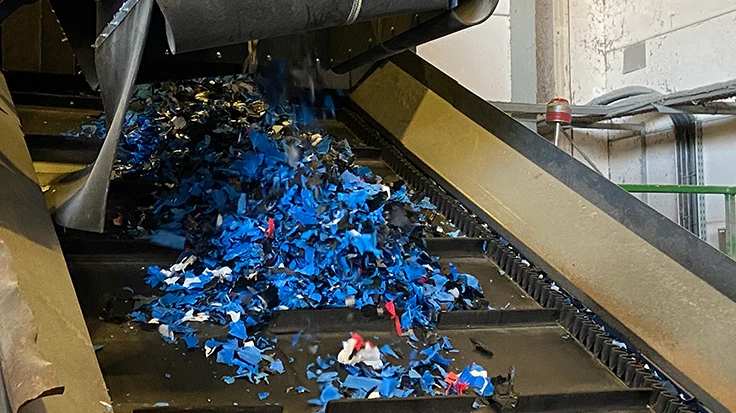
Graham Forbes, Global Plastics Campaign Leader at Greenpeace USA, pointed out that Unilever’s brands—such as Dove—are among the primary drivers of single-use packaging proliferation, shifting the burden of waste management onto communities. He emphasized that, as a global leader in the consumer goods industry, Unilever bears both the responsibility and the capacity to lead the sector away from single-use packaging toward reusable solutions, rather than remaining fixated on low-barrier recycling targets.
Unilever responded that the company is proceeding with its plastic recycling efforts as planned. However, real data shows that the global recycled plastics industry is facing serious challenges. The Brussels International Recycling Bureau analysis pointed out that existing support policies are poorly implemented or missing in some areas, and the low cost of virgin resin makes it difficult for recycling companies to be profitable, resulting in weak market demand.
Recently, several PET recycling companies in the United States have gone bankrupt consecutively, and chemical giant LyondellBasell has significantly reduced its 2030 target for recycled polymer production by 60%. Industry experts point out that, without robust policy support and business model innovation, relying solely on individual corporate efforts will be insufficient to overcome the current bottlenecks in plastic pollution control.
【Copyright and Disclaimer】The above information is collected and organized by PlastMatch. The copyright belongs to the original author. This article is reprinted for the purpose of providing more information, and it does not imply that PlastMatch endorses the views expressed in the article or guarantees its accuracy. If there are any errors in the source attribution or if your legitimate rights have been infringed, please contact us, and we will promptly correct or remove the content. If other media, websites, or individuals use the aforementioned content, they must clearly indicate the original source and origin of the work and assume legal responsibility on their own.
Most Popular
-

Layoffs, Divestments, Plant Closures While Pouring Billions: BASF Undergoes Major Transformation!
-
Ascend Adipic Acid Hit By Force Majeure, Market Expects Supply Resumption In Mid-September
-

Raw Material Supply Shortage! INEOS Phenol Declares Force Majeure on Phenol and Acetone Businesses
-
South Korea initiates anti-dumping investigation against Chinese PVC suspension resin! The target is Tianjin Bohua and Wanhua Chemical. How to break through?
-

Sixth national procurement set to be implemented: A “Reshuffling” Moment for the $10-Billion Medical Device Market