



FDA Approved! The World’s First Registered Bioprosthetic Valve for Tricuspid Valve Indication
Among the four valvular positions in structural heart disease, the tricuspid valve has long been marginalized. While aortic and mitral valves have undergone more than a decade of iterative advances in interventional devices, the market for surgical bioprosthetic tricuspid valves has continued to make do with devices adapted from the aortic or mitral positions.
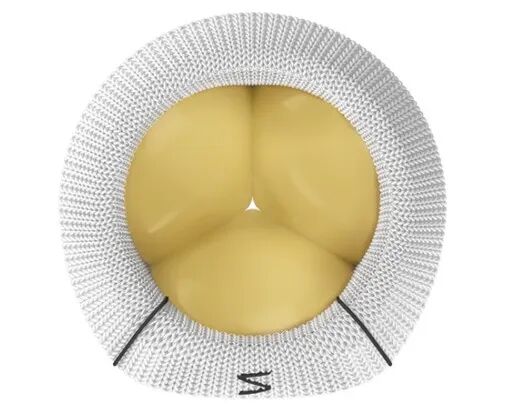
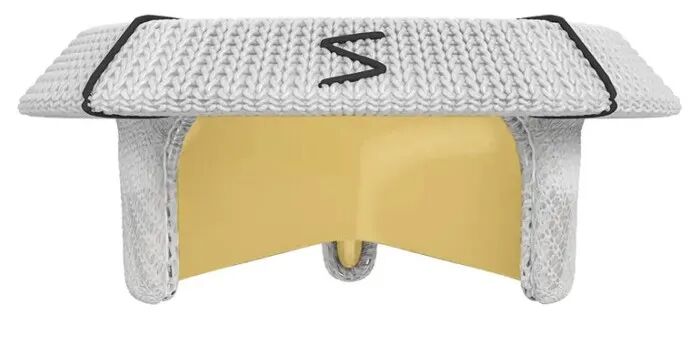
On June 2, 2026, Edwards Lifesciences (NYSE: EW) announced that it had received FDA premarket approval for Triformis Resilia, making it the first surgical bioprosthetic valve specifically designed for the tricuspid valve anatomy and approved with tricuspid valve disease as the indicated registration use. According to the company’s timeline previously disclosed at its December 2025 Investor Day, Triformis was scheduled for U.S. launch in the second half of 2026, and this approval came right within that window.
The core issue is not that Edwards obtained an approval, but rather:Why will this product not be available until 2026, and what does the Resilia organizational data it carries mean for the entire surgical bioprosthetic valve market?
# Triformis’s Design Logic: Not Modification, but Reinvention
Currently, most surgical tricuspid valve replacements rely on products originally designed for other valve positions—including Edwards’ own Perimount series—rather than valves specifically developed for the anatomical characteristics of the tricuspid valve. The tricuspid annulus has a complex saddle-shaped geometry, its annular plane is angled relative to the right ventricular inflow tract, and its three leaflets are asymmetrical in size. In addition, the suturing space is relatively confined, so traditional “one-size-fits-all” designs are prone to procedural challenges at this position, such as difficult orientation and suture entanglement.
The design strategy of Triformis Resilia is customized to address the aforementioned issues one by one: the shape and contour of the sewing ring are specifically tailored to fit the native anatomy of the tricuspid valve; the valve frame is an improved version based on the Perimount platform, incorporating a nickel-titanium (Nitinol) wire frame; the holder features a pre-implantation disc that allows the struts to be folded inward before implantation, reducing space occupancy during the deployment process; the leaflet material is made from Edwards' Resilia bovine pericardial tissue, enhanced with anti-calcification treatment.
The direct goal of these design changes is:Reduce the surgical difficulty of operating on the tricuspid valve and lower the risk of intraoperative complications caused by instrument mismatch.—although publicly available clinical data on tricuspid valve-specific indications have not yet been disclosed in the materials.
Resilia 10 years: the data for this part of the organization happened to mature right at this point.
The approval of Triformis was not an isolated event. Just one month earlier, at the 106th Annual Meeting of the American Association for Thoracic Surgery (AATS) held in May 2026, Edwards presented 10-year follow-up data from the COMMENCE aortic valve trial: the Resilia tissue valve achieved a 97.9% freedom from structural valve deterioration, a 97.8% freedom from reoperation due to SVD, and stable hemodynamic performance— including gradients and effective orifice area—through 10 years.
This set of data is particularly significant in terms of timing. The traditional disadvantage of surgical bioprosthetic valves is durability—standard glutaraldehyde-fixed bovine pericardial valves typically begin to undergo calcific degeneration after 10 to 15 years, which for younger patients (<65 years) means an almost inevitable need for reoperation. The core of Resilia technology lies in introducing ethanol pre-treatment and anti-calcification processes in the treatment of bovine pericardium. The COMMENCE trial specifically enrolled a relatively younger patient population considered at high risk for structural valve deterioration (SVD), and even in this group, it achieved a 97.9% 10-year SVD-free rate, supporting the clinical decision pathway of selecting bioprosthetic valves in younger patients.
The direct value of the COMMENCE data for the clinical use of Triformis is that physicians can reference the 10-year durability data from the same tissue platform at other valve locations when deciding to implant a biological valve (rather than a mechanical valve) for tricuspid patients. This does not directly prove the tricuspid product, but in the absence of dedicated long-term data for the tricuspid valve, it serves as the most compelling supporting evidence available.

Chinese coordinates: The tricuspid valve is the largest blank space in the entire valve arena.
Tricuspid valve disease has a unique epidemiological background in China. Historically, rheumatic heart disease has been a significant burden, and a large number of patients develop functional tricuspid regurgitation (TR) after mitral valve surgery. This "post-left heart valve surgery TR" is the primary surgical indication for tricuspid valve replacement in the country, which differs from Western countries where degenerative diseases are the main cause. Domestic literature indicates that the incidence of atrial fibrillation in this patient group can be as high as 88.9%, with nearly 100% of patients classified as NYHA III/IV in terms of heart function. By the time of surgery, these patients often present with end-stage right heart failure, making the surgical risk extremely high.
At the device level, the current situation is:In the domestic tricuspid valve market, neither surgical replacement nor transcatheter intervention has any product approved by the NMPA with a specific indication.Transcatheter tricuspid valve interventions (including repair TTVr and replacement TTVR) are still largely in the investigational stage, and no products have yet been approved for marketing by China’s NMPA worldwide. In the field of transcatheter tricuspid valve replacement, among domestically developed products under investigation, JENSCARE’s Lux-Valve Plus is the most advanced in development, followed by BRIDGE Biomedical and Venus Medtech, but none has completed the registration application.
On the surgical replacement side, Triformis Resilia’s registration pathway in China has not yet been disclosed. However, based on the NMPA approval timeline for other Edwards products—which typically lags FDA approval by 2 to 4 years—even if an application is initiated, it is unlikely to be commercialized in China before 2027 to 2028. This means that, over the next few years, domestic cardiac surgeons will continue to rely on non-tricuspid-valve-specific bioprostheses for STVR.
It is worth noting that in 2024, volume-based procurement for the first time extended into the valve field, with Guangzhou launching a joint procurement initiative for transcatheter aortic valves. Edwards’ pricing flexibility in the aortic valve segment has already come under pressure. If a tricuspid-specific product enters China, its pricing strategy will face a more complex policy environment than that of the aortic valve market in its mature stage.
# Heart Future Perspective
Edwards’ strategy in surgical tricuspid valve replacement mirrors the approach it has taken with TAVR over the past decade: first establishing confidence in the durability of its tissue platform through clinical data (10-year RESILIA COMMENCE), then extending that platform to launch products for new anatomical positions. The moat in this playbook is not a single product, but an entire body of clinical evidence.
The real risk worth watching is not competitors, but the market-size ceiling of tricuspid valve surgery itself. Historically, tricuspid valve replacement volumes have been extremely low—surgeons have long avoided isolated tricuspid procedures, mainly because postoperative mortality is several times higher than that of other single-valve surgeries. Transcatheter tricuspid interventions are reactivating this group of “abandoned” patients with lower procedural risk. If the safety of the transcatheter approach continues to improve over the next three to five years, the eligible population for surgical replacement will narrow further to only those patients with indications for open-heart surgery. By then, Triformis’s market size may be smaller than Edwards expects, and the commercial priority of bringing the device into China may be correspondingly downgraded.
A more immediate question for practitioners in China is: during the window period before domestically developed interventional TTVR products are approved and while imported dedicated surgical devices will also take several years to arrive, how can current surgical practice be standardized, and is there an opportunity to promote the initiation of domestic dedicated surgical tricuspid valve projects—a field that is currently almost entirely unoccupied.
【Copyright and Disclaimer】The above information is collected and organized by PlastMatch. The copyright belongs to the original author. This article is reprinted for the purpose of providing more information, and it does not imply that PlastMatch endorses the views expressed in the article or guarantees its accuracy. If there are any errors in the source attribution or if your legitimate rights have been infringed, please contact us, and we will promptly correct or remove the content. If other media, websites, or individuals use the aforementioned content, they must clearly indicate the original source and origin of the work and assume legal responsibility on their own.
Most Popular
-

Layoffs, Divestments, Plant Closures While Pouring Billions: BASF Undergoes Major Transformation!
-

Ascend Adipic Acid Hit By Force Majeure, Market Expects Supply Resumption In Mid-September
-

Raw Material Supply Shortage! INEOS Phenol Declares Force Majeure on Phenol and Acetone Businesses
-
South Korea initiates anti-dumping investigation against Chinese PVC suspension resin! The target is Tianjin Bohua and Wanhua Chemical. How to break through?
-

Sixth national procurement set to be implemented: A “Reshuffling” Moment for the $10-Billion Medical Device Market