


From Car Brain to Physical AI, Lenovo's Leap in Vehicle Computing 2.0 Strategy
On April 24, the first day of the 2026 Beijing Auto Show, Lenovo's Intelligent Vehicle Computing booth was swarmed with visitors. The tech giant, renowned for its PCs, is showcasing its latest achievements in the field of intelligent vehicles.
Currently, the intelligent automotive industry is at a critical juncture where it is transitioning from "function-driven" to "AI-driven." High-level driver assistance is evolving from highway NOA to urban NOA, L4-level Robotaxi is moving from demonstration operations to large-scale replication, and cockpit and driving integration is shifting from concept to mass production. From laboratory to industrial application, embodied intelligence is making its way into the industry. At this dual turning point of technology and industry, Lenovo Automotive Computing has presented its own answer.
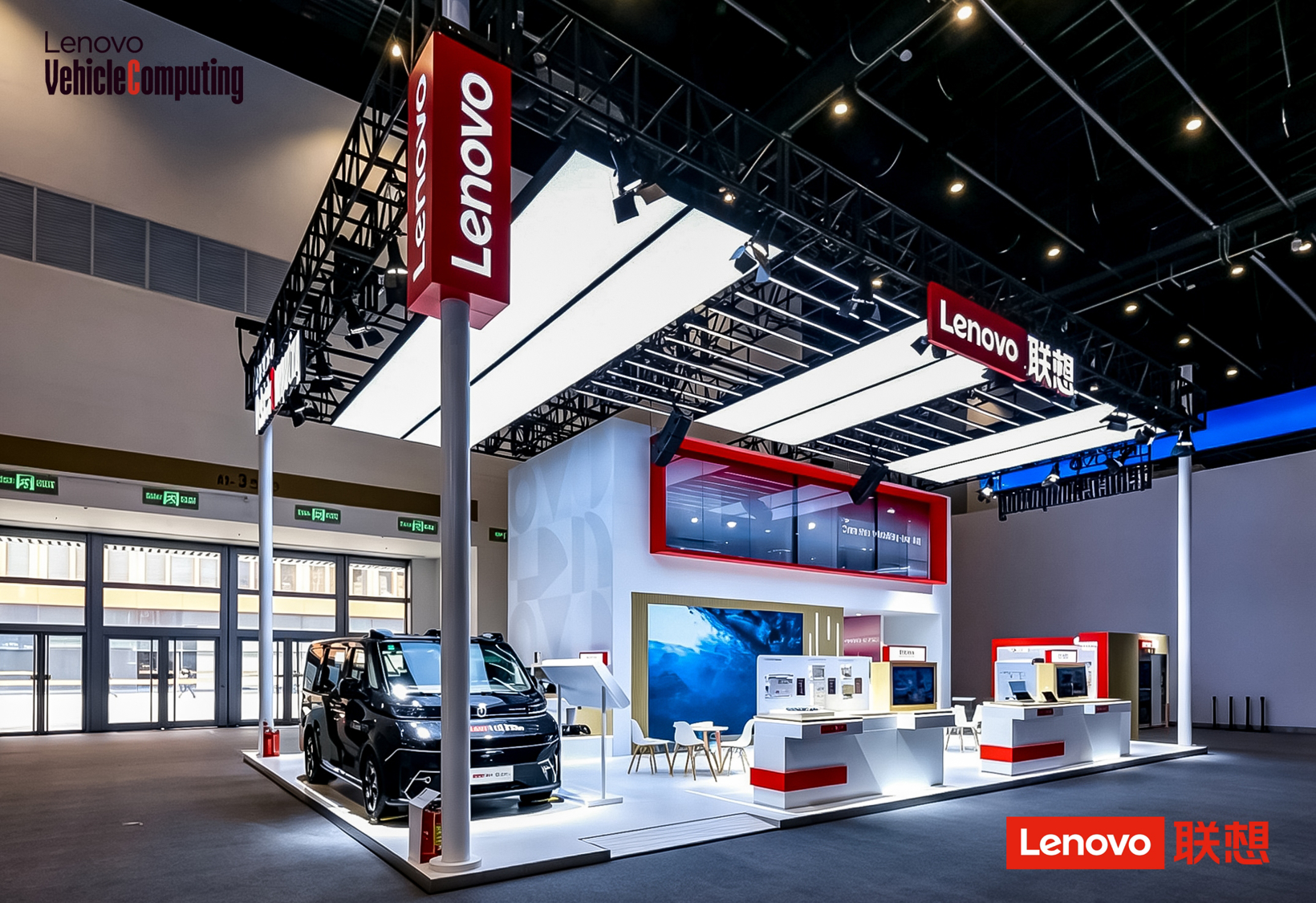
Image source: Lenovo
Focusing on the dual-wheel drive strategy of "intelligent computing platform + intelligent interaction," Lenovo Car Computing has launched a new AI Box and the OneAI automotive intelligence platform, deepening strategic cooperation with partners such as WeRide, and announcing a global deployment target of 200,000 autonomous vehicles, signaling that the car computing business has officially entered its 2.0 phase.
Strategic Upgrade: From "Computing Platform" to "Intelligent Agent Platform"
Lenovo Vehicle Computing is a strategic business unit under Lenovo’s Solutions & Services Group (SSG), targeting the intelligent automotive sector. Leveraging Lenovo’s leading expertise in computing and artificial intelligence, its global ecosystem resources, and engineering and manufacturing strengths, Lenovo Vehicle Computing delivers highly customized intelligent solutions to automakers and autonomous driving companies. In just three years, the team has evolved from a newcomer in the automotive industry into a mature force with advanced intelligent computing capabilities, becoming a key player in automotive intelligence.
From 1.0 to 2.0, Lenovo's strategic positioning has undergone a fundamental change. In the 1.0 phase, Lenovo focused on building a vehicle-grade intelligent computing platform, launching core products such as the L4-level autonomous driving domain controller AD1 and the L2++-level advanced driver assistance domain controller AH1 based on NVIDIA DRIVE Thor, achieving global debut and mass production. Entering the 2.0 phase, Lenovo has moved from a "computing platform" to an "embodied intelligence platform," expanding from serving intelligent driving to embodied intelligence.
Behind this strategic shift is Lenovo's deepening of its "One Ecosystem, Multiple Devices" strategy. Under this framework, cars are no longer isolated systems but a key component of the intelligent ecosystem.
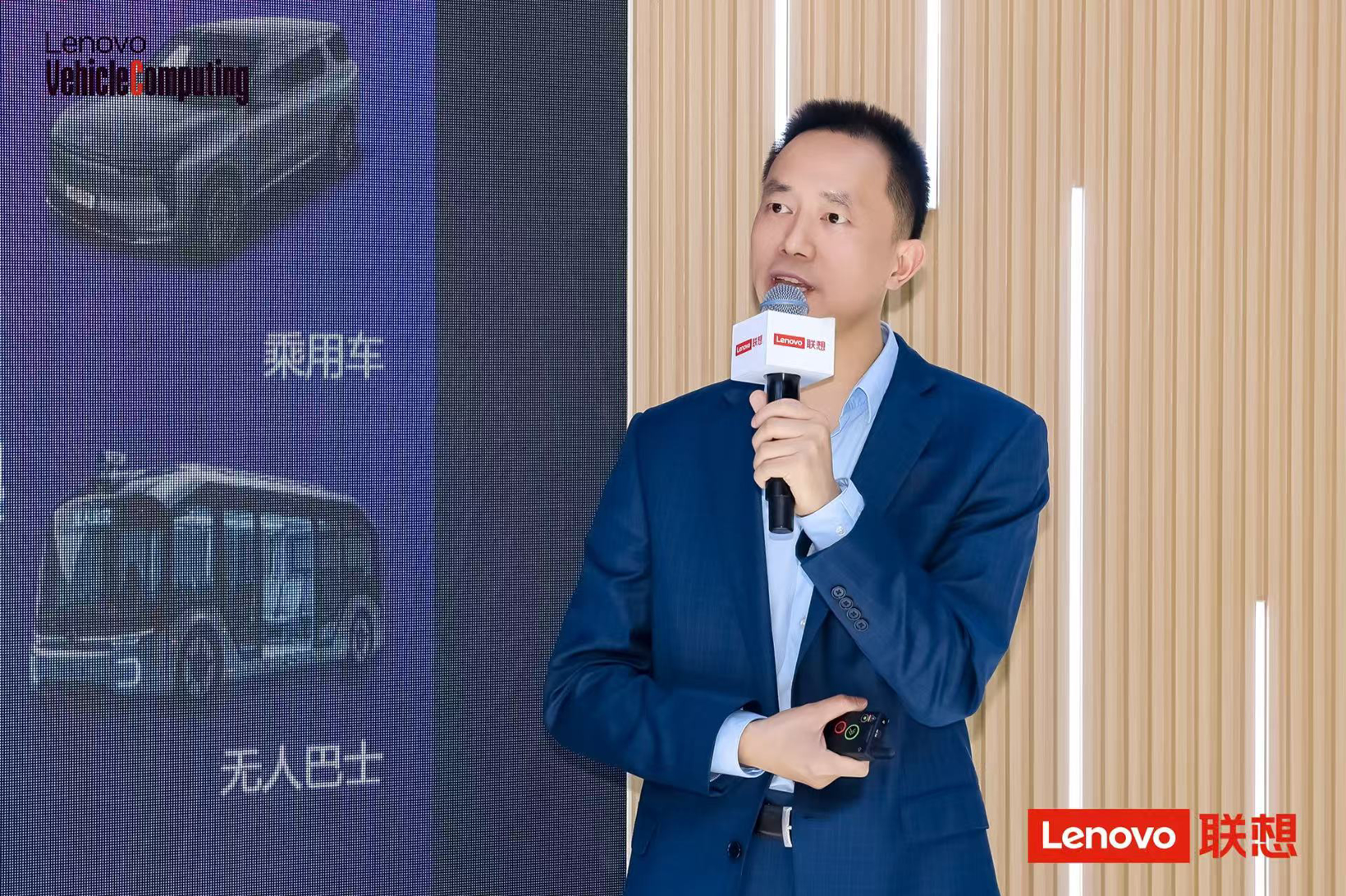
Lenovo Group Vice President and General Manager of Vehicle Computing, Xu Liang; Image source: Lenovo
Lenovo Group Vice President and General Manager of Vehicle Computing Xu Liang told Gasgoo that from Vehicle Computing 1.0 to 2.0, Lenovo’s core strategic thinking has evolved from “entering the race” to “becoming a leading player.” During Phase 1.0 (2023–2025), Lenovo’s primary goal was to “secure an entry ticket,” leveraging its research institute’s R&D-driven approach and partnerships with companies like NVIDIA to establish an initial R&D system and product platform, achieving a breakthrough from 0 to 1. Entering Phase 2.0, Lenovo’s strategic focus has shifted toward “mass production” and “system capability building.” Specifically, this includes: first, expanding the product portfolio from single-product exploration to multiple domains such as smart cockpits and integrated AI scenarios; second, building automotive DNA by establishing development, engineering, delivery, and quality systems aligned with global mainstream automakers, transitioning from an “R&D-driven” to a “mass-production-and-delivery-driven” model; and third, advancing global business expansion by leveraging Lenovo’s global manufacturing, supply chain, and service systems to support customers’ worldwide deployment.
Under the “One Core, Multiple Terminals” strategy, automobiles will become one of the key terminal carriers within Lenovo’s AI ecosystem. Xu Liang emphasized that cars are no longer isolated transportation tools, but rather the most important “personal mobile AI intelligent hub” and “third mobile space” following smartphones and PCs. Within Lenovo’s “One Core, Multiple Terminals” ecosystem, automobiles will achieve seamless collaboration with other smart terminals—including smartphones, PCs, and tablets—through a unified account system, unified memory, and a shared intelligent agent platform. For instance, work unfinished on a PC or videos left unwatched can be seamlessly continued upon entering the vehicle. At the heart of this transformation is the evolution of the automobile from a functional terminal into an intelligent agent endowed with perception, comprehension, memory, planning, and execution capabilities—making it a pivotal vehicle for Lenovo’s Physical AI strategy.
Focusing on AI computing and intelligent agent applications in vehicles, the Auto AI Box jointly launched by Lenovo and NVIDIA has garnered significant attention at the new product releases of this auto show.
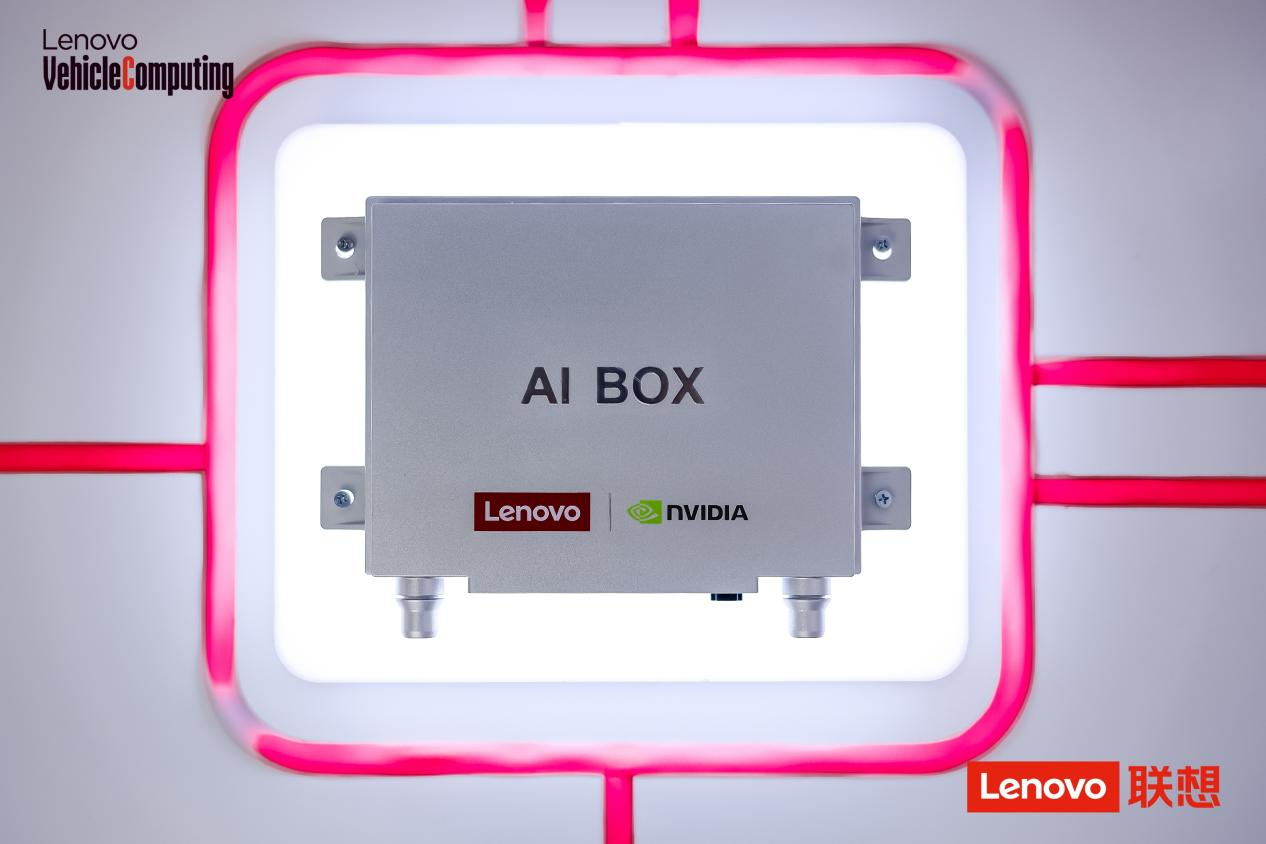
Image source: Lenovo
This product, based on the NVIDIA DRIVE AGX Thor-Z platform, is aimed at in-cabin intelligent agent applications, providing a high intelligence-to-price ratio for in-vehicle AI computing solutions. The technical architecture has achieved several breakthroughs. First and foremost, it has the capability to deploy large multimodal models on the edge. The Auto AI Box boasts 360 TOPS@FP8 in AI computing power, supporting the deployment of up to 30B parameter multimodal large models on the edge, capable of real-time processing of multimodal inputs such as voice, vision, and touch. Compared to cloud solutions, edge deployment reduces interaction latency from seconds to milliseconds, while also addressing issues of data privacy and network dependency. An open ecosystem facilitates the rapid deployment of models, providing an ideal operational environment for the on-boarding of agents.
Edge-side large models being applied to vehicles have become an important technical direction in the industry since 2025. Compared to traditional rule-based or small model solutions, edge-side large models can achieve more natural human-vehicle interaction and more complex scene understanding. The launch of Auto AI Box means that Lenovo has already achieved mass production-level product capabilities in this technical path, helping customers and partners to build full-scenario cockpit systems centered around AI agents.
As the third mobile space, smart cars will become the intelligent hub connecting personal work and life. Lenovo's other major release is the automotive intelligent body platform, based on the Auto AI Box mass production-level computing foundation and Lenovo's "one body, multiple ends" personal intelligent body framework and ecosystem. It supports flexible deployment and collaborative scheduling of multiple intelligent agents on the edge, forming a complete intelligent loop from perception, understanding, memory, planning to execution. As a mobile intelligent hub for individuals, it comprehensively covers scenarios such as travel, work, and home life, achieving unified accounts, unified memory, multi-device connectivity, and proactive services.
Mass Production and Deployment: From Scalable Deployment to Embodied Intelligence Extension
The elevation of strategy and innovation of products cannot be achieved without solid mass production capabilities. In the past three years, Lenovo's automotive computing has proven its engineering capabilities through multiple benchmark projects.
In the field of L4 autonomous driving, Lenovo has globally launched the AD1 domain controller, based on the NVIDIA DRIVE Thor, and has taken the lead in mass production worldwide. It currently supports the large-scale deployment of Robotaxis for multiple international partners, including WeRide, Nuro, and SWM. In the area of L2++ high-level assisted driving, the Lenovo AH1 domain control platform has helped the new models of IM LS6, LS8, and LS9 from SAIC IM achieve mass production and delivery. In the field of intelligent cockpits, the Lenovo RSE multi-end interconnection solution has been installed in models such as Chery Starand iCar V27.
Building on its mass production achievements, Lenovo is advancing large-scale commercialization through strategic partnerships. At this auto show, Lenovo and WeRide announced a deepened strategic collaboration on Level 4 autonomous driving, focusing on scaling and global deployment of autonomous vehicle businesses such as Robotaxi. The two companies plan to achieve global deployment at a scale of 200,000 units starting from 2026, driving autonomous driving from "demonstration operations" toward "large-scale replication."
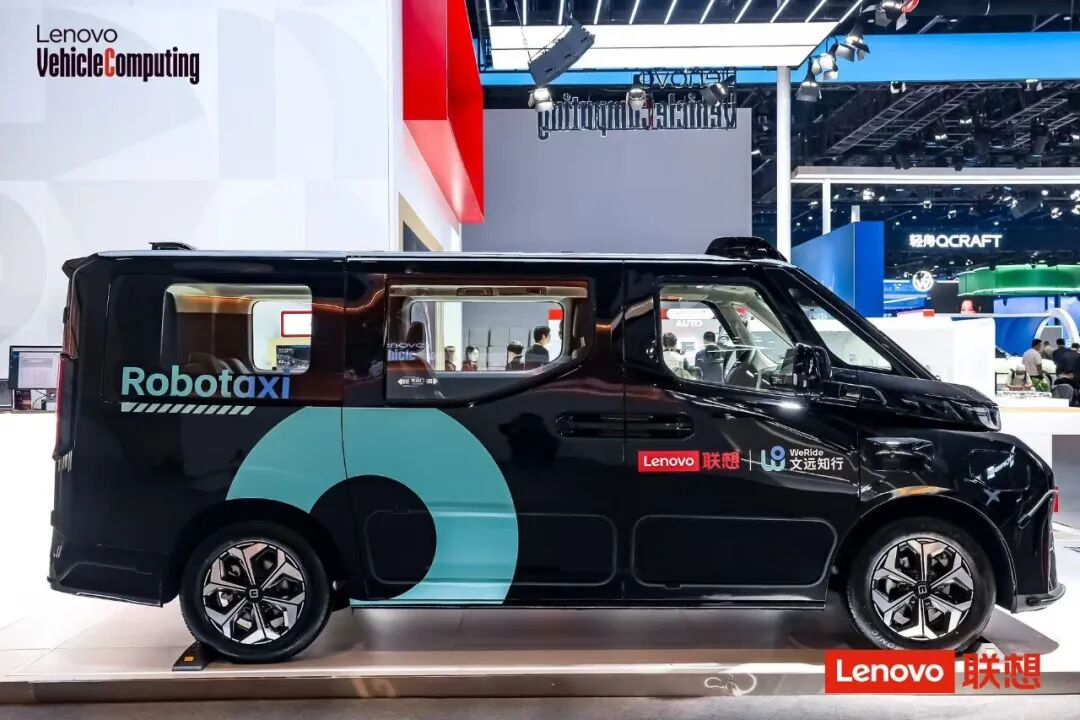
Image source: Lenovo
It should be noted that Lenovo and WeRide plan to achieve global deployment of 200,000 autonomous vehicles, which is an extremely aggressive scale target in the industry. What enables Lenovo to support such large-scale deployment? What is the biggest challenge?
According to Xu Liang, the confidence of Lenovo originates from a deep recognition of the technical capabilities of its partner, WeRide. The AD1 domain controller, developed based on the NVIDIA Thor platform, has achieved large-scale operation of L4-level Robotaxi across the entire city of Guangzhou, verifying the excellent compatibility between the algorithm and the computing platform. Secondly, Lenovo's core strength lies in its global manufacturing and supply chain system. Lenovo has more than 30 manufacturing bases worldwide and has established strategic partnerships with core suppliers such as NVIDIA, Micron, and Samsung, forming a stable supply system. Whether it is ramping up production capacity or global delivery, Lenovo can provide full-chain support from manufacturing to delivery.
“The greatest challenge lies not only in manufacturing capability but also in adapting to the regulations, road conditions, and user habits of different countries and regions to achieve genuine global localization. Lenovo’s balanced business presence and localized service system across North America, Europe, and the Asia-Pacific region constitute its core competitive advantage in addressing this challenge,” said Xu Liang.
Meanwhile, Lenovo is also exploring the extension of automotive-grade computing power to a broader range of physical devices. At this auto show, Lenovo jointly demonstrated embodied intelligence applications with QiuZhi Tech, leveraging Lenovo's high-performance computing platform to drive an ultra-lightweight dual-arm robot, achieving an end-side closed-loop capability of "perception-decision-execution." This validates the technical feasibility of extending automotive-grade computing platforms to robotics scenarios. This collaboration marks Lenovo's vehicle computing business expanding beyond the intelligent automotive domain into the broader Physical AI landscape.
Future Vision: Building the Infrastructure for the Physical AI Era
Currently, the focal point of competition in the intelligent automotive industry is undergoing a profound shift. As the capabilities of large models gradually converge, the core of competition is shifting toward “system capability”—that is, which company can enable AI to operate stably in the real world, scale effectively, and continuously deliver value. In this dimension, automobiles possess unique advantages, making them one of the most mature application platforms within the Physical AI ecosystem. From intelligent driving and intelligent cockpits to automotive AI agents, Lenovo is empowering vehicles to evolve from mere transportation tools into personal mobile AI command centers.
Looking ahead, Lenovo will continue to advance the integration of automotive-grade intelligent computing platforms and agent technologies, empowering customers and partners to build better intelligent vehicles, safer and more reliable robotaxis, more convenient autonomous delivery vehicles, and robots for diverse scenarios.
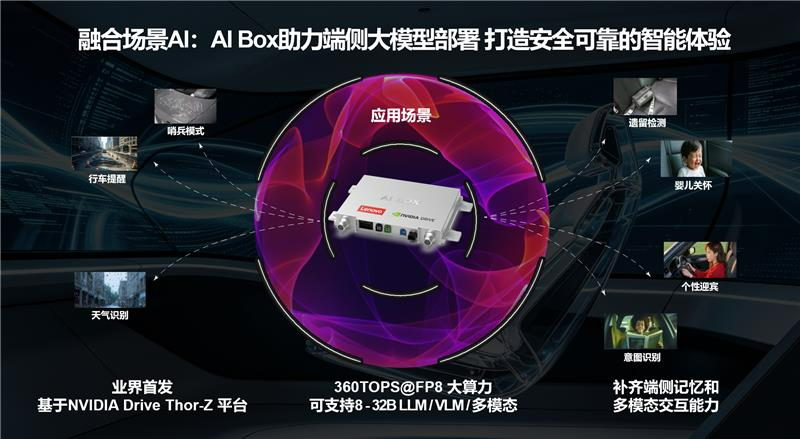
Image source: Lenovo
Regarding the long-term role of its automotive computing business, Xu Liang explicitly stated that automobiles are an indispensable physical carrier in Lenovo’s “Hybrid AI” strategy and a critical step in Lenovo’s evolution from “smart terminals” to “Physical AI.” Lenovo Automotive Computing not only provides vehicles with a “brain,” but also extends its automotive-grade computing capabilities to a broader range of physical terminals—such as robots, autonomous delivery vehicles, and sanitation vehicles. Lenovo Automotive Computing’s vision is to help transform automobiles from mere transportation tools into personal mobile AI hubs, positioning Lenovo as an infrastructure provider for the Physical AI era. Against the backdrop of Lenovo’s ambition to achieve $100 billion in revenue, the automotive computing business will serve as a brand-new growth engine for the Group, assuming the mission of bridging the virtual and physical worlds.
Conclusion: Translate the above content into English, output the translation result directly, without any explanation.From Car Computing 1.0 to 2.0, Lenovo has completed the leap from an explorer to a core player in the automotive industry in three years. At the 2026 Beijing Auto Show, the global launch of Auto AI Box, the release of the OneAI automotive intelligent platform, and the announcement of the plan to deploy 200,000-level autonomous vehicles with WeRide, together painted a complete picture of Lenovo's Car Computing 2.0: at the technical level, achieving the leap from computing power to an intelligent entity; at the mass production level, completing the full coverage from L2++ to L4; at the ecological level, building cross-terminal collaboration from cars to embodied intelligence. As Xuliang said, "What we are doing is not only to make cars smarter, but also to truly bring AI into the physical world and create value in real scenarios."
【Copyright and Disclaimer】The above information is collected and organized by PlastMatch. The copyright belongs to the original author. This article is reprinted for the purpose of providing more information, and it does not imply that PlastMatch endorses the views expressed in the article or guarantees its accuracy. If there are any errors in the source attribution or if your legitimate rights have been infringed, please contact us, and we will promptly correct or remove the content. If other media, websites, or individuals use the aforementioned content, they must clearly indicate the original source and origin of the work and assume legal responsibility on their own.
Most Popular
-

Continental Plans to Begin Sale of ContiTech in Early 2026
-

$4 Billion! Medtronic Makes Another Acquisition
-

BASF Delivers First Batch of Innovative Cathode Materials for Semi-Solid-State Batteries to Weilan New Energy
-

Why did a century-old european dental instrument giant relocate its manufacturing hub to china?
-
Profit and Revenue Growth Struggle to Conceal Debt Repayment Pressure; Success of Kingfa Sci & Tech's High-End Strategy Yet to Be Seen