



Has the New-Generation Aito M9 Gone Viral Again?
On May 27th, Shenzhen. The all-new AITO M9 powered by HarmonyOS officially launched.
The new vehicle has plenty of selling points, and an especially explosive remark came at the end of the launch event from Richard Yu, Huawei’s Executive Director, Chairman of the Products Investment Review Board, and Chairman of the Consumer BG. Yu said, “This is the most powerful SUV among all vehicles currently on the market on Earth, bar none.” He also made a point of adding, “I’m not being very modest here—you’re welcome to compare.”
After the previous-generation AITO M9 was launched, dozens of “9 Series” SUVs have already entered the market, and competitors are racing to catch up. Competition in this segment has intensified exponentially. Yet while many rivals are still imitating the design and technology of the previous M9, Yu Chengdong has declared that the new-generation M9 has once again opened up a lead of more than two years. This is not only a confident statement about AITO’s technological moat, but also, in a rather blunt way, a break from the long-standing tacit restraint of the premium automotive market.
The all-new AITO M9 has indeed arrived with tremendous momentum. According to official information, within one hour of its launch, firm orders for the new model exceeded 11,000 units. In the high-end SUV market at the RMB 500,000-and-above level, this figure is undoubtedly a pressure signal that will leave all competitors feeling suffocated.
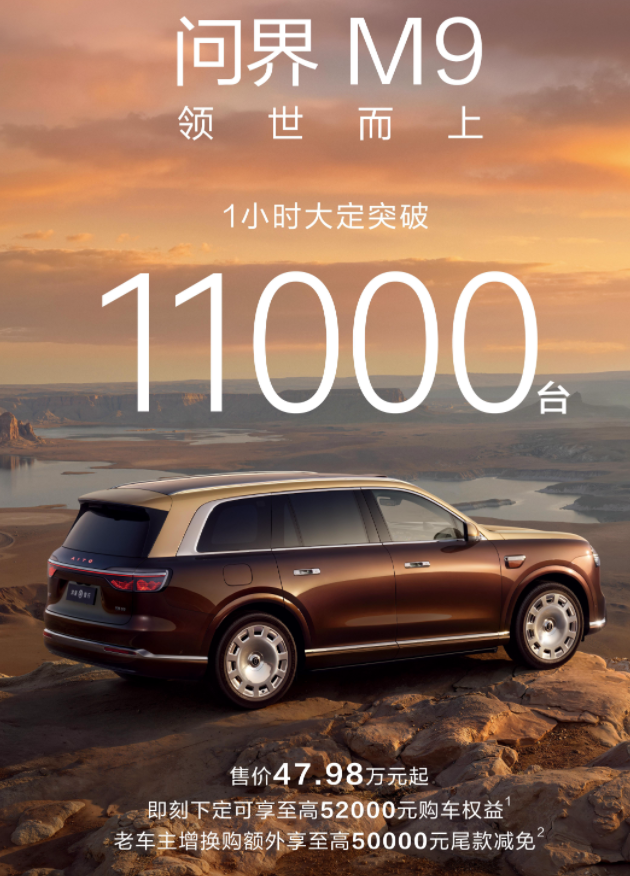
Image source: Harmony Intelligent Mobility
As the industry sinks deeper into fierce price wars and configuration-driven competition, the all-new AITO M9 emerges with 140 new technologies and more than 40 industry-first innovations. The competitive logic behind it is no longer a simple contest of range, acceleration, or screen count, but has evolved into a full-scale battle over end-to-end technological integration, deep user-ecosystem engagement, and generational leadership in product definition.
There is something new again.Generational Gap?
The core competitiveness of the all-new AITO M9 is first reflected in the systematic generational lead brought by Huawei’s technology ecosystem.
While most models are still focused on "single-point technological breakthroughs," such as faster charging speeds, higher computing power chips, or larger screen sizes, the AITO M9 leverages Huawei's HarmonyOS Intelligent Driving for full-process leadership, achieving vertical integration from the underlying architecture to the upper-layer experience.
This is not a simple overlay of configurations, but a revolutionary shift in underlying logic from passive response to active perception.
The most typical example lies in the holographic spatial perception network it has built. By integrating the StarFlash system, IR sensors, RGB sensors, DMS sensors, UWB sensors, and seat sensors, the new-generation AITO M9 breaks away from the rigid logic of traditional automotive cabins. This capability is completely different from simple voice wake-up or touch control; instead, it enables the vehicle to possess a preliminary ability to anticipate the environment and the user’s state.
For example, the proactive welcome system based on StarFlash technology can recognize users from a distance of 3 meters with 99% accuracy, allowing the vehicle to open its doors autonomously. The proactive lighting-following and proactive air-ventilation air-conditioning systems further transform comfort features from user-operated functions into system-provided services. This leap from a mere accumulation of features to full-stack perception is something that the vast majority of emerging EV makers currently find difficult to replicate, because it requires not only robust pre-installed hardware, but also the collaborative computing capabilities of multiple devices and sensors within the HarmonyOS ecosystem.
What Yu Chengdong calls “far ahead” is reflected precisely, in the dimension of cockpit intelligence, in this ecosystem experience closed loop that is difficult to measure with parameters.
In terms of intelligent driving, the new-generation AITO M9 is the first to feature Huawei’s Qiankun Intelligent Driving ADS 5.0 and the all-direction collision avoidance CAS 5.0 across the entire lineup.
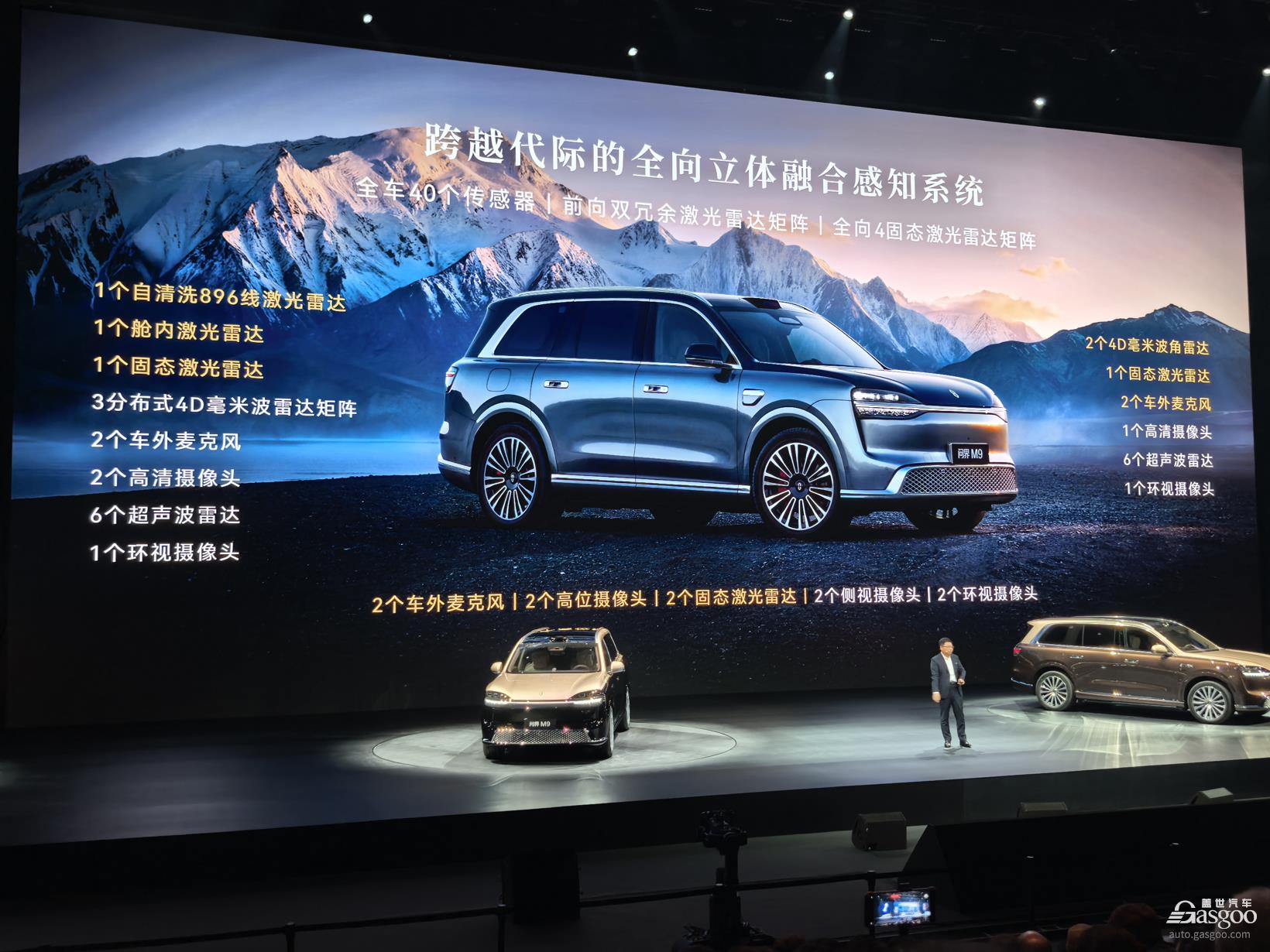
In the field of intelligent driving, Huawei’s current focus has shifted to the six-dimensional protection of “all-speed, all-directions, all-scenarios, all-targets, all-weather, and all-time domains.” Of particular note is the deployment of a front-facing dual-redundant LiDAR matrix and an omnidirectional 4-solid-state LiDAR matrix, which build a higher level of safety redundancy at the hardware level.
The new-generation AITO M9 is equipped with a total of 40 sensors, making its intention very clear: to fully prepare the hardware groundwork for Level 3 autonomous driving. During this window period before L3 is fully rolled out, uncompromising safety capabilities are of greater value to users than the so-called number of takeovers. According to official data, Harmony Intelligent Mobility’s active safety system has so far prevented more than 4.29 million potential collisions.
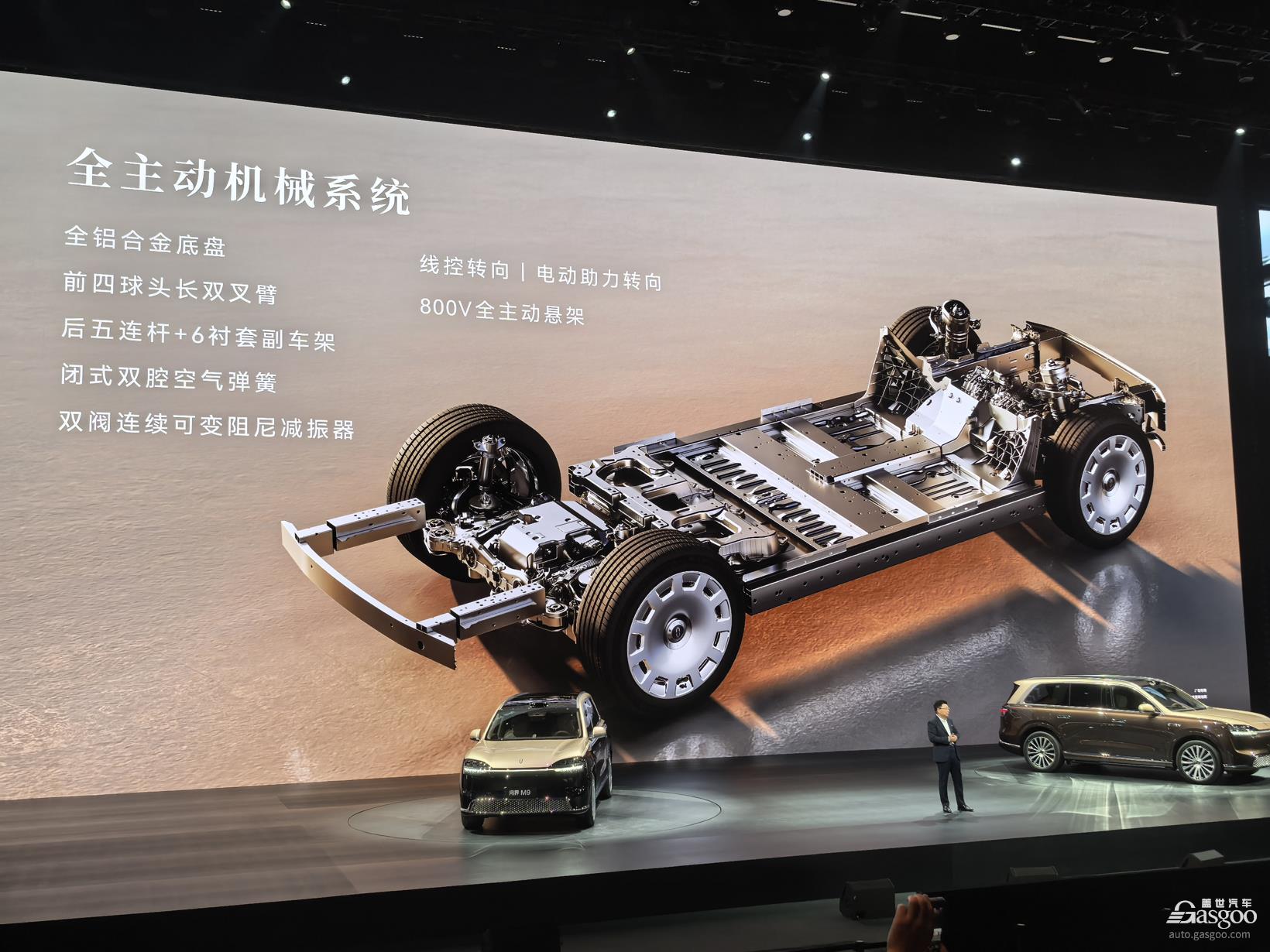
The powertrain and chassis domain likewise demonstrates a comparable depth of technological integration. The all-domain fusion architecture of the all-new Huawei Tuling Longxing platform enables autonomous judgment and control over everything from the 800V fully active suspension, dual-valve continuously variable damping shock absorbers, to the dual-chamber air suspension. Combined with ±8° rear-wheel steering and a minimum turning radius of 5.1 meters, the handling agility of this full-size SUV can be said to break through the limitations of physical dimensions.
Yu Chengdong’s confidence in boldly claiming it is “the strongest under 10 million yuan” in fact comes from these all-round breakthroughs in hardcore technology, rather than the stacking of individual specs.
500,000-levelSUVThe "New King" of the Market “Old Order”
The new-generation AITO M9’s price range of RMB 479,800 to RMB 659,800 precisely targets the core profit stronghold of traditional luxury brands.
Data shows that cumulative deliveries of the previous-generation AITO M9 have surpassed 285,000 units, ranking first in sales, user net promoter score, and quality performance in the SUV market priced above RMB 500,000. This fact has already proven that Chinese brands no longer rely on a value-for-money narrative to break into the high-end market, but have truly developed the ability to command a technology premium. Moreover, for HIMA, a very important point is that the AITO M9 has already earned its reputation through its historical performance. As Huawei enters the high-end automotive market with a full-stack technology approach, whether they are once-dominant traditional giants or leading new-energy upstarts, all are facing enormous market squeeze effects.
The launch of the all-new AITO M9 will further accelerate the evolution of this trend.
From the perspective of product positioning, the launch of the AITO M9 Ultimate Executive Extended Edition—with a body length of 5,402 mm and a wheelbase of 3,236 mm—directly targets million-yuan luxury full-size SUVs. Priced at RMB 659,800, it nevertheless delivers an intelligent experience at the configuration level that is difficult for traditional million-yuan fuel-powered vehicles to match: a 39-unit, 2,920W HUAWEI SOUND audio system, a 120-inch projection system, four zero-gravity seats, and an industry-first centrally supplied 18-point full-body massage system. This “dimensionality reduction” approach to product definition is fundamentally reshaping the purchase decision logic of high-end consumers—the historical legacy and brand halo that traditional brands have long relied on are being rapidly eroded by the tangible experiential differences enabled by Huawei’s full-stack technologies.
What’s even more noteworthy is AITO’s benefits designed for existing users. Owners of the 2024 AITO M9 who upgrade or trade in their vehicles can enjoy a final payment reduction of 50,000 yuan; owners of other model years of the M9 get a reduction of 30,000 yuan; and owners of other HarmonyOS Smart Vehicles receive a reduction of 20,000 yuan.
This strategy clearly demonstrates that AITO is building a highly sticky user ecosystem. In the high-end market, user repurchase rates and brand loyalty are core indicators for measuring long-term competitiveness. By offering highly attractive trade-in benefits to existing owners, AITO is not only maintaining relationships with its current users but also sending a signal: those who chose AITO early on will have their trust rewarded with tangible benefits. This approach of treating users as valuable assets mirrors the high stickiness logic of the Apple ecosystem and carries far greater long-term strategic value than simple price discounts.
Harmony Intelligent Mobility has now built a five-brand matrix comprising AITO, LUXEED, STELATO, MAEXTRO, and SAIC, with cumulative deliveries exceeding 1.39 million units. Since 2026, cumulative deliveries have reached 190,000 units, up 27% year on year. Within this system, the AITO M9 serves as the technology flagship and brand beacon. Its success contributes not only to sales volume, but more importantly establishes a high-end intelligent positioning anchor for the entire Harmony Intelligent Mobility ecosystem. As consumers recognize the 140 innovations and pricing of the new M9, the premium power of lower-positioned models such as the M8, M7, and M5 will also be naturally extended.
This top-down transmission of brand momentum may well be the underlying logic that most unnerves competitors when Richard Yu claims they are “more than two years ahead.”
Segmented marketFuture Competition Trends?
The launch of the all-new AITO M9 marks the official entry of the smart electric vehicle competition into an era of ecosystem-wide rivalry.
The so-called system warfare refers to the competition of individual vehicle models no longer being determined by the parameters of the models themselves, but rather by the depth of the technological ecosystem behind them, the speed of data iteration, and the operational capability for the entire lifecycle value of users. Yu Chengdong defines the AITO M9 as "the strongest SUV on Earth." On the surface, this is a highly controversial slogan, but what it reflects is Huawei's ambition to reshape the rules of the automotive industry through systematic and systemic capabilities.
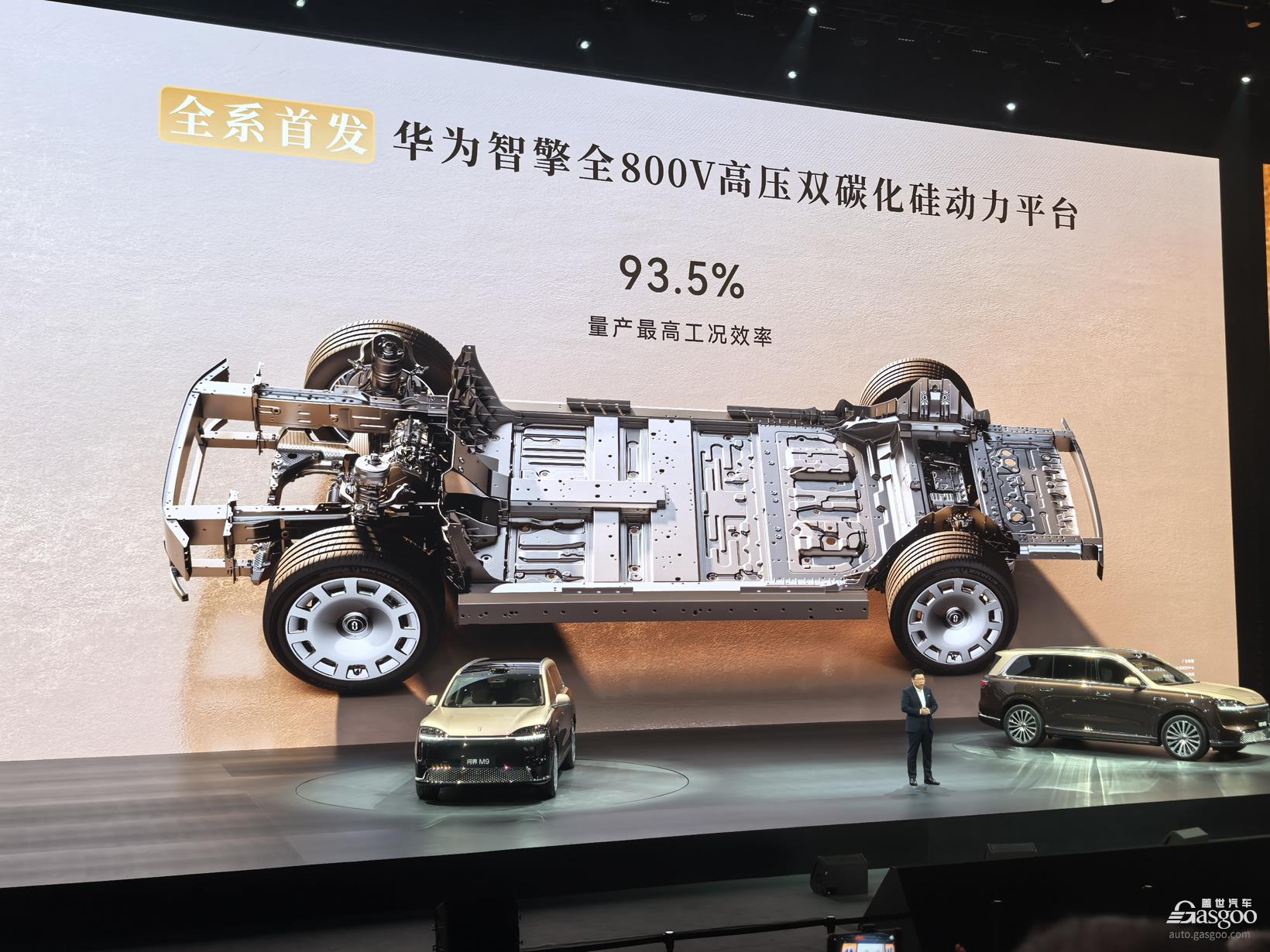
At the level of the technology ecosystem, Huawei’s Harmony Intelligent Mobility Alliance has already demonstrated a distinctive flywheel effect. The AITO M9’s Huawei ALPS Healthy Cabin 3.0, Huawei Xinghe Communication 2.0, and Huawei’s all-800V high-voltage dual-silicon-carbide power platform are not isolated technical modules; rather, they are a natural extension of Huawei’s all-scenario smart ecosystem—HarmonyOS smart home, HarmonyOS office, audio-visual entertainment, and sports and health—into the mobility scenario. This means that when users choose the AITO M9, they are choosing not just a car, but entry into a full-scenario lifestyle covered by Huawei’s device and service ecosystem.
This seamless cross-device, cross-scenario experience is a core competitive advantage that is currently difficult for any traditional automaker or independent new EV maker to offer. When Richard Yu says, “Everyone is welcome to compare,” he is in effect inviting all competitors onto an ecosystem battlefield that Huawei has long since laid out—where isolated technological advantages can be easily replicated, but ecosystem-level synergy requires a long period of development and a massive user base.
In just about two years, the new-generation AITO M9 has achieved 140 brand-new technological upgrades compared with its predecessor. Such a pace of iteration is only possible through the dual drive of a highly integrated R&D system and massive amounts of real-world driving data.
In the future, competition in the high-end automotive market will no longer be about who launches a feature first, but about who can more quickly turn laboratory technologies into user-perceived value through OTA updates.
Of course, the new-generation AITO M9 is not without its challenges. As an increasing number of traditional luxury brands accelerate their electrification transition, and more domestic new energy brands introduce additional competing models in the same segment, competition in the price range above 500,000 yuan will become increasingly intense.
Moreover, many high-end features on the new models still require optional packages. How to maintain a competitive starting price while making customers perceive the value of being fully equipped at the entry level is a challenge Wenjie still needs to address.
The deeper issue is that when Richard Yu pushes the product positioning to the extreme height of being the “strongest on Earth,” consumers’ expectations for new products will also be raised to an unprecedented level. Whether Huawei’s pace of technological innovation and iteration can continue to meet such exceptionally high market expectations will directly determine the ceiling of the AITO brand’s long-term competitiveness.
Summary:
The launch of the all-new AITO M9 is not only a vertical product upgrade, but also a landmark event marking the transformation of China’s intelligent electric vehicle industry from a follower to a shaper of the industry.
The new car, with more than 140 technological innovations and a market response of 11,000 orders in one hour, clearly sends a signal: in the new era of automobiles defined by software, driven by ecosystems, and iterated by data, Chinese technological strength represented by Huawei has already acquired the capability to redefine high-end luxury cars.
Yu Chengdong’s high-profile declaration may seem insufficiently modest to traditional automotive veterans, but when the new-generation AITO M9 gains a firm foothold in the market with a string of hardcore technical specs such as six LiDAR units, 903 horsepower, and 0–100 km/h acceleration in 3.99 seconds, the claim of being “the strongest SUV on Earth” may truly evolve from a controversial slogan into a market-validated judgment. For the entire industry, this is both an inspiration and a warning: the moats of the old era are being filled in, and the war of the new era has already begun in full.
【Copyright and Disclaimer】The above information is collected and organized by PlastMatch. The copyright belongs to the original author. This article is reprinted for the purpose of providing more information, and it does not imply that PlastMatch endorses the views expressed in the article or guarantees its accuracy. If there are any errors in the source attribution or if your legitimate rights have been infringed, please contact us, and we will promptly correct or remove the content. If other media, websites, or individuals use the aforementioned content, they must clearly indicate the original source and origin of the work and assume legal responsibility on their own.
Most Popular
-

Layoffs, Divestments, Plant Closures While Pouring Billions: BASF Undergoes Major Transformation!
-

Ascend Adipic Acid Hit By Force Majeure, Market Expects Supply Resumption In Mid-September
-

Raw Material Supply Shortage! INEOS Phenol Declares Force Majeure on Phenol and Acetone Businesses
-
South Korea initiates anti-dumping investigation against Chinese PVC suspension resin! The target is Tianjin Bohua and Wanhua Chemical. How to break through?
-

Sixth national procurement set to be implemented: A “Reshuffling” Moment for the $10-Billion Medical Device Market