



Huntsman Introduces “War Surcharge” Amid Shipping Disruption and Soaring Energy Costs, Global MDI Prices Continue to Rise
On March 5, 2026, Huntsman announced that due to the sharp deterioration of the situation in the Middle East, leading to a surge in European natural gas prices, it will...MDIProduction costs have significantly increased, and therefore a natural gas surcharge of EUR 200 per ton will be applied to all MDI products sold to the Europe, Middle East, and India (EMEI) region.
This is not Huntsman's first price increase this year. On February 17, it raised MDI prices by $260/ton and polyether prices by $110/ton in the U.S. market. Earlier, on December 2, 2025, Huntsman had already increased MDI prices by €350/ton in Europe, Africa, and the Middle East.
Meanwhile, Dow announced on March 5 an urgent price increase for its MDI products in Europe and the IMEA region (India, Middle East, and Africa), with increases of 200 euros per ton and 300 dollars per ton respectively. Dow clearly stated in the notice that the significant rise in energy, raw material, and logistics costs due to the turmoil in the Middle East was the direct cause of this price adjustment.
Since the fourth quarter of 2025, industry leaders such as Hexion, BASF, Dow, and Wanhua Chemical have continuously issued price increase notices, with the price hikes covering most regions including Southeast Asia, Europe, the Middle East, and Africa. The global polyurethane core raw material MDI market has remained heated, according to...Buy chemicals and plasticsAccording to monitoring by the research institute, the domestic price of polymeric MDI has risen to RMB 15,200–15,500 per ton.
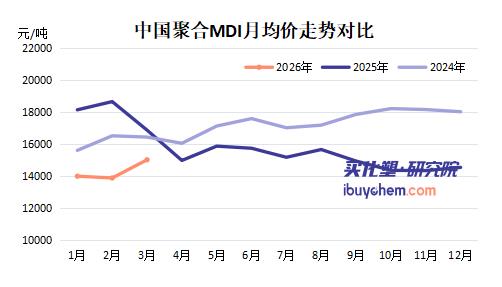
Huntsman's additional natural gas surcharge this time is the direct trigger. The sharp escalation of the Middle East situation has triggered a surge in European energy prices.
As the core energy cost in MDI production, fluctuations in natural gas prices directly determine the cost floor of European chemical plants. Although companies have alleviated the pressure through internal optimization and process adjustments, they still cannot fully absorb the cost increases, and thus have to pass on the costs to downstream customers through surcharges. Huntsman has clearly stated that the surcharge will be implemented immediately within the scope allowed by contracts, and may be adjusted dynamically in the future depending on geopolitical situations, indicating that the cost pressure on the MDI market in Europe may still rise.
From the perspective of industry patterns, the period around February each year is traditionally a time for polyurethane price increases. As major consumer markets in Southeast Asia, China, and elsewhere enter the Spring Festival holiday, coupled with the need for stockpiling in the Middle East during Ramadan, the concentrated replenishment by downstream sectors quickly depletes manufacturers' inventories, providing a favorable window for price hikes. What makes 2026 unique is the triple pressure of geopolitical conflicts, energy shortages, and the paralysis of shipping, turning the traditional peak season price increase into a global cost crisis.
Freight rates on Middle East routes have surged, with spot rates jumping by $3,000 per container, and multiple shipping lines imposing a "war surcharge."
Since February 28, the US and Israel carried out military strikes against Iran, followed by Iran's threat to block the Strait of Hormuz, and the Yemeni Houthi rebels announced the resumption of attacks on Red Sea merchant ships, pushing the two global shipping "gates" of the Strait of Hormuz and the Red Sea route to the brink of paralysis.
The Strait of Hormuz is the sole lifeline for the export of oil and gas resources from the Persian Gulf, through which approximately one-fifth of the world's oil trade passes; meanwhile, the Red Sea shipping route is a vital maritime corridor connecting Asia and Europe, handling about 12% of global seaborne cargo. Faced with rapidly escalating geopolitical risks, major global shipping lines have swiftly activated emergency risk-mitigation measures, either suspending Middle East shipping operations or imposing surcharges.
The world's largest container shipping company, Mediterranean Shipping Company (MSC), headquartered in Switzerland, has announced the suspension of all booking services to the Middle East and Salalah port. The Danish shipping giant Maersk has suspended passage through the Strait of Hormuz, with some routes rerouted via the Cape of Good Hope in Africa. This means that cargo destined for the UAE, Oman, Qatar, and other countries will face serious shipping delays.
This has been accompanied by a sharp surge in freight rates, with French carrier CMA CGM imposing an Emergency Conflict Surcharge (ECS) of up to USD 2,000–3,000 per container on affected regions, and Germany’s Hapag-Lloyd raising its War Risk Surcharge (WRS) to USD 3,500 per TEU. The sudden spike in shipping costs is directly undermining the stability of global supply chains and further driving up cross-border logistics expenses for chemical products.
The Middle East is not only a key transportation route but also an important energy supply region, and the tense situation has directly driven up natural gas prices in Europe. For downstream industries, MDI, as a core raw material in the fields of home appliances, construction, and automobiles, continuous price increases will directly be passed on to the cost of end products. The manufacturing sectors in Europe, the Middle East, and other regions are already under pressure from high energy costs, and another round of raw material price hikes may further squeeze profit margins, with some small and medium-sized manufacturers facing the risk of reduced production or shutdowns. In its announcement, Huntsman candidly admitted that although it is actively taking internal measures to alleviate the pressure, the impact of rising costs can no longer be fully absorbed.
Looking ahead, the uncertainty of the Middle East situation remains the biggest variable. If the conflict continues to escalate, energy and shipping costs are likely to rise further, and companies like Huntsman may not rule out increasing surcharges and product prices. Meanwhile, as downstream demand gradually recovers following the holiday in Southeast Asia and China, it will provide new support for MDI prices.
【Copyright and Disclaimer】The above information is collected and organized by PlastMatch. The copyright belongs to the original author. This article is reprinted for the purpose of providing more information, and it does not imply that PlastMatch endorses the views expressed in the article or guarantees its accuracy. If there are any errors in the source attribution or if your legitimate rights have been infringed, please contact us, and we will promptly correct or remove the content. If other media, websites, or individuals use the aforementioned content, they must clearly indicate the original source and origin of the work and assume legal responsibility on their own.
Most Popular
-
A Look at the Material Suppliers Behind SpaceX
-
Government's Triple Action, Enterprises' Three Arrows in Five Days, Semiconductor Reshuffle! What Signal Does Japan's Chemical Industry Release?
-
Fire breaks out at jiangsu meiside!
-
Name change without tax change: POM Anti-Dumping Duty Rate Inheritance Implemented
-
Ethylene: Production Capacity Accelerates Expansion, Global Industry Landscape Is Being Reshaped