



Key to masterbatch quality: Mechanism and Selection Logic of Dispersants
As polymer materials technology continues to evolve and masterbatch applications expand into high-end fields, performance standards are rising accordingly. Among these, the uniform dispersion of fillers, as a core indicator for measuring the technical level of masterbatch production and ensuring application performance, has become a key focus for improving masterbatch quality and meeting the needs of high-end applications.
In the actual production process of masterbatch, there is a prominent industry pain point: most inorganic fillers (such as calcium carbonate, talc, carbon black, etc.) are hydrophilic, while polymer carriers like polyethylene and polypropylene are mostly hydrophobic. There is an inherent compatibility difference between the two, which easily leads to filler agglomeration. Selecting an appropriate dispersant can effectively improve the compatibility between them, alleviate agglomeration issues, and enhance the uniformity of the masterbatch and product quality.
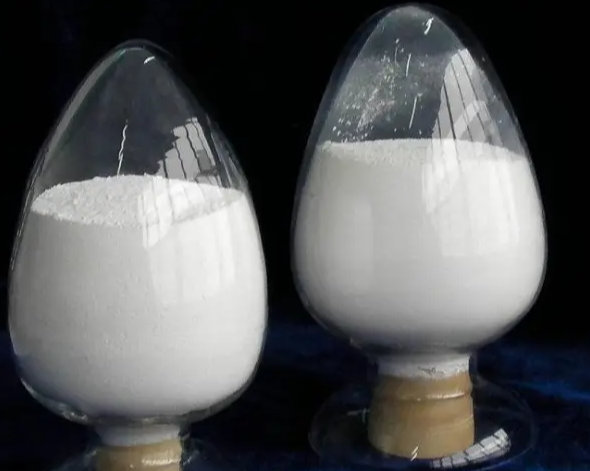
Mechanism of Action of Dispersants
· 1Wetting stage
The dispersant combines with the surface of the filler through its own hydrophilic groups, replacing the water molecules on the filler surface, thereby reducing the interfacial tension between the filler and the polymer matrix. This allows the matrix to fully wet the filler particles, laying the foundation for subsequent mixing and dispersion.
· 2Dispersion Stage
During the process of melt blending and mechanical shearing, the hydrophobic groups of the dispersant are well compatible with the polymer matrix, breaking apart the agglomerated filler particles into fine individual particles and evenly dispersing them into the matrix system, ensuring uniform distribution of the filler within the masterbatch.
· 3Stable stage
The dispersant adsorbs onto the surface of the dispersed filler particles, forming a protective layer that prevents fine particles from re-agglomerating, thereby ensuring that the masterbatch maintains a stable dispersion state during subsequent processing and storage and guaranteeing uniform performance.
Not all additives with dispersing functions are suitable for every masterbatch production scenario. A dispersant compatible with the corresponding type of masterbatch must meet three core requirements:
First, compatibility.It must also be highly compatible with both the filler and the polymer carrier to prevent issues such as stratification and precipitation during preparation, which could affect the quality of the masterbatch.
2. Decentralized efficiencyIt can achieve good dispersion at a relatively low addition level (typically 0.5%-3% of the total masterbatch), thereby reducing costs.
Third is stability.In the high-temperature, high-shear environment of masterbatch processing, it does not decompose or volatilize, and can maintain dispersion effects for a long time.
Selection of dispersants for different masterbatches
· 1Filler Masterbatch
Filler masterbatch production primarily uses inorganic fillers such as calcium carbonate and talc, with the core needs being cost reduction and improved processing performance. The requirements for dispersants focus mainly on high efficiency and low cost.
It is recommended to select fatty-acid and stearate dispersants. These dispersants are low-cost and offer moderate dispersion efficiency, effectively addressing filler agglomeration, and they exhibit good compatibility with polyolefin carriers, making them suitable for large-scale production.
· 2Color masterbatch
The core requirements of masterbatch are uniform color, no color spots, and minimal color difference. The choice of dispersant directly affects the dispersion of the pigment powder and the color performance.
It is recommended to choose polyolefin waxes and amide-based dispersants. These types of dispersants have excellent compatibility with color pigments and polymer carriers, allowing for the uniform dispersion of color pigments into fine particles, which helps to avoid color spots and streaks. Additionally, they can enhance the color migration stability of the masterbatch, ensuring color consistency in the end products.
· 3Functional Masterbatch
For functional masterbatches (such as flame-retardant, antistatic, and antibacterial masterbatches), the core requirement is to achieve specific functionalities, and the selection of dispersants must take into account both dispersion performance and functional synergy.
For example, in flame-retardant masterbatches, the dispersant must have good compatibility with flame retardants (such as magnesium hydroxide and aluminum hydroxide) to avoid affecting the flame-retardant performance. In antistatic masterbatches, the dispersant needs to work synergistically with the antistatic agent, ensuring uniform dispersion without compromising antistatic performance. It is recommended to choose specialized dispersants, or polyether- or polyester-based dispersants with good compatibility with functional additives.
In fact, masterbatch dispersion is not merely a simple application of dispersants, but a systematic approach encompassing dispersant selection, formulation optimization, and process adaptation. Each link complements the others and is indispensable, working together to help solve the core challenges in production.
In the practical implementation of such systematic dispersion processes, Suzhou Boli has been deeply engaged in the chemical fiber masterbatch and advanced functional modified materials industry for many years. Leveraging its leading core technologies in dispersion, phase inversion, formulation, film forming, spinning, foaming, and other areas, the company has established a mature masterbatch process system. It can prepare functional masterbatches and slurries using various functional additives and functional powders. Its products are widely used in fiber, film, plastics, coatings, and other fields.
【Copyright and Disclaimer】The above information is collected and organized by PlastMatch. The copyright belongs to the original author. This article is reprinted for the purpose of providing more information, and it does not imply that PlastMatch endorses the views expressed in the article or guarantees its accuracy. If there are any errors in the source attribution or if your legitimate rights have been infringed, please contact us, and we will promptly correct or remove the content. If other media, websites, or individuals use the aforementioned content, they must clearly indicate the original source and origin of the work and assume legal responsibility on their own.
Most Popular
-

Layoffs, Divestments, Plant Closures While Pouring Billions: BASF Undergoes Major Transformation!
-
Ascend Adipic Acid Hit By Force Majeure, Market Expects Supply Resumption In Mid-September
-

Raw Material Supply Shortage! INEOS Phenol Declares Force Majeure on Phenol and Acetone Businesses
-
South Korea initiates anti-dumping investigation against Chinese PVC suspension resin! The target is Tianjin Bohua and Wanhua Chemical. How to break through?
-

Sixth national procurement set to be implemented: A “Reshuffling” Moment for the $10-Billion Medical Device Market