



New Energy Vehicle Executives Join Emerging Powerhouses
Recently, OpenClaw has caused a frenzy in the AI field. In the embodied intelligence sector, two major investment and financing deals have quietly stirred up waves.
The embodied intelligence company, Zijian Power, officially announced to the public. Founded in July last year, it has completed five rounds of financing in less than half a year, with a cumulative amount as high as 2 billion RMB, and its post-investment valuation has exceeded 1 billion US dollars, becoming the youngest unicorn in the track. At the same time, another highly anticipated embodied intelligence startup was also reported to have completed its seed round of financing and is about to make its official debut.
In addition to the close official announcement times, these two companies share another striking similarity: their core executives all come from Li Auto.
Amid discussions about the "Li Auto" cluster rushing into the embodied intelligence sector, there's another piece of news from within Li Auto: Qin Dong, the head of the SoC department, has also left and chosen to join a startup.
In the past six months since the second half of 2025, eight core technical executives from Li Auto have successively left the company, nearly all of them heading to startups in the embodied intelligence field. Why has the embodied intelligence sector seen a concentration of entrepreneurs from the "Li Auto camp"? And why can't Li Auto—or the intelligent driving industry as a whole—retain its core talent?
01Internal pressure leads to external overflow; ideal executives leave to start their own businesses.
The pressure on Li Auto is evident.
In 2025, with a large number of competitors entering the extended-range vehicle market, the six-seater market is besieged by various brands and models at all price points. Against this backdrop, Li Auto's new car sales reached 405,900 units, a year-on-year decline of 18%. More critically, a loss of 624 million yuan in the fourth quarter fueled pessimism from the outside.
During the interim period when pure electric models are being developed and the extended-range series awaits updates, embodied intelligence has become Li Auto’s key focus. At the beginning of 2026, Li Auto held an impromptu online all-hands meeting. Over the course of nearly two hours, Li Xiang did not dwell extensively on existing vehicle models or sales figures; instead, he devoted much of the time to analyzing and sharing insights on AI industry trends.
At the meeting, he emphasized that this year is the final year for all companies aspiring to become AI industry leaders to “get on board”; Level 4 (L4) autonomous driving will definitely be deployed no later than 2028; globally, no more than three companies will ultimately be capable of building a full-stack business spanning foundational large models, chips, embodied intelligence, and operating systems—and Li Auto will strive vigorously to secure one of these three positions. Li Xiang also specifically stressed that Li Auto will definitely develop humanoid robots and will launch them as soon as possible.
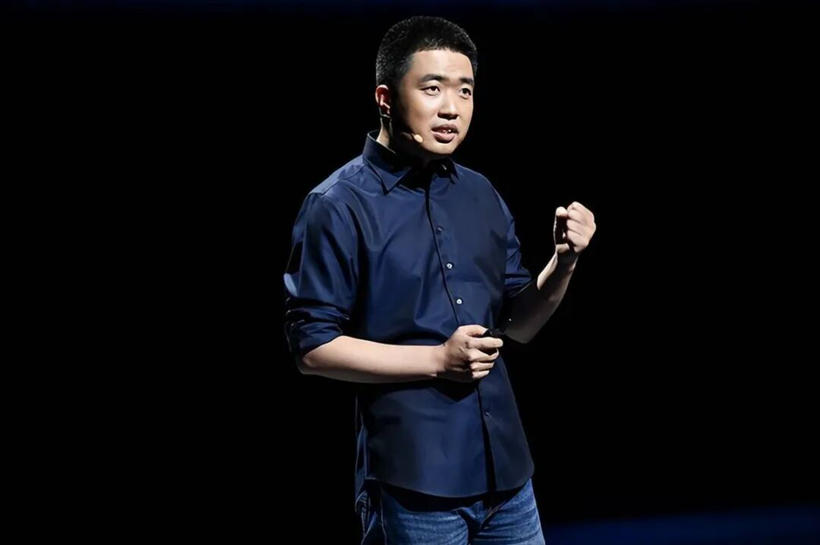
This statement is both a signal to the outside world and a way to put pressure on the inside. Li Xiang's style of doing things has always been clear. Compared to Li Bin, who has a sociology background and focuses more on long-term ecological layout, Li Xiang places greater emphasis on the implementation of ideas and pursues the ultimate R&D efficiency.
After Lang Xianpeng’s departure, some media outlets dug up a clip from his 2024 interview: “I feel he (Li Xiang) wants to fire me several times a month, because he basically tells me once a week, ‘Lang Xianpeng, just quit.’” He also recalled Li Xiang’s statement: “If intelligent driving does not show significant progress and fail to secure a top-tier position by the second half of the year, then you, as the person in charge, will no longer be needed.”
Judging from the context, Lang Xianpeng’s remarks were not hinting at his own departure; rather, they were meant to highlight the immense work pressure he, as a core executive, has been under—the root of which likely lies in Li Xiang’s relentless pursuit of efficiency.
Looking back from the present perspective, Li Xiang’s foresight and execution capability—whether in judging the automotive industry’s development trends or capturing the AI and embodied intelligence booms—have both been proven remarkably accurate. However, under the dual pressures of his ambition to rank among the world’s top three automakers and the critical 2026 deadline, his demands for efficiency will inevitably become even more stringent. Within Li Auto’s highly goal-oriented and execution-driven corporate structure, this top-down pressure is first transmitted to the heads of all core departments.
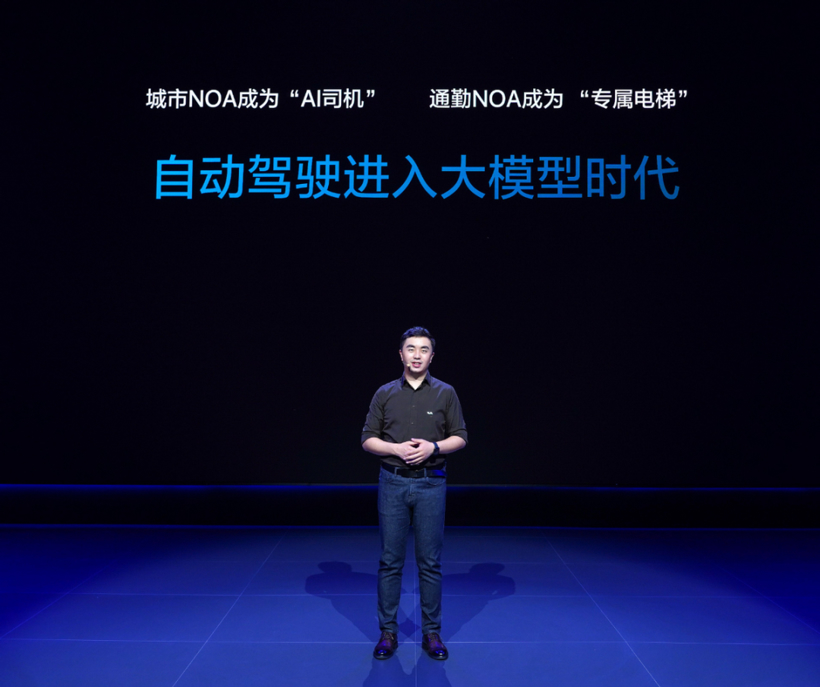
Moreover, as Li Xiang stated, the ultimate form of automobiles can be described as wheeled robots, sharing a high degree of technical logic and R&D methodology. Amid the current surge in embodied intelligence, the executive team emerging from Li Auto is not theoretical armchair strategists, but pragmatic practitioners with solid R&D capabilities and proven experience in mass production.
Under the combined influence of internal and external factors, the emergence of the "Li Xiang system" is not surprising.
02Riding the wave of industry trends, intelligent driving talents migrate across domains.
Notably, the flow of core talent to the embodied intelligence sector is not an exception for Li Auto, but a common trend across the intelligent driving industry. Driven by industry trends, talent in the intelligent driving field is accelerating its migration to the embodied intelligence industry.
For example, Guo Yandong, former Chief Scientist of XPeng Motors, joined the early-stage XPeng Motors in 2018—riding the wave of the new-energy vehicle boom—after leaving Microsoft. He later worked at OPPO before founding Zhi Ping Fang, a company focused on humanoid robots and embodied AI solutions. Additionally, Liu Fang, former Head of Autonomous Driving Product Technology at Xiaomi Automobile; Chen Yilun, former Chief Scientist of Huawei’s Intelligent Vehicle Solution BU; and executives formerly from companies such as WeRide, Qianli Intelligent Driving, and Momenta, have all left their positions to start ventures in the embodied intelligence field.
Due to regulatory restrictions and intensifying competition in the, development opportunities for talent in the intelligent driving sector are becoming increasingly constrained. In contrast, the humanoid robotics industry is still in its infancy, sharing highly overlapping technologies with intelligent driving, yet offering broader prospects for innovation and greater enthusiasm from capital. Therefore, cross-domain talent mobility is virtually inevitable.
However, for the automotive industry, such cross-domain talent competition may not be a good thing. In the current highly competitive environment, the automotive industry is in a critical stage of elimination, and intelligence has become the core criterion for determining success or failure. The loss of core talent is undoubtedly a blow to the industry's competitiveness. For companies, the loss of talent they have carefully cultivated is also an intangible loss.
However, there is another side to the coin. The mobility of talent objectively creates more growth opportunities for young people, and the infusion of fresh blood helps invigorate organizations. More importantly, breakthroughs in the AI and embodied intelligence industries can also feed back into the automotive industry.
It can be said that the flow of intelligent driving talents into the field of embodied intelligence is an inevitable outcome of technological iteration and industry development. As embodied intelligence becomes a core trend, and the boundaries between automotive and robotics technologies blur, talent cross-over is both an individual choice of opportunity and a process of industry resource optimization and technological integration. The rise of the Li Auto group reflects the solid talent reserve in China's intelligent technology sector, and also signals that the deep integration of the two fields will open up a new technological landscape.
【Copyright and Disclaimer】The above information is collected and organized by PlastMatch. The copyright belongs to the original author. This article is reprinted for the purpose of providing more information, and it does not imply that PlastMatch endorses the views expressed in the article or guarantees its accuracy. If there are any errors in the source attribution or if your legitimate rights have been infringed, please contact us, and we will promptly correct or remove the content. If other media, websites, or individuals use the aforementioned content, they must clearly indicate the original source and origin of the work and assume legal responsibility on their own.
Most Popular
-

Layoffs, Divestments, Plant Closures While Pouring Billions: BASF Undergoes Major Transformation!
-

Ascend Adipic Acid Hit By Force Majeure, Market Expects Supply Resumption In Mid-September
-

Raw Material Supply Shortage! INEOS Phenol Declares Force Majeure on Phenol and Acetone Businesses
-
South Korea initiates anti-dumping investigation against Chinese PVC suspension resin! The target is Tianjin Bohua and Wanhua Chemical. How to break through?
-

Sixth national procurement set to be implemented: A “Reshuffling” Moment for the $10-Billion Medical Device Market