



North America Polystyrene (PS) Recycling Infrastructure Continues To Expand
The Polystyrene Recycling Alliance (PSRA) has released a special research report, clearly stating that polystyrene recycling has transitioned from a future concept to a reality. Currently, a mature recycling infrastructure, mass production recycling processes, and a compliant and stable downstream resource market have been established across North America.
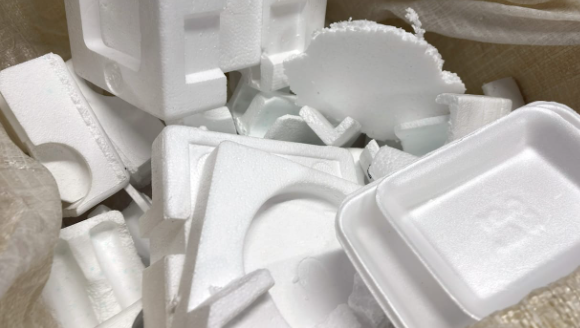
This report, compiled based on research data from the third-party organization Resource Recycling Systems (RRS) and demonstration projects implemented across various regions, provides a comprehensive review of the current state of polystyrene recycling in North America in 2026. It covers two major categories—expanded polystyrene (EPS) transport packaging and rigid polystyrene (HIPS/GPPS) packaging—and is supported by detailed data spanning collection and transportation systems, recycling technologies, compliant end-use material companies, and investment trends across the entire industry chain.
Polystyrene Recycling Alliance Chairman Justin Riney said, “This report is grounded in real-world data, not industry aspirations. Polystyrene recycling is no longer a long-term development goal; mature, operational systems are already in place in many parts of the United States, Canada, and Latin America, supported by proven technologies and established end markets. Stakeholders across the value chain need to consider how to build on existing evidence-based successes to enable polystyrene to deliver its full value in the plastics circular economy.”
The recycling rate is steadily increasing, and the coverage of recycling channels is expanding.
The report presents multiple key data points confirming the significant effectiveness of polystyrene resource recycling. According to independent third-party verification, the recycling rate of EPS transport packaging in North America has reached 31%, and more than 100 million Americans have convenient access to source-separated recycling for at least one type of polystyrene product. Currently, three industrially mature processes—mechanical recycling, dissolution recycling, and chemical recycling—can all enable the resource recovery of polystyrene.
This survey represents the most comprehensive assessment to date of polystyrene downstream recycling and resource recovery companies across the United States and Canada. Commissioned by PSRA and carried out by RRS, the survey found that there are 81 companies and 119 facilities across North America receiving post-consumer EPS transport packaging. In addition, 45 companies process rigid polystyrene waste, with operations spanning more than 20 U.S. states and four Canadian provinces. The recycled material can be used again in new EPS packaging, food-grade containers, building materials, consumer goods, and other applications, and demand for recycled feedstock remains strong.
Mature and replicable projects to support the expansion of recycling scale.
The report lists a number of PSRA-supported projects that have been implemented and can serve as models for replication and promotion in other regions to improve polystyrene recycling networks. These include: on Earth Day 2026, the Alliance partnered with Nashville’s Solid Waste Management Department to install a Foam Cycle foam densification unit at the East Nashville Convenience Recycling Center; a statewide polystyrene recycling project was launched through Colorado’s circular transportation network, while Denver and Baltimore partnered with Brave Industries on all-category polystyrene recycling; in Mexico City, the Alliance worked with R3vira to double the number of short-distance urban door-to-door collection points, and, through the Mexico Plastics Pact, partnered with Danone, Lala, and Yakult to launch a dedicated HIPS dairy packaging recycling project.
As Oregon, Colorado, and other regions continue to advance Extended Producer Responsibility (EPR) legislation, PSRA advocates that policymakers set fee standards based on real-world industry data and use EPR policies to further support the development of the already scaled polystyrene recycling industry.
Riney summarized: "The facts have proven that polystyrene is not a material that needs to be eliminated; it contains real circular economy value, which is gradually being realized through investments and industry collaborations."
【Copyright and Disclaimer】This article is the property of PlastMatch. For business cooperation, media interviews, article reprints, or suggestions, please call the PlastMatch customer service hotline at +86-18030158354 or via email at service@zhuansushijie.com. The information and data provided by PlastMatch are for reference only and do not constitute direct advice for client decision-making. Any decisions made by clients based on such information and data, and all resulting direct or indirect losses and legal consequences, shall be borne by the clients themselves and are unrelated to PlastMatch. Unauthorized reprinting is strictly prohibited.
Most Popular
-
Layoffs, Divestments, Plant Closures While Pouring Billions: BASF Undergoes Major Transformation!
-
Ascend Adipic Acid Hit By Force Majeure, Market Expects Supply Resumption In Mid-September
-

Raw Material Supply Shortage! INEOS Phenol Declares Force Majeure on Phenol and Acetone Businesses
-
South Korea initiates anti-dumping investigation against Chinese PVC suspension resin! The target is Tianjin Bohua and Wanhua Chemical. How to break through?
-

Sixth national procurement set to be implemented: A “Reshuffling” Moment for the $10-Billion Medical Device Market