



Progress in flame retardant modification technology of pa66
From 2024 to 2026, flame-retardant modification technology for PA66 is undergoing a critical transition from “single-function additives” to “multifunctional synergistic, intelligent response” systems.
The core strategy of current research is to address the trade-offs among mechanical properties, processability, and long-term stability while ensuring excellent flame retardancy through innovative molecular-level design. The main technological advances are as follows:
Comparison of the Three Major Technical Routes
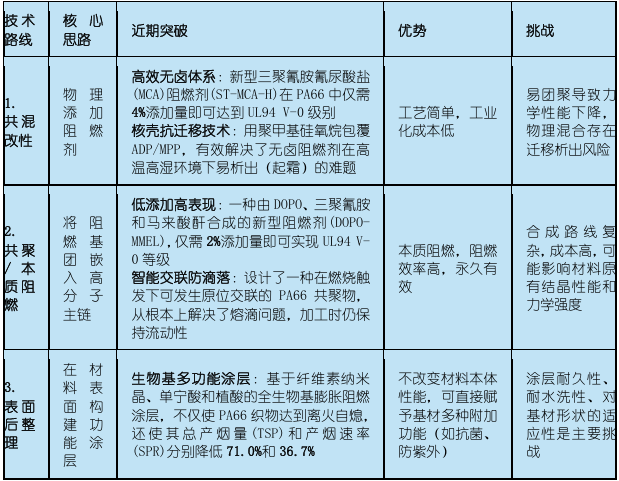
Frontier Progress: Multifunctional Synergy and Performance Breakthroughs
Biobased Nano-Hybrid Synergy (Representative Case: DCZ)In a study published in 2026, researchers prepared a cellulose nanocrystal (CNC)-based bio-nanohybrid (DCZ).With only DCZ added, the limiting oxygen index (LOI) of the PA66 composite increased to31.3%the peak heat release rate (pHRR) decreased by 65.3%, and the tensile strength was further improved.61.9%。
Multifunctional integrated surface coatingIn a study conducted at the end of 2024, a fully bio-based intumescent flame-retardant (IFR) nanocellulose coating was constructed on the surface of PA66 fabric, reducing the total smoke production and smoke production rate of the PA66 fabric by 71.0% and 36.7%, respectively.
High-Performance Nanocomposite Materials (Representative Case: CNC/A/P)A 2025 study developed a flame retardant called CNC/A/P, which, with only 15% addition, can increase the LOI of PA66 from 21.6% to an astonishing46.7%and significantly improved the thermal protection performance.
Summary and Outlook
The current core trend in PA66 flame-retardant modification technology can be summarized as "Efficient, green, multifunctional, stable”。
Efficiency and sustainability go hand in hand.Whether using low loadings of ST-MCA-H and DOPO-MMEL or employing bio-based nanohybrids and coating technologies, both significantly reduce the environmental burden.
2. Multifunctionality has become the main trend.The technical focus has expanded from simple “flame retardancy” to simultaneously addressing mechanical reinforcement, smoke suppression, UV resistance, antibacterial properties, and other functions.
3. Intelligence and stability are key.Combustion-induced crosslinking technology and core–shell encapsulation technology represent two important future directions in the development of materials, pursuing both the “intelligent response” of the materials themselves and their “long-term stability” in complex environments.
Looking ahead, research in this field will place greater emphasis on the green transformation of materials throughout their entire life cycle, from production to recycling, while integrating computational simulation and artificial intelligence to accelerate the design and development of new flame retardants.
【Copyright and Disclaimer】The above information is collected and organized by PlastMatch. The copyright belongs to the original author. This article is reprinted for the purpose of providing more information, and it does not imply that PlastMatch endorses the views expressed in the article or guarantees its accuracy. If there are any errors in the source attribution or if your legitimate rights have been infringed, please contact us, and we will promptly correct or remove the content. If other media, websites, or individuals use the aforementioned content, they must clearly indicate the original source and origin of the work and assume legal responsibility on their own.
Most Popular
-

Raw Material Supply Shortage! INEOS Phenol Declares Force Majeure on Phenol and Acetone Businesses
-

Lantiche Group To Shut Down Italian Adipic Acid Production Plant
-
Resin Market Trends Diverge: Buyers' Bargaining Advantage Hit by Geopolitical Uncertainty
-
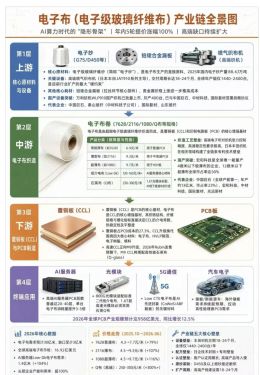
AI Computing Power Demand Ignites Electronic Fabrics! China Jushi Hits Limit Up! Domestic Substitution Welcomes Golden Window
-
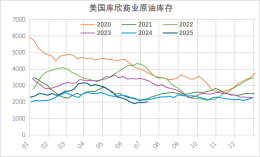
Strait of Hormuz Blocked Again, Supply-Demand Mismatch in Polyolefin Market Set to Intensify!