


RunWei Strategic Release: From "Chip-Car Translation" to "Omni-Directional Intelligent Foundation," Observing the Engineering Implementation Path of Domestic Supply Chain
On April 24, the 2026 Beijing Auto Show opened as scheduled, featuring 17 exhibition halls and over 1,400 vehicles on display. Intelligence emerged as the central theme throughout the event. Automakers, chipmakers, and Tier 1 suppliers showcased their latest innovations side by side, unveiling advancements in computing platforms, intelligent driving, AI ecosystem solutions, and other key technological areas, collectively outlining the evolving trajectory of the intelligent automotive industry.
In the Amidst the flurry of industry announcements, RunXinwei's in-depth strategic conference stood out as particularly special. It did not merely focus on the demonstration of individual technologies, but rather systematically presented its comprehensive thinking and large-scale practices regarding the domestic intelligent supply chain, offering a more pragmatic and systematized value perspective.
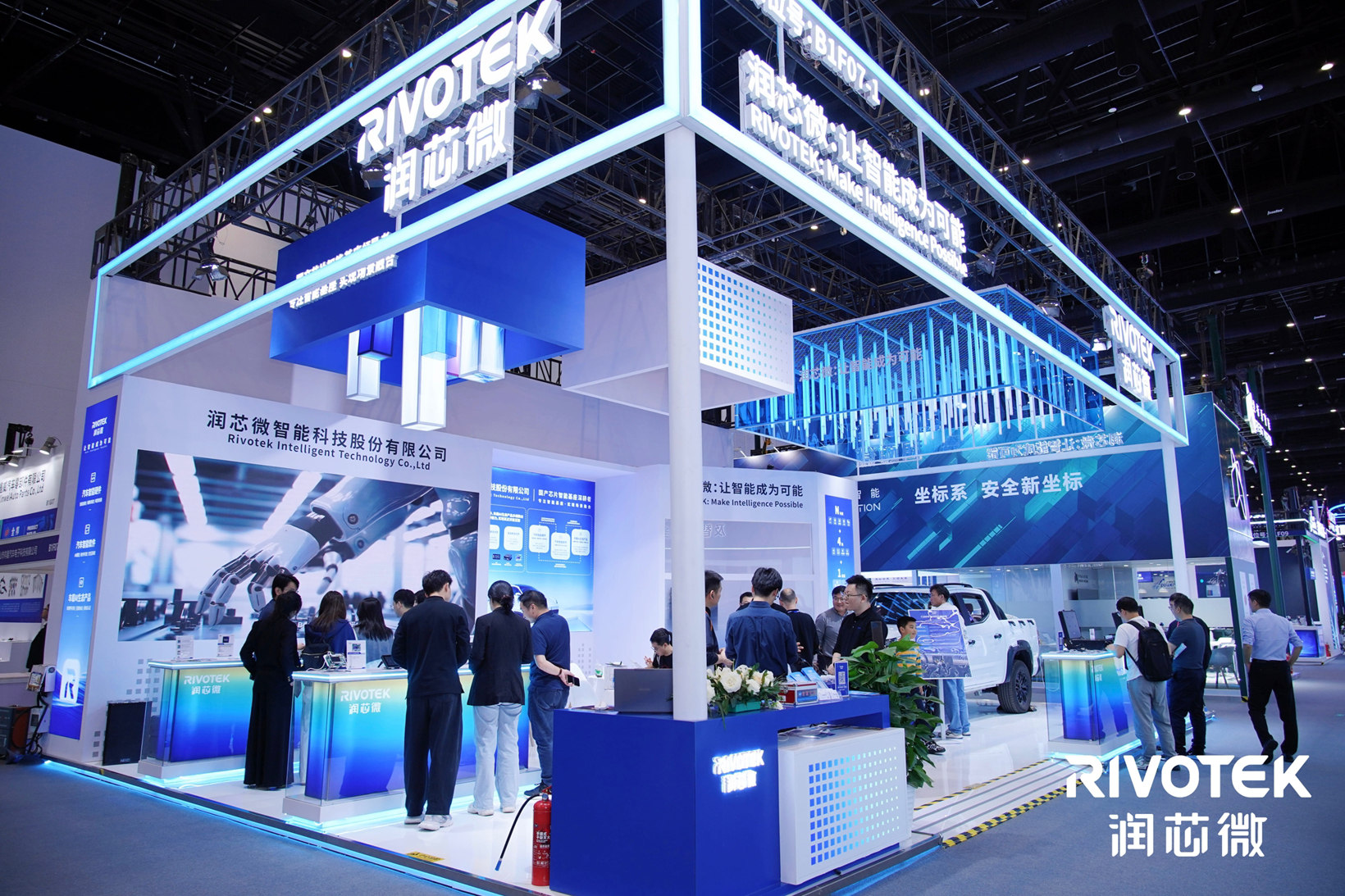
From an early focus on chip adaptation as a "chip-to-vehicle translator," RunWei is now undergoing a key role upgrade to become an "industry connector" that links the entire supply chain. Positioned as a neutral third party, it is building a reusable, scalable, and collaborative intelligent foundation for domestic smart supply chains, and also providing the industry with a reference path for implementation.
Positioning Upgrade: Becoming a Neutral Connector for "Chip-System-Whole Vehicle", Solving the Engineering Bottleneck of Chip-on-Vehicle
The intelligent vehicle industry is currently undergoing a critical phase marked by rapid technological iteration and supply chain restructuring, facing clear structural challenges: While chip manufacturers possess strong hardware design and computing power R&D capabilities, they generally lack experience in automotive-grade scenario-specific optimization, system integration, and mass-production engineering; while OEMs possess deep expertise in user experience and vehicle development requirements, they struggle to efficiently perform low-level chip adaptation, end-to-end system optimization, and reliable delivery. Many domestic chips demonstrate promising performance potential, yet fail to achieve large-scale vehicle deployment due to prolonged adaptation cycles, high system integration complexity, and intricate automotive-grade validation processes—not because of shortcomings in a single link, but because of systemic issues arising from insufficient collaboration across chips, software, and vehicles.
Addressing this industry pain point, Runxin Micro clearly defined its core positioning as a “domestic intelligent infrastructure solution provider” at its press conference during this auto show. This new role builds upon its established identity as an “industrial connector” and “chip-vehicle translator,” but goes a step further—focusing its capabilities on constructing an industry bridge that integrates “software-hardware convergence, experience translation, and mass-production engineering,” directly tackling the challenges of deploying domestic chips in vehicles.
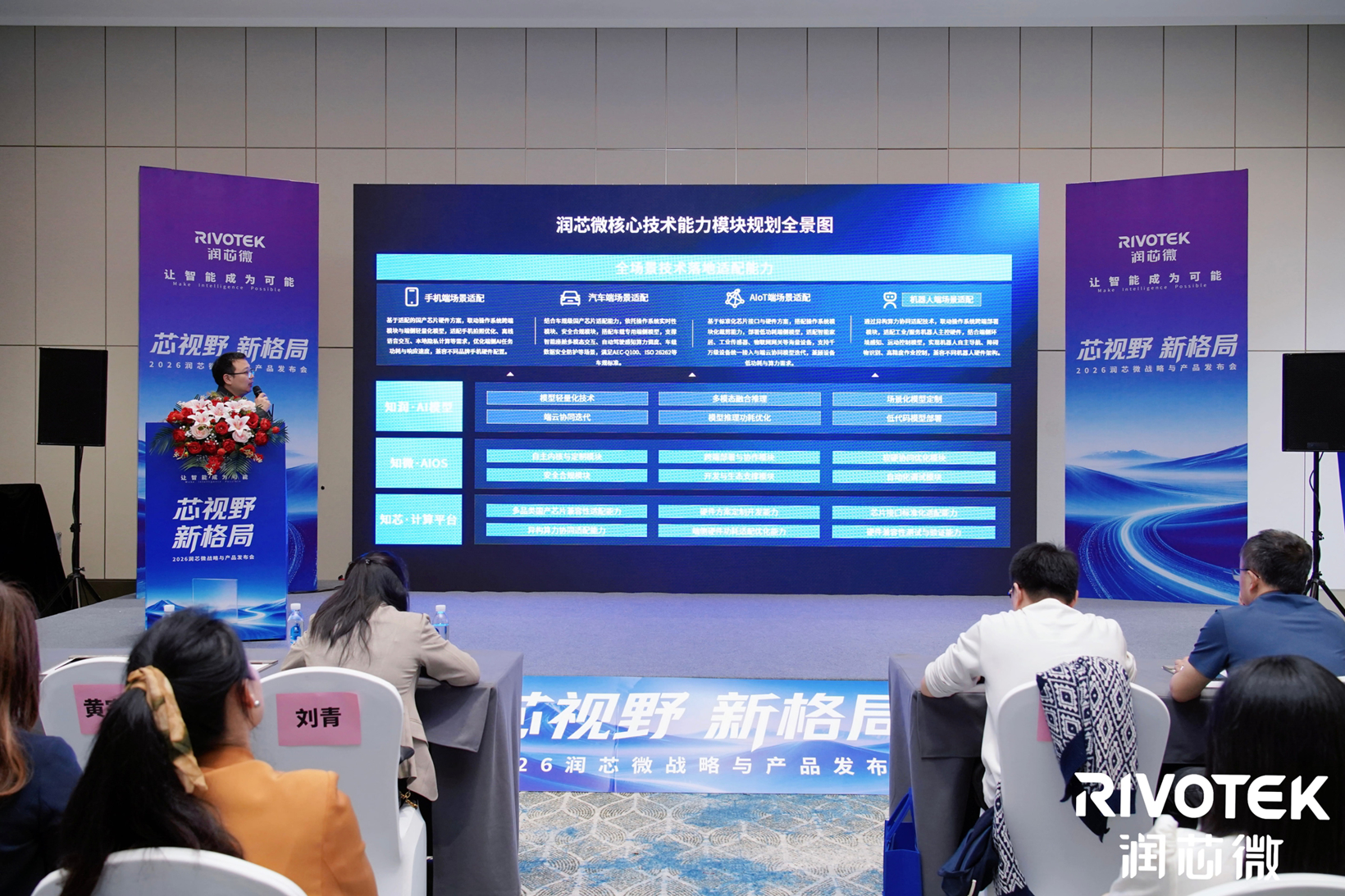
At the meeting, the company comprehensively elaborated its “1+4+N” strategic layout and systematically interpreted its three core technological foundations—“ZhiXin,” “ZhiWei,” and “ZhiRun”—establishing a unified, scalable, full-stack technology system. Through standardized underlying abstraction capabilities, the system enables efficient integration between hardware and systems, as well as between technologies and application scenarios.
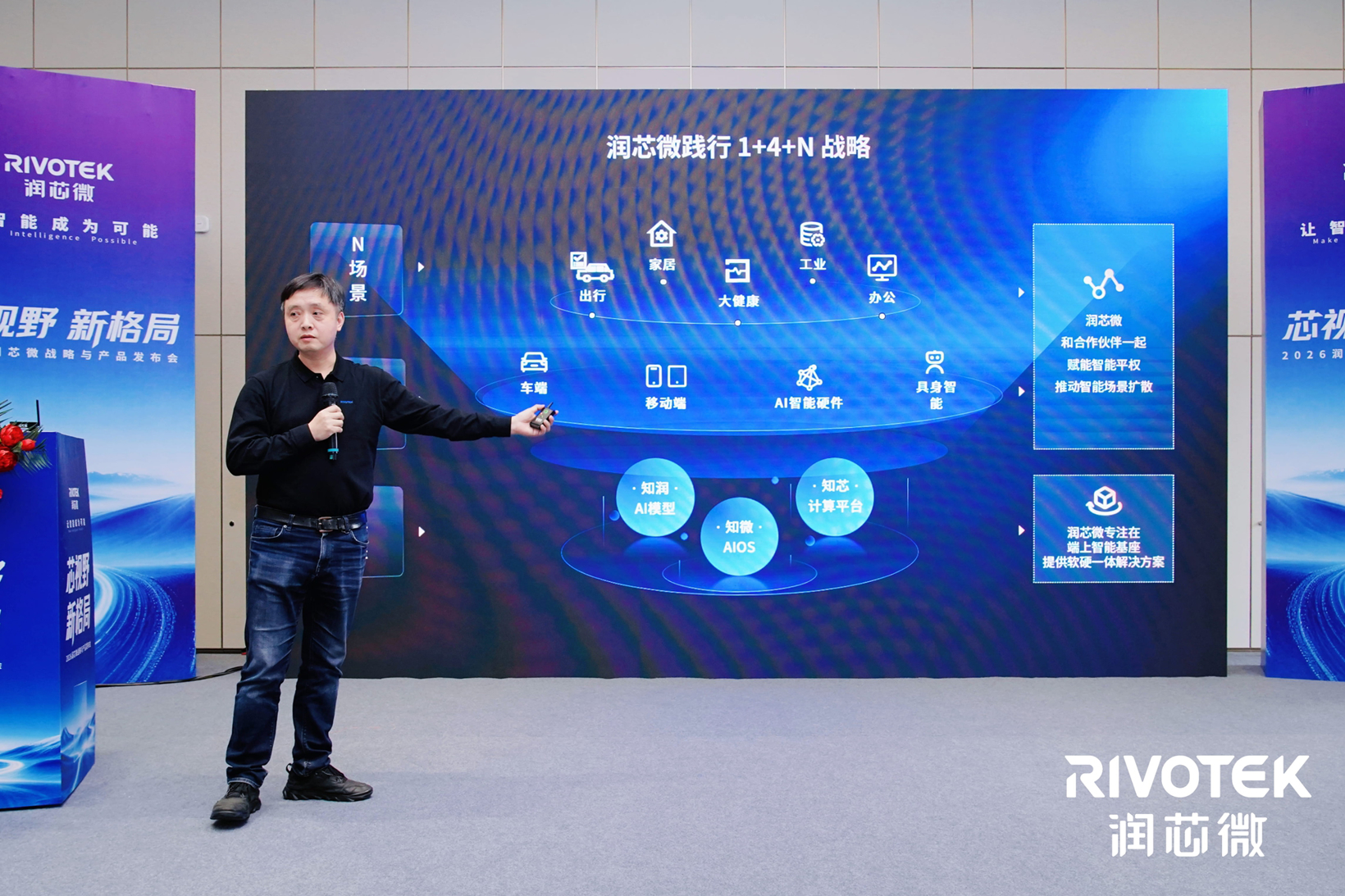
“Runchip Micro’s mission is to make intelligence possible and ensure that intelligence is accessible to everyone, everywhere.” According to Zhang Junfeng, Chief Strategy Officer of Runchip Micro, when explaining the concept of the “Intelligence Foundation,” “an Intelligence Foundation is inevitably required at every endpoint.” This implies that Runchip Micro’s core focus moving forward will be highly concentrated on building this foundation and extending its capabilities across diverse terminal sectors—including smartphones, automobiles, AI-powered smart hardware, and embodied intelligence.
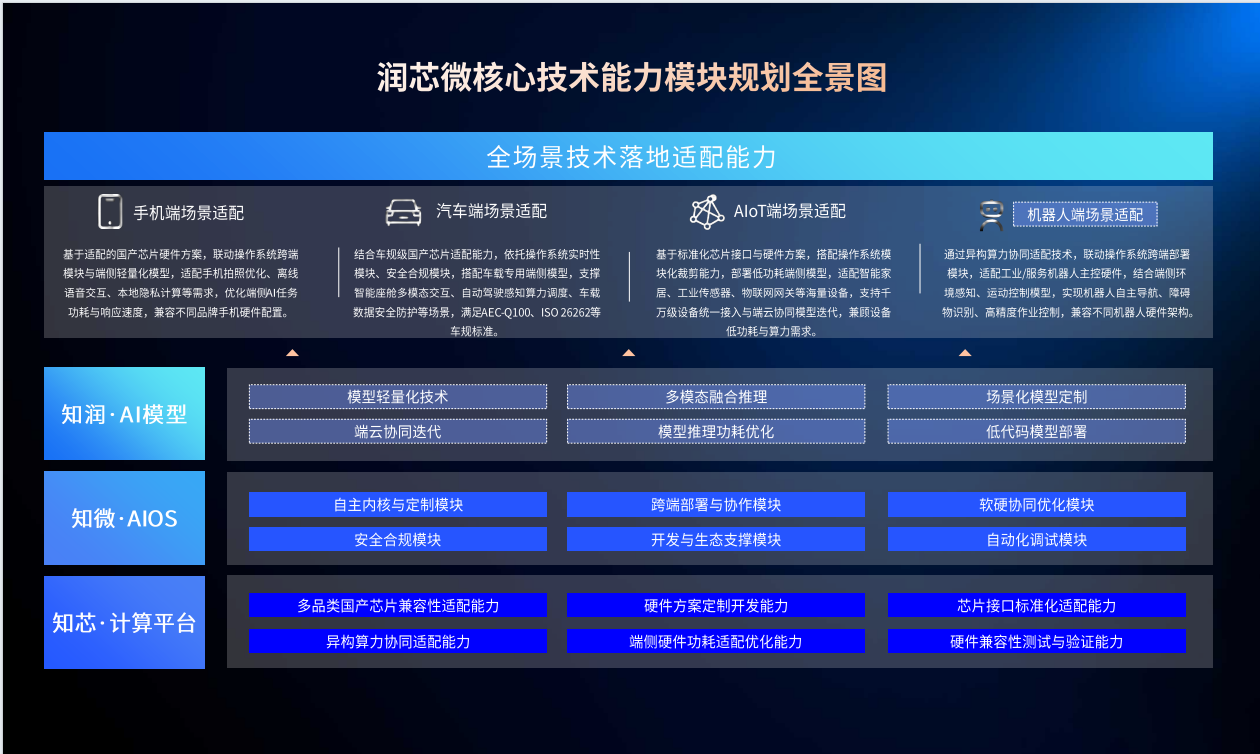
As a neutral third-party solution provider, Runxin Micro does not rely on any single chip manufacturer or automotive group, but instead adopts an open approach to connect upstream and downstream players across the industry. During this auto show, the company has reached multiple strategic partnerships with partners including Xiaomi, UNISOC, Moore Threads, and SAIC MAXUS. Through deep technical collaboration and project implementation, Runxin Micro efficiently converts chip hardware computing power into automotive-grade stable user experiences, thereby actively advancing the large-scale mass production and adoption of domestic chips. This non-aligned, collaboration-focused cooperation model further strengthens its role as an “industry connector” and enhances its credibility across the industry.
Omni-domain Reusability: A Unified Technical Foundation Deployed Across Platforms, Reconstructing the Paradigm of Intelligent Platform Engineering
In line with the industry trend toward omnidomain intelligence, Runxin Micro unveiled its comprehensive, scenario-spanning solution portfolio at this auto show, vividly demonstrating the cross-scenario reusability of its core technologies and its platform-based advantages.
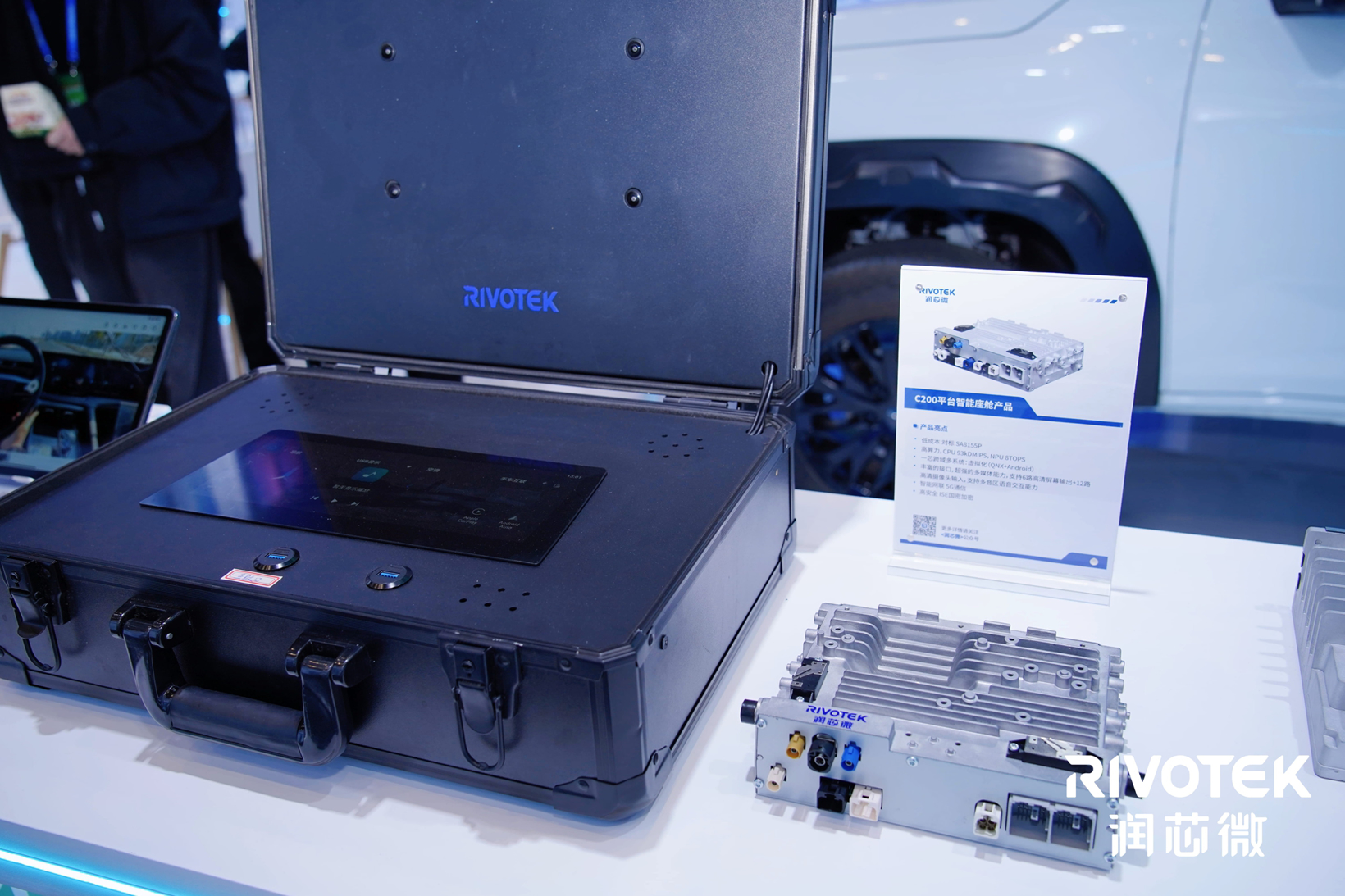
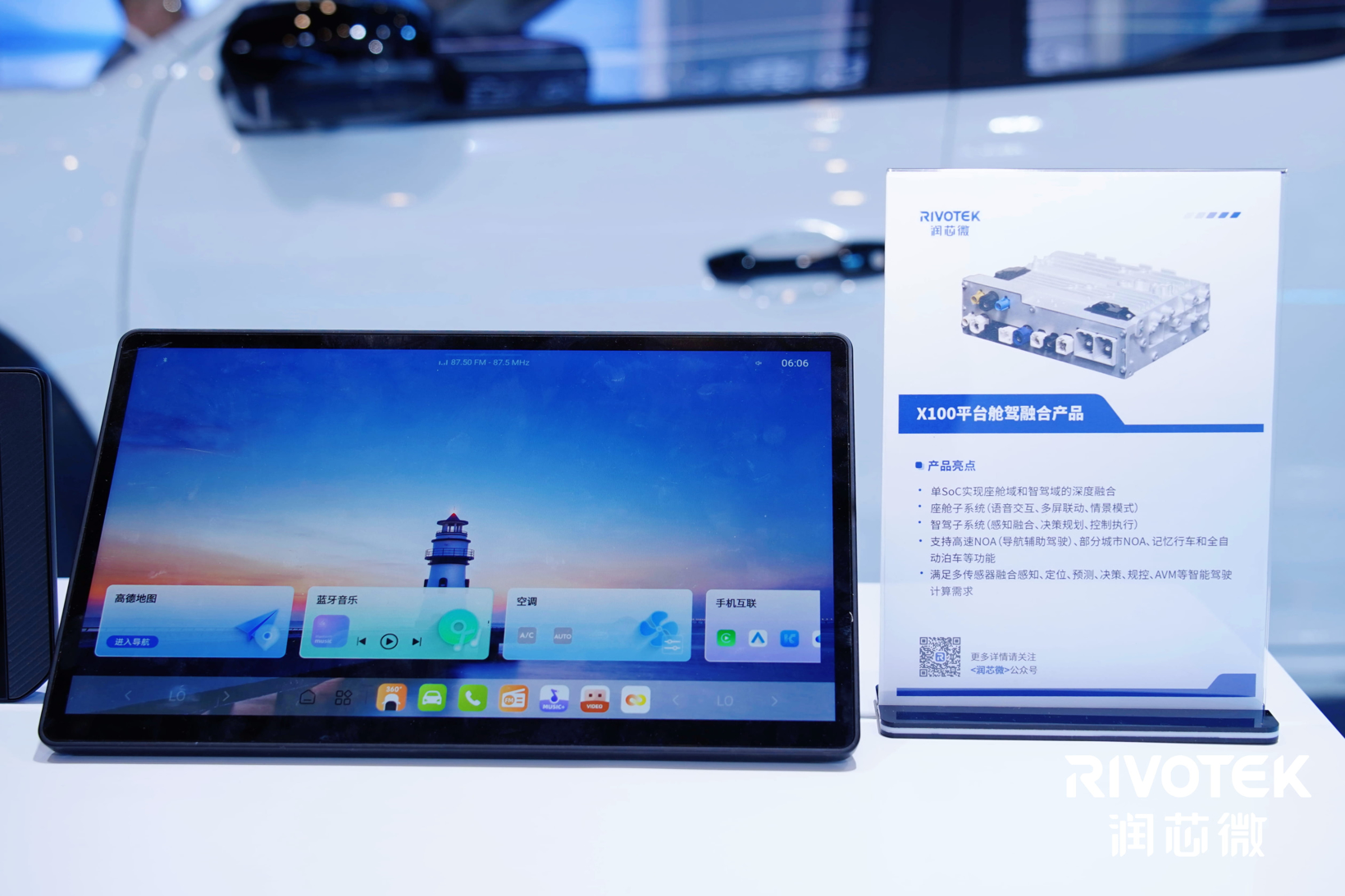
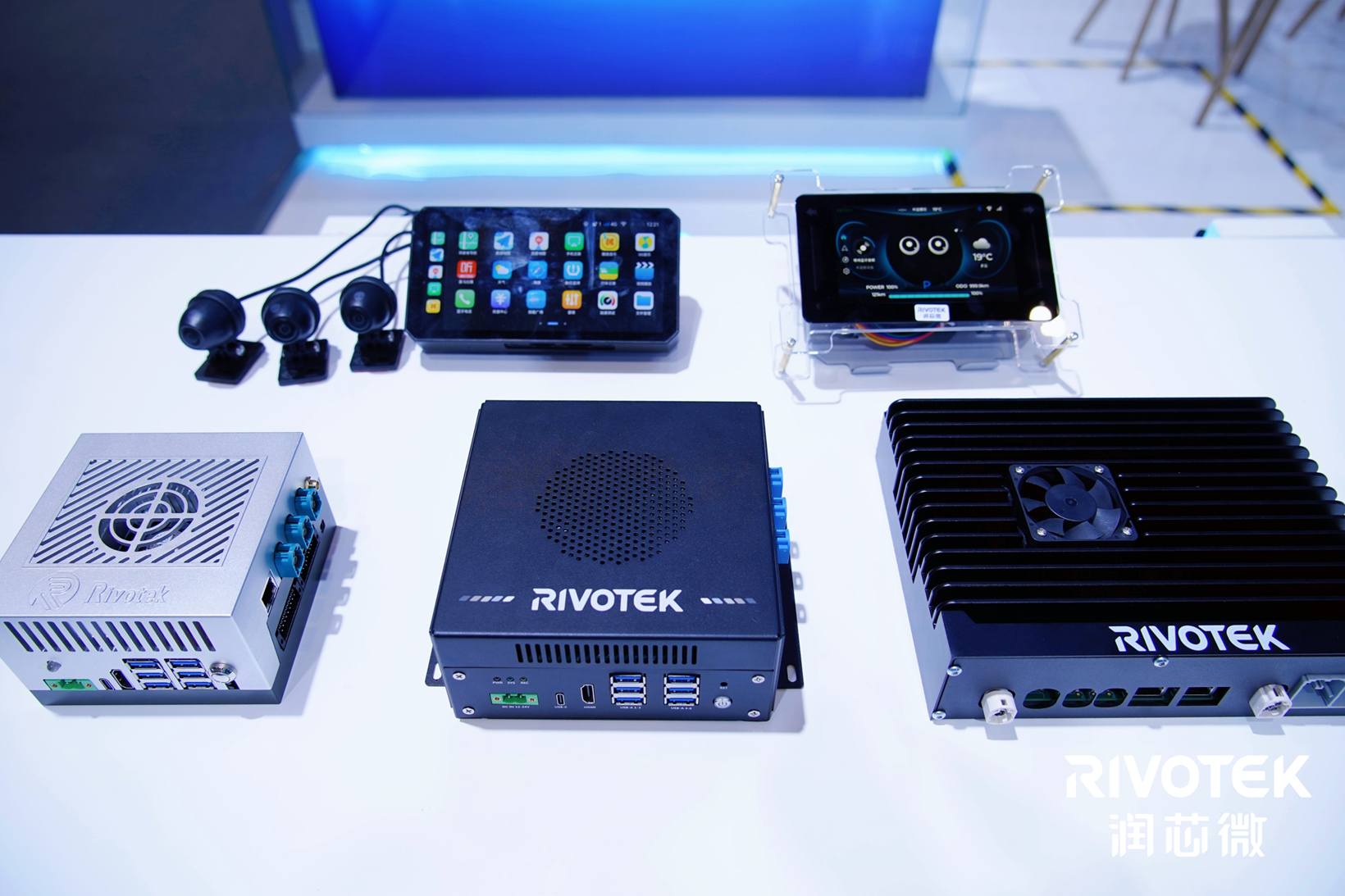
The vehicle lineup covers automotive-grade intelligent cockpits, integrated cabin-and-driving domain controllers, robotic computing platforms, and smart upgrade solutions for two-wheelers, establishing a comprehensive presence spanning from automotive to AIoT and from mobility to embodied intelligence.Intelligent Cockpit C200 Platform Cabin-Driving Integrated X100 PlatformBecome the focal point of this press conference.
Specifically, for the entry-level and high cost-performance market,C200 PlatformBuilt with the Unisoc 7870 chipset, it offers flexible memory configurations ranging from 8+64 to 2+32, and supports both Android and Linux dual systems. Its domestication rate is as high as 90%, achieving hardware support for 2.5K instrument and 4K center console displays while keeping costs under control.
Meanwhile, in the mid-to-high-end market,X100 PlatformIt showcases a more forward-looking single SoC cabin and driving integration solution, adopting the Horizon J6E chip, with computing power covering 100T+80TOPS, capable of supporting high-speed NOA and automatic parking functions, with a localization rate of about 85%.
Behind this diverse product matrix is Runic's mature system engineering capabilities and technology reuse logic. Relying on the three technical foundations "ZhiXin + ZhiWei + ZhiRun," the company achieves unified sharing of the underlying hardware abstraction layer, AIOS kernel, and edge-side AI models. It smoothly migrates automotive-grade high stability, strong real-time performance, and high security compliance capabilities to more scenarios such as robotics, industry, and two-wheeled vehicles, truly achieving "one development, wide reuse."
Technology reuse not only effectively amortizes R&D costs and shortens product time-to-market, but also continuously feeds back into core technology iteration, creating a virtuous cycle of “R&D – reuse – optimization – scale-up.” Compared with suppliers focused on a single domain, RunChip leverages cross-device and cross-scenario technology integration capabilities that align more closely with the current industry convergence trend of “vehicle-device synergy and end-to-cloud integration.”
Mass Production Foundation: Hundred Million Units of Practical Application, Open Ecosystem Collaboration Building the Future of the Industry
In the intelligent automotive industry, mass production delivery and stable operation are the core criteria for verifying technological maturity. At this launch event, Runxin Micro highlighted its end-to-end mass production capability, substantiating its technical expertise with real vehicle installation data.
To date, Runxinwei's intelligent cockpit system has surpassed one million units in cumulative vehicle installations, supporting models from renowned automakers such as SAIC, BAIC, and Dongfeng, covering multiple platforms across both passenger and commercial vehicles, and achieving stable dual-track deliveries for both segments.
At this Beijing Auto Show, Runxin Micro unveiled several core software and hardware products, including the C200, X100, the new-generation Zhiwei AIOS Lite, the Zhirun Edge-side Multimodal Model, the RideBrain M4 Smart Instrument Cluster, and the Rbox-S100 Computing Platform, further enriching its product portfolio and opening up additional growth opportunities for future development.
Meanwhile, Runxin Micro relies on two major smart manufacturing plants in Huzhou, Zhejiang, and Yongchuan, Chongqing, as well as a domestic chip mass production platform covering "10k-100T" level computing power, to build a complete capability loop from R&D testing, system integration, to automotive regulation verification, and batch delivery, providing a solid guarantee for large-scale mass production and implementation.
In terms of ecological collaboration, Allchip Micro adheres to a fully chip-compatible and fully open cooperation approach, without setting technological barriers or being tied to a single ecological partner. During the auto show, the company not only deepened its underlying compatibility cooperation with chip manufacturers such as UNISOC and Moore Threads, but also completed significant actions such as the strategic partnership signing with OpenVela and the in-depth signing of the Intelligent Project. With actual results such as OpenVela ecological adaptation and the certification of the Gemini-S1 development board, the company participates in the construction of open-source ecosystems, promoting the synergistic development of domestic operating systems and chip ecosystems.
This collaborative model has been validated in recent projects. When discussing the cooperation with Datong Motors and Unisoc, Huang Yuning, Executive Vice President and General Manager of the Automotive Business Unit at Unisoc, stated that the Runxinwei C200 intelligent cockpit system, equipped with the Unisoc A7870 chip, has been launched with new wide-body light commercial vehicles and pickup trucks, truly achieving the integration of the entire industrial chain from chips and cockpit to the whole vehicle.
“In the future, we will further deepen strategic collaboration, adopt a more open attitude, and leverage more advanced technologies to jointly develop more competitive intelligent cockpit solutions, empowering the intelligent automotive industry.” He stated.
From chip-level adaptation to system solution integration, from vehicle project implementation to cross-end ecological expansion, Runxinwei connects upstream and downstream with inclusiveness, lowers the threshold for domestic chips in automotive applications, and accelerates the large-scale deployment of intelligent solutions. This open and win-win cooperation model not only opens up space for its own business growth, but also continuously drives the domestic intelligent supply chain from individual breakthroughs to system maturity.
The 2026 Beijing Auto Show once again confirmed that the competition in intelligent vehicles has long shifted from single-point technology comparisons to a comprehensive contest of the entire industry chain system capabilities, engineering implementation efficiency, and ecological collaboration levels. While the industry pursues rapid iteration and conceptual innovation, RunWei held a deep strategic conference, returning to the essence of the industry and focusing on the three core aspects of mass production, experience, and collaboration.
From being a "chip-to-vehicle translator" tackling the challenge of domestic chips in automotive applications, to serving as an "industry connector" building a comprehensive intelligent foundation, Runxunwei has always grounded itself in real-world industry needs. It leverages full-stack technologies to bridge chips and end devices, fulfills its technological promises through mass-production data, and breaks down industry barriers through an open ecosystem. This development approach—deeply rooted in engineering capabilities, committed to pragmatic implementation, and focused on collaborative win-win outcomes—is precisely the stabilizing force urgently needed in today’s domestic intelligent automotive supply chain.
As intelligent vehicles and the broader terminal ecosystem continue to integrate, domestic solution providers like RunMicro may continue to play the role of neutral connectors and foundational builders, driving the domestic intelligent supply chain toward a more mature, open, and globally competitive new phase.
【Copyright and Disclaimer】The above information is collected and organized by PlastMatch. The copyright belongs to the original author. This article is reprinted for the purpose of providing more information, and it does not imply that PlastMatch endorses the views expressed in the article or guarantees its accuracy. If there are any errors in the source attribution or if your legitimate rights have been infringed, please contact us, and we will promptly correct or remove the content. If other media, websites, or individuals use the aforementioned content, they must clearly indicate the original source and origin of the work and assume legal responsibility on their own.
Most Popular
-

Continental Plans to Begin Sale of ContiTech in Early 2026
-

$4 Billion! Medtronic Makes Another Acquisition
-

BASF Delivers First Batch of Innovative Cathode Materials for Semi-Solid-State Batteries to Weilan New Energy
-

Why did a century-old european dental instrument giant relocate its manufacturing hub to china?
-
Profit and Revenue Growth Struggle to Conceal Debt Repayment Pressure; Success of Kingfa Sci & Tech's High-End Strategy Yet to Be Seen