



Tata motors plans to introduce chery vehicle platform, promote mass production of high-end electric brand avinya
Recently, according to relevant reports, Tata Motors of India plans to introduce a complete vehicle manufacturing platform license from Chery Automobile to advance the mass production plan of its premium electric brand, Avinya.
According to reports, the Avinya project has been delayed due to the shelving of the originally planned Jaguar Land Rover platform, with the mass production target for the first model pushed back to 2027. Tata has stated that it will use the platform from the joint venture between Chery and Jaguar Land Rover in China, and manufacturing will take place at a new factory in Tamil Nadu, southern India; Chery will participate in the project as a supplier.
This plan was disclosed just one year away from the target of mass production in 2027, addressing the practical challenges following Tata's adjustments to its high-end electric vehicle strategy, and reflecting the changes taking place in the competitive landscape of the Indian electric vehicle market.
From Proprietary Architecture to External Leverage
The Avinya project first debuted in 2022, when Tata Motors positioned it as a high-end electric vehicle brand for the future and showcased a concept model at the Delhi Auto Expo. The initial technology roadmap was not complicated — utilizing Jaguar Land Rover's EMA electrification architecture for local production in India.
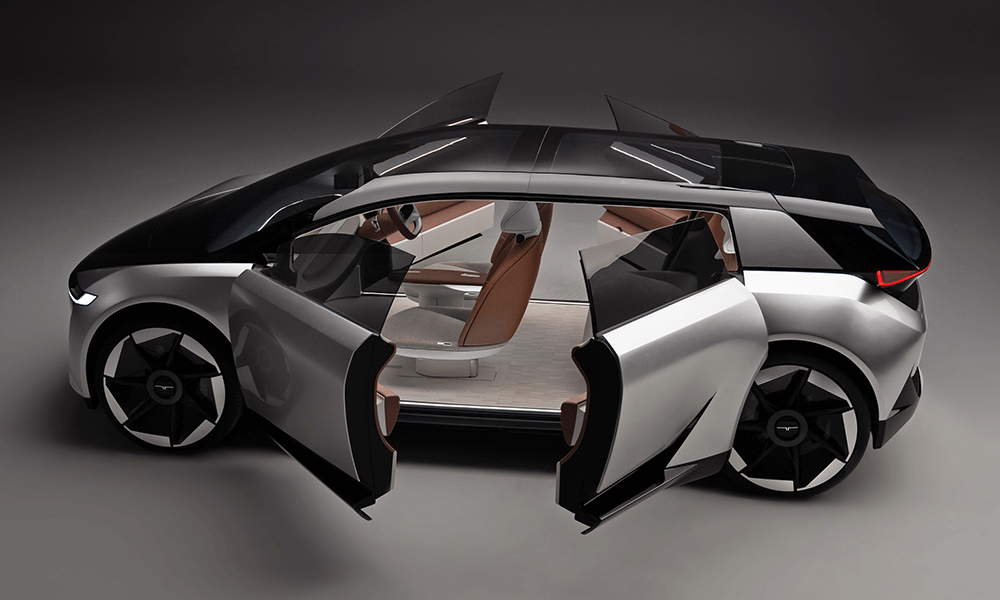
Image source: Tata Motors
If everything had proceeded smoothly, the original plan was to see the first mass-produced vehicle roll off the production line in 2025. However, things changed last year. Jaguar Land Rover decided to cancel its plan to produce electric vehicles based on the EMA platform in India, completely disrupting Tata’s original internal project timeline.
From the perspective of internal management and costs, if the project is stalled and Tata restarts the development of a self-developed platform from scratch, it would require at least 3 to 5 years and an investment of hundreds of millions of dollars, with high uncertainties in technology validation and market timing. The project has been on hold for over a year, during which Tata's Avinya concept has completed preliminary consumer education in the market but has lacked a producible mass-market model to meet expectations. Insiders describe the cooperation with Chery as a "stopgap measure," because if new products cannot be brought to market in the short to medium term, Tata's leading position in the Indian electric vehicle market will face gradual erosion by other competitors.
From the perspective of the reuse efficiency of technical assets, Tata's shift to other platforms has its particularity. The technical foundation of this platform comes from Chery, but the brand assets come from Jaguar Land Rover—both companies previously collaborated to establish a new electric vehicle brand, utilizing Chery's electrification platform and the brand name authorized by Jaguar Land Rover.
In other words, under the long-term cooperation framework between Chery and Jaguar Land Rover, this platform has already developed a relatively mature electric-drive system, vehicle architecture, and supply chain support. Tata’s involvement in this existing technological chain is equivalent to customizing a model on a technology line that has already been verified and refined, thereby significantly shortening the cycle from research and development to mass production.
Proactive responseNew variable:Market Expansion and Accelerated Competition
To understand the broader context behind Tata’s decision, it is also necessary to view it against the larger market landscape. According to data released by authoritative organizations such as the Federation of Automobile Dealers Associations (FADA) of India and the India Energy Storage Alliance (IESA), in 2025, India’s total retail sales of all types of electric vehicles reached approximately 2.3 million units, accounting for 8% of total new vehicle registrations. Among them, retail sales of electric passenger vehicles were about 176,800 units, representing a year-on-year increase of 77.04%. This pace of market expansion has far exceeded the expectations of many industry analysts.
In the core electric passenger vehicle segment, the landscape among the leading brands has remained stable in some respects while also undergoing subtle changes. Tata Motors retained its position as the annual sales leader with 70,004 units sold. However, the second-ranked JSW MG Motor India and the third-ranked Mahindra both posted year-on-year growth of over 130% and 360%, respectively, with the latter recording the fastest growth among the leading brands.
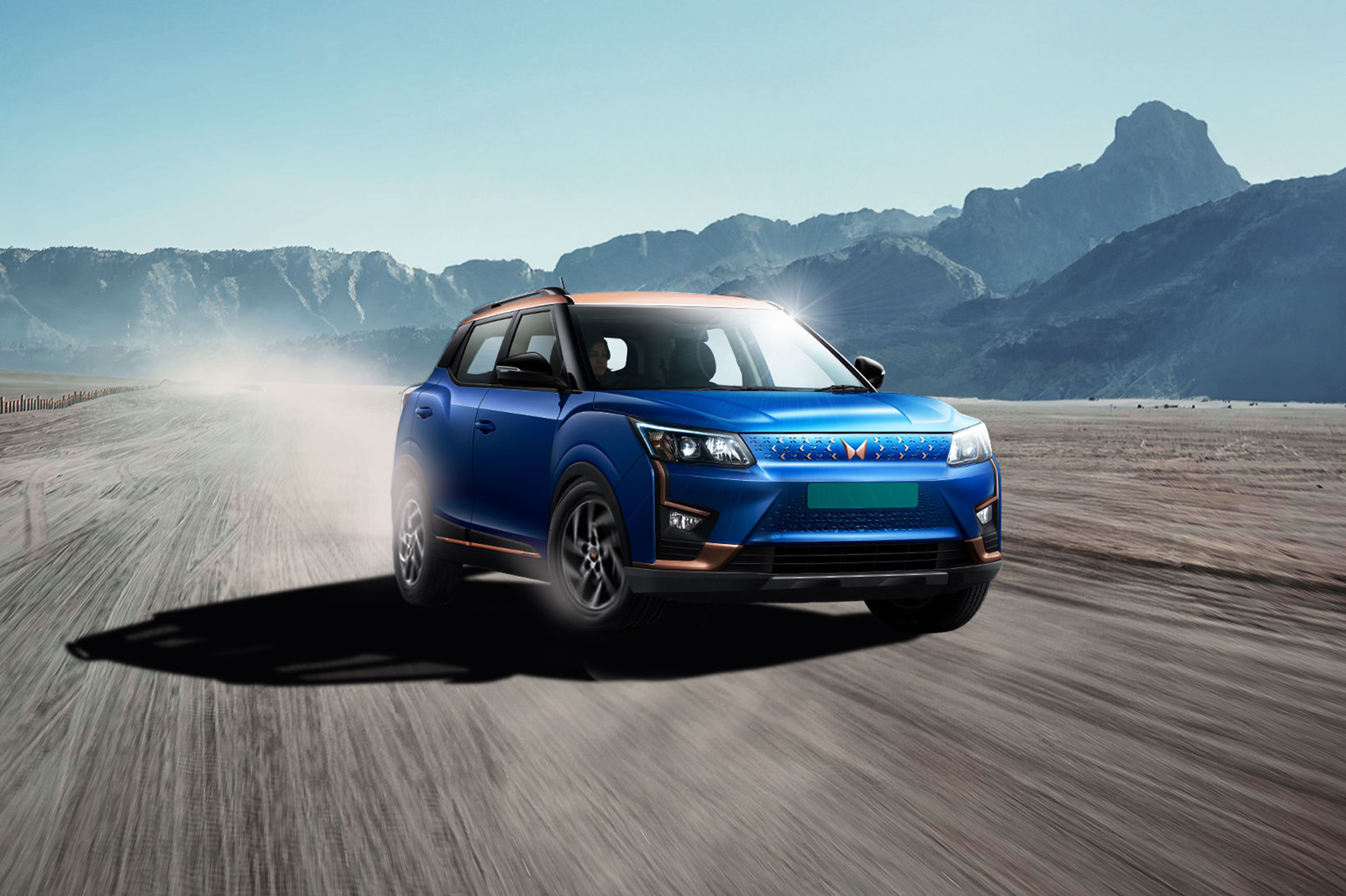
Image source: Mahindra
Mahindra has rapidly captured market share with its two newly launched electric SUVs in 2025, the BE 6 and XEV 9e. These two models have directly entered the price segment in India’s premium EV market that was previously dominated only by Tata’s flagship Nexon EV. JSW MG Motor India, meanwhile, has quickly rolled out multiple electric models in the Indian market through its technical partnership with SAIC Motor, and its ranking in the electric passenger vehicle market has now climbed to second place. This means that, relying solely on its existing affordable EV lineup, Tata’s available defensive room is shrinking as mid- and high-end competitors continue to close in.
From a sales mix perspective, Tata’s electric vehicles currently account for about 14% of its total sales. The company has previously announced a target of raising this proportion to 30% by 2030. To achieve this goal, whether new models such as the Avinya can scale up smoothly will be critical. On the component supply side, whether Indian local suppliers can keep pace with Avinya’s mass-production schedule also remains an uncertain variable.
Overall, the cooperation between Tata and Chery is a choice made under the dual pressures of a narrowing time window and accelerated market competition. Unlike simple parts procurement, this is a deep collaboration involving vehicle architecture and core technologies.
Through this, Tata has secured valuable development time, enabling it to complete its product lineup during the critical window around 2027 when high-end electric vehicles are expected to enter the market in large numbers. Chery, meanwhile, as a supplier and technology exporter, has further embedded its technical standards in India, a rapidly growing market. Going forward, the execution capabilities of both parties in areas such as technology integration, production coordination, and localization will be key factors determining the ultimate effectiveness of this cooperation model.
【Copyright and Disclaimer】The above information is collected and organized by PlastMatch. The copyright belongs to the original author. This article is reprinted for the purpose of providing more information, and it does not imply that PlastMatch endorses the views expressed in the article or guarantees its accuracy. If there are any errors in the source attribution or if your legitimate rights have been infringed, please contact us, and we will promptly correct or remove the content. If other media, websites, or individuals use the aforementioned content, they must clearly indicate the original source and origin of the work and assume legal responsibility on their own.
Most Popular
-

Layoffs, Divestments, Plant Closures While Pouring Billions: BASF Undergoes Major Transformation!
-

Ascend Adipic Acid Hit By Force Majeure, Market Expects Supply Resumption In Mid-September
-

Raw Material Supply Shortage! INEOS Phenol Declares Force Majeure on Phenol and Acetone Businesses
-
South Korea initiates anti-dumping investigation against Chinese PVC suspension resin! The target is Tianjin Bohua and Wanhua Chemical. How to break through?
-

Sixth national procurement set to be implemented: A “Reshuffling” Moment for the $10-Billion Medical Device Market