



US Slashes Tariffs on China by 10%; Court Rules Trump’s 10% Global Tariff Invalid
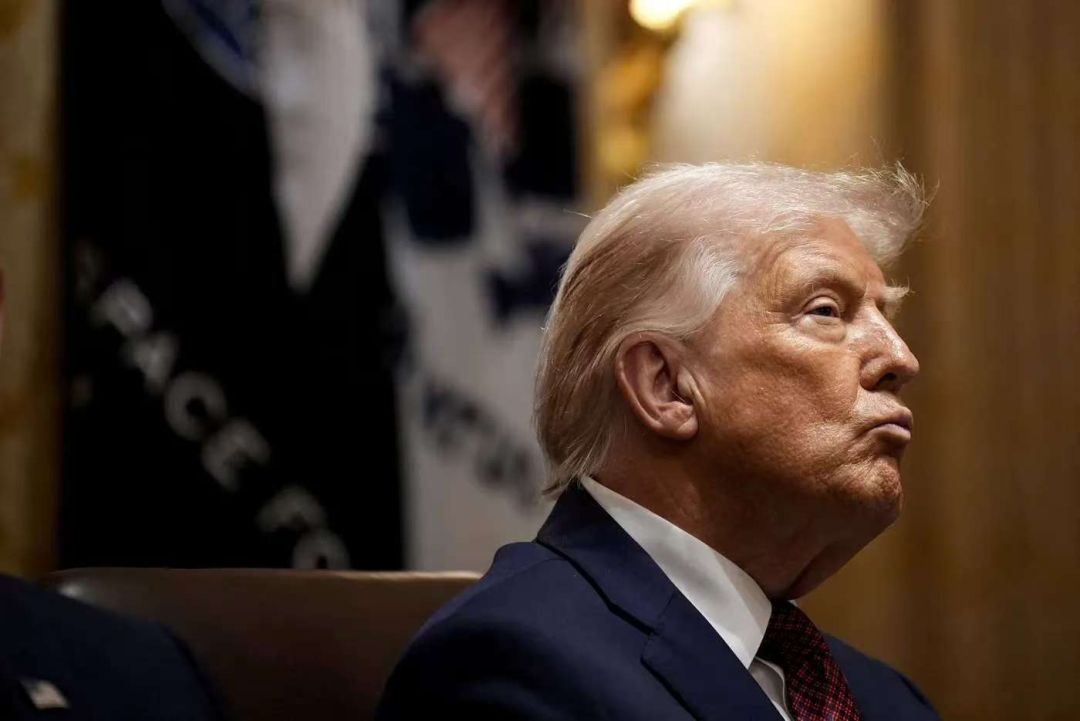
Recently, the U.S. Court of International Trade (CIT) ruled that the 10% global Section 122 tariffs imposed by Trump are invalid.
On May 7, 2026, Eastern Time, the U.S. Court of International Trade (CIT) ruled that the 10% global import tariffs imposed by the Trump administration under Section 122 of the Trade Act of 1974 were invalid.
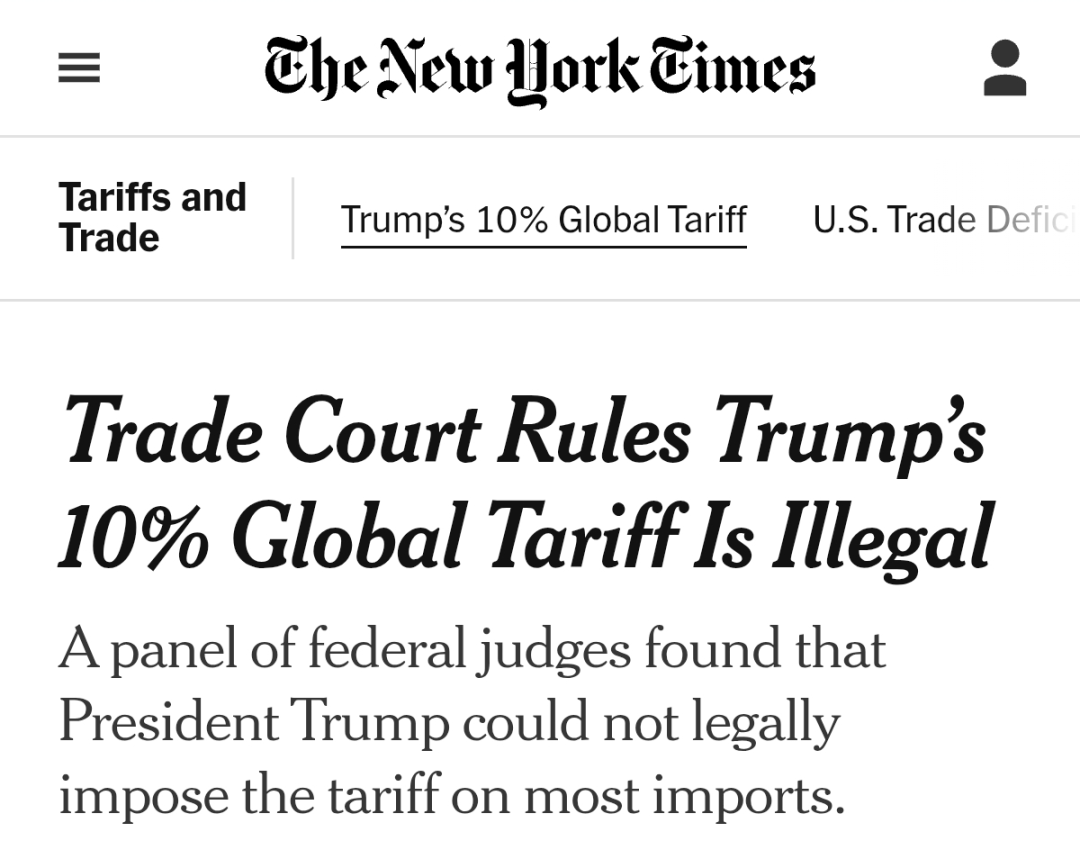
Screenshot of The New York Times report
Three months ago, on February 20, 2026, after the U.S. Supreme Court ruled that the large-scale "reciprocal tariffs" and "fentanyl tariffs" implemented by Trump under the International Emergency Economic Powers Act (IEEPA) were invalid, Trump urgently used an alternative plan, announcing a new 10% global tariff under Section 122, which went into effect around February 24, for a maximum duration of 150 days unless extended by Congress.
On May 7th, the U.S. trade court dealt another blow to Trump's tariff strategy, with a three-judge panel of the U.S. Court of International Trade ruling 2-1 that the 10% tariff was illegal.
The majority opinion held that the trade deficit and other reasons cited by Trump were not sufficient to constitute a "large and serious" international payments imbalance emergency required by Section 122, and that the president had overstepped his authority.
The court upheld the plaintiffs' (including small businesses such as Burlap & Barrel, Basic Fun, and the State of Washington) claims, ordered the refund of paid duties plus interest, and issued a permanent injunction targeting specific plaintiffs.
The scope of the ruling was narrow, as the court did not fully block the implementation of the tariff, but only prevented the imposition of the tariff on the plaintiffs (two private importers and the state of Washington), and ordered the refund of the tariff plus interest to the plaintiffs.
The Trump administration is expected to immediately appeal to the Federal Circuit Court of Appeals (CAFC). The CAFC is the regular appellate court for CIT tariff cases, typically known for its faster processing, especially in high-profile trade cases where it may expedite.
However, the Section 122 tariff itself lasts for a maximum of 150 days, expiring on July 24, 2026, unless explicitly extended by Congress. Even with an appeal, the tariff may expire or be replaced by other tools (such as Section 301) before a Supreme Court ruling.
🚨 The U.S. has launched a large-scale Section 301 investigation, preparing to replace previous tariffs.
The Trump administration has actively initiated and deployed tools such as Section 301 as the primary alternative to the IEEPA tariffs, which were ruled invalid by the Supreme Court, and is currently in the investigation and preparation phase for implementation.
In March 2026, the Office of the United States Trade Representative (USTR) initiated two major Section 301 investigations covering more than 60 major trading partners (accounting for over 99% of U.S. imports), including China, the European Union, Mexico, India, Japan, and others.
A study on "structural excess capacity" practices in the manufacturing sector involving 16 economies. Another study on "failure to effectively prohibit the import of products made with forced labor," covering approximately 60 economies.
The investigation reasons include unfair trade practices and "unreasonable or discriminatory" measures, which meet the statutory requirements of Section 301. A hearing has been recently held. The USTR plans to expedite the process, aiming to complete it and potentially implement new tariffs before the expiration of Section 122 (around July 24).
🚨 Refunds for "reciprocal tariffs" and "fentanyl tariffs" will be credited on May 11.
Tariffs imposed by Trump under the International Emergency Economic Powers Act (IEEPA), including "reciprocal tariffs" and "fentanyl tariffs," will be refunded, and the process has entered the implementation stage. The refund includes principal and interest, and is being handled by the U.S. Customs and Border Protection (CBP).
On April 20, 2026, the U.S. Customs officially launched the CAPE refund system, allowing importers/authorized customs brokers to submit refund applications through the ACE portal. This is a dedicated channel for the centralized and batch processing of IEEPA refunds.
According to the process, the first batch of refunds may be credited by around May 11.
【Copyright and Disclaimer】The above information is collected and organized by PlastMatch. The copyright belongs to the original author. This article is reprinted for the purpose of providing more information, and it does not imply that PlastMatch endorses the views expressed in the article or guarantees its accuracy. If there are any errors in the source attribution or if your legitimate rights have been infringed, please contact us, and we will promptly correct or remove the content. If other media, websites, or individuals use the aforementioned content, they must clearly indicate the original source and origin of the work and assume legal responsibility on their own.
Most Popular
-

Layoffs, Divestments, Plant Closures While Pouring Billions: BASF Undergoes Major Transformation!
-
Ascend Adipic Acid Hit By Force Majeure, Market Expects Supply Resumption In Mid-September
-

Raw Material Supply Shortage! INEOS Phenol Declares Force Majeure on Phenol and Acetone Businesses
-
South Korea initiates anti-dumping investigation against Chinese PVC suspension resin! The target is Tianjin Bohua and Wanhua Chemical. How to break through?
-

Sixth national procurement set to be implemented: A “Reshuffling” Moment for the $10-Billion Medical Device Market