



Vietnam vs. India, Who Is the Next "World Toy Factory"?
One is a mature player with an annual export of 6 billion USD, while the other is rapidly catching up with a 26% low tariff to the U.S. and a 190 million USD domestic market. Where will the next stop for the toy industry be?
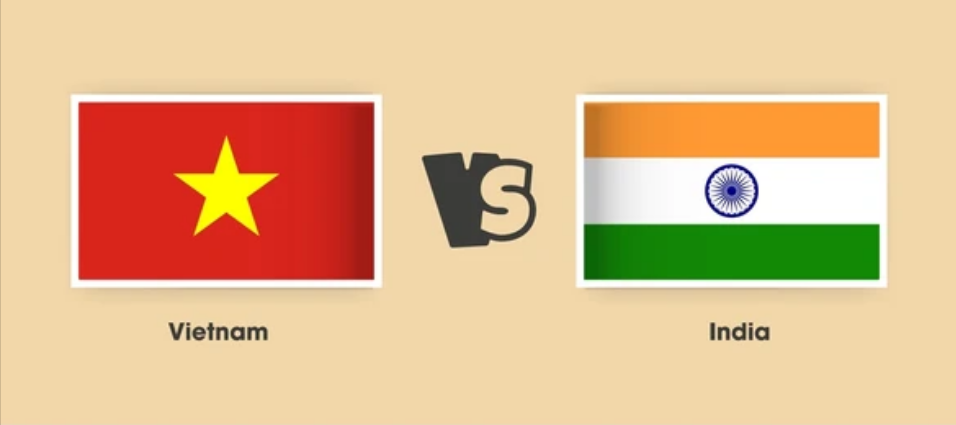
If you follow the global supply chain shift, you must know that Vietnam and India are always the two most discussed names for the "world factory" candidates outside of China.
But in the toy segment, the two have completely different trump cards.
On one side is Vietnam, already deeply embedded in global supply chains with annual exports exceeding US$6 billion; on the other is India, still largely import-dependent but rapidly rising on the strength of policy support, domestic demand, and tariff advantages.
Who has greater growth potential?
The answer depends on whether you are asking "who is more stable today" or "who will be bigger in ten years."
Vietnam: the top choice for mature, compliant, large orders
Vietnam is no longer a “newcomer” to the toy industry. Over the past decade, it has successfully absorbed substantial plastic, electronics, and precision manufacturing capacity shifted from China, and has grown into a global hub for toy manufacturing and exports.
Annual export scale: approximately USD 6 billion
Core Advantages:
Mature logistics and infrastructure, with highly efficient ports.
Deeply cultivating the manufacturing of plastic and electronic components with mature processes.
High ESG (Environmental, Social, and Governance) compliance standards, highly favored by Western brands such as Walmart, Disney, and Mattel
Main challenges:
Labor costs continue to rise.
More sensitive to fluctuations in international tariffs (e.g., the United States imposes an import tariff of approximately 46% on toys from Vietnam).
In short, Vietnam is today’s most reliable “large-scale mass production base.” If brands want stable, compliant, high-volume contract manufacturing, Vietnam is almost the best choice in Southeast Asia.
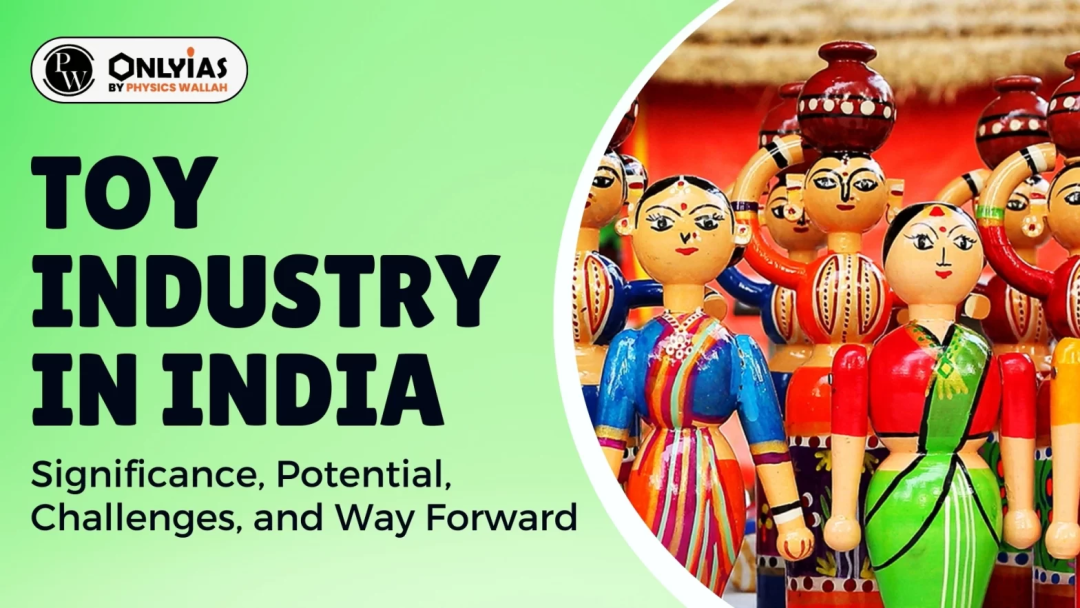
India: Explosive Growth + Domestic Demand Giant, Tariff Differences as a Killer Weapon
India's toy industry is currently in a critical phase of transitioning from "import dependency" to becoming a "new global manufacturing hub." The "National Toy Action Plan" promoted by the government is changing the underlying logic of the entire industry.
Export scale: currently only USD 326 million–350 million, seemingly far smaller than Vietnam.
Domestic market size: USD 1.6–1.9 billion, expected to double in the coming years.
Core Advantages:
Labor costs are lower than in Vietnam, and the youthful demographic dividend is enormous.
Domestic market demand is expanding rapidly, especially for STEM educational toys.
Tariff advantage: The U.S. import tariff on Indian toys is about 26%, while that on Vietnamese toys is 46%—a full 20 percentage points higher, a decisive difference for export competitiveness.
Against the backdrop of geopolitics, the United States is more inclined to grant India preferential export treatment.
Main Challenges:
The industry is highly fragmented and still dominated by small-scale “micro, small, and medium enterprises” (MSMEs).
Lacking large-scale, efficient, and intensive contract manufacturing infrastructure like Vietnam’s.
Quality control, compliance, and delivery stability need improvement.
Which has more development potential?
If what you want is today’s high-volume export and mature contract manufacturing capabilities —
👉 Vietnam remains the more reliable and proven choice.
If you're looking at long-term growth and geopolitical dividends—
India shows greater long-term transformational potential.
A set of data is enough to illustrate the problem.
The U.S. imposes a 26% tariff on toys from India and a 46% tariff on those from Vietnam—this 20-percentage-point gap is enough to prompt international brands to redraw their “sourcing map” within 3–5 years.
Coupled with demand in India’s domestic toy market set to nearly double, strong government intervention to promote import substitution, and an increasingly large young labor force, India’s explosive growth is not a fantasy but an ongoing reality.
Conclusion: In the short term, bet on Vietnam; in the long term, bet on India.
For global toy brands and buyers, this is not an either-or choice, but a matter of timing.
2026–2028: If you need a stable, compliant, mature manufacturing base capable of large-scale output, Vietnam remains the better choice.
After 2028: If India can bridge the gaps in infrastructure and intensive manufacturing in the next two to three years, coupled with the dual engines of tariffs and domestic demand, its potential will clearly surpass that of Vietnam.
As an industry insider with factories in both places put it:
"Vietnam is a place where money can be made today, and India is a place that must be occupied tomorrow."
【Copyright and Disclaimer】The above information is collected and organized by PlastMatch. The copyright belongs to the original author. This article is reprinted for the purpose of providing more information, and it does not imply that PlastMatch endorses the views expressed in the article or guarantees its accuracy. If there are any errors in the source attribution or if your legitimate rights have been infringed, please contact us, and we will promptly correct or remove the content. If other media, websites, or individuals use the aforementioned content, they must clearly indicate the original source and origin of the work and assume legal responsibility on their own.
Most Popular
-

Layoffs, Divestments, Plant Closures While Pouring Billions: BASF Undergoes Major Transformation!
-

Ascend Adipic Acid Hit By Force Majeure, Market Expects Supply Resumption In Mid-September
-

Raw Material Supply Shortage! INEOS Phenol Declares Force Majeure on Phenol and Acetone Businesses
-
South Korea initiates anti-dumping investigation against Chinese PVC suspension resin! The target is Tianjin Bohua and Wanhua Chemical. How to break through?
-

Sixth national procurement set to be implemented: A “Reshuffling” Moment for the $10-Billion Medical Device Market