



Waterborne maiden flight! tantou technology tests consumer-level low-altitude scenarios
On June 4, NAVEE’s WaveFly 5X consumer-grade manned waterborne flying vehicle under Tantu Technology completed its maiden flight on Suzhou’s East Taihu Lake, marking the official extension of the low-altitude economy into mass-market water-based consumer scenarios.
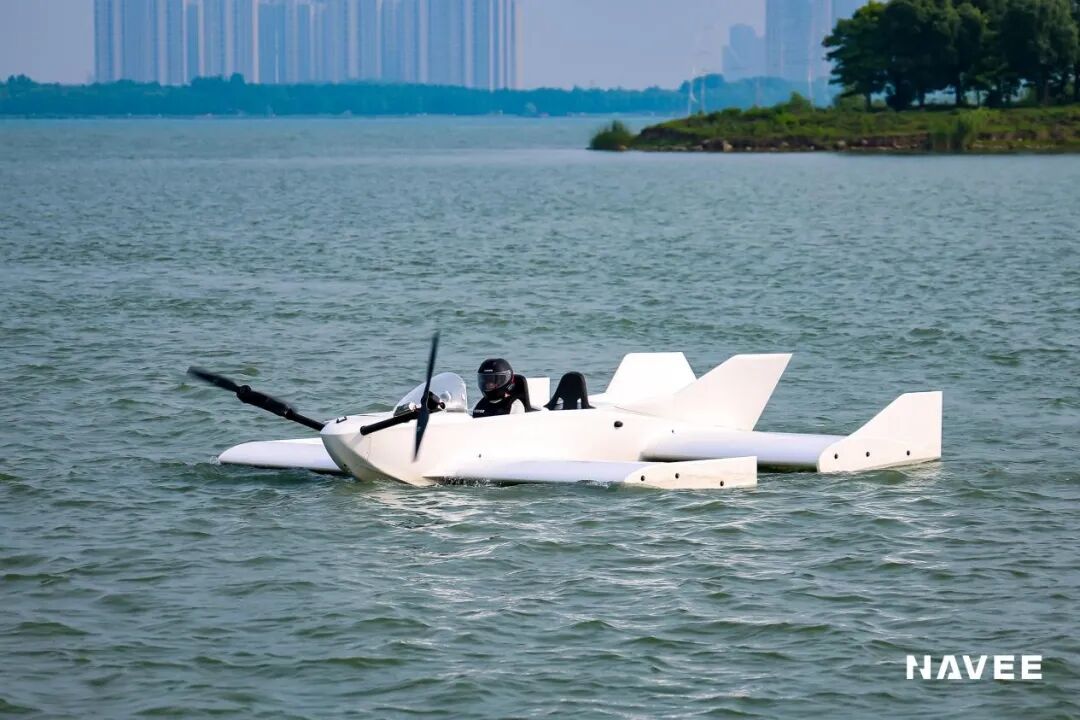
“The essence of the low-altitude economy is not to pursue breakthroughs in flight altitude, but to achieve the democratization of mobility,” said Lu Jian, President of NAVEE at Tantu Technology. “The birth of WaveFly 5X marks the transition of personal water-surface flight from a professional field to the consumer market, making skimming flight a new option within everyone’s reach.”
Currently, the land-based low-altitude travel products are highly homogenized, and Tantu Technology has chosen to focus on the water surface sector to achieve differentiated development. This aircraft relies on the ground effect principle for water-surface flight, with a flight altitude of only 0.3 to 0.8 meters, ensuring stable operation and low difficulty for users. It can also leverage the air currents above the water surface to reduce energy consumption, with the entire weight controlled at 120 kilograms. Compared to jet skis and waterborne aircraft, it requires less space on the water and offers a superior experience.
According to the relevant classification standards, this product is categorized as a light watercraft, requiring neither a pilot’s license nor complex airworthiness certification, thereby significantly lowering the barrier to entry and addressing key challenges in the commercial deployment of consumer-grade low-altitude equipment.
Leveraging its technological expertise accumulated from existing electric mobility products and a sales network spanning more than 60 countries worldwide, the company is well positioned for rapid deployment. In the initial stage, the product will focus on overseas markets, with priority given to B2B cultural tourism scenarios such as scenic areas, premium resorts, and yacht clubs.
Currently, the scale of China’s low-altitude economy industrial chain continues to expand, but civilian consumer manned flying products remain relatively scarce. Industry insiders believe that low-altitude operations over water face lower regulatory barriers and offer a wide range of application scenarios, making them a promising sub-sector of the low-altitude economy to be among the first to achieve large-scale profitability.
【Copyright and Disclaimer】The above information is collected and organized by PlastMatch. The copyright belongs to the original author. This article is reprinted for the purpose of providing more information, and it does not imply that PlastMatch endorses the views expressed in the article or guarantees its accuracy. If there are any errors in the source attribution or if your legitimate rights have been infringed, please contact us, and we will promptly correct or remove the content. If other media, websites, or individuals use the aforementioned content, they must clearly indicate the original source and origin of the work and assume legal responsibility on their own.
Most Popular
-

Layoffs, Divestments, Plant Closures While Pouring Billions: BASF Undergoes Major Transformation!
-
Ascend Adipic Acid Hit By Force Majeure, Market Expects Supply Resumption In Mid-September
-

Raw Material Supply Shortage! INEOS Phenol Declares Force Majeure on Phenol and Acetone Businesses
-
South Korea initiates anti-dumping investigation against Chinese PVC suspension resin! The target is Tianjin Bohua and Wanhua Chemical. How to break through?
-

Sixth national procurement set to be implemented: A “Reshuffling” Moment for the $10-Billion Medical Device Market