



World’s First 50,000-Ton PPC Mass Production Successfully Launched, the Underrated Biodegradable Sector Rises Strongly
On May 29, 2026, a major breakthrough was achieved in Levima Green New Energy Materials and biodegradable materials integrated project under Levima Advanced Materials Corporation: the world’s first 50,000-ton-per-year industrial-scale polypropylene carbonate (PPC) unit based on carbon dioxide successfully completed its full-process startup on the first attempt and produced qualified products.
It marks the official entry of China’s carbon dioxide-based biodegradable materials into a new stage of large-scale mass production.。
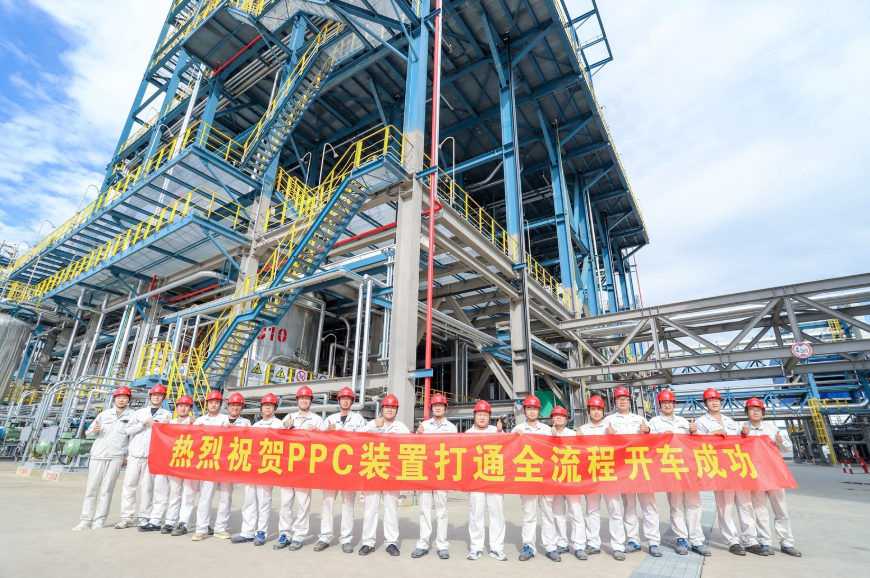
Image source: Lianhong Xinke
Four years of research and development, from the laboratory to industrial-scale production of tens of thousands of tons.
On May 21, 2026, the 50,000-ton-per-year PPC industrialization unit of the Lianhong Gelun integrated project for new energy materials and biodegradable materials officially began feed-in. On May 25, it successfully completed the production of four slurry batches in succession. On May 27, the coagulation and extrusion pelletizing system was started up. At 13:55 on May 29, qualified products were produced. From the first batch of feed-in to the shipment of qualified products, it took less than nine days.
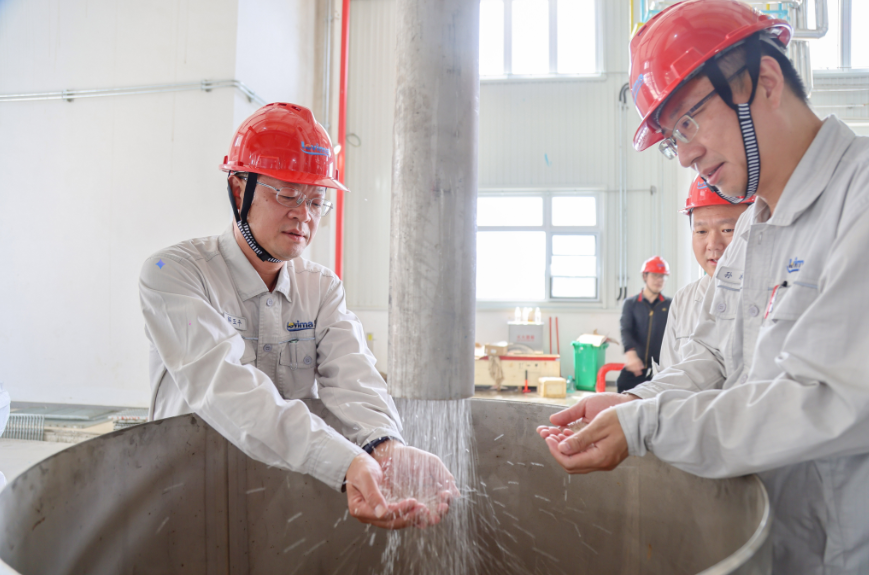
Image source: Levima Advanced Materials
The nine-day production launch was backed by four years of engineering accumulation starting in 2022. The industrialization of PPC is not a new topic—back in 1969, Japanese scientist Shohei Inoue first synthesized this material through the catalytic copolymerization of carbon dioxide (CO₂) and propylene oxide (PO). In the decades that followed, the United States and Japan continued their research, yet they were never able to bridge the gap from the laboratory to mass production: engineering challenges such as low catalyst efficiency, the difficulty of transporting high-viscosity materials, and the complexity of controlling a supercritical reaction system long stood in the way.
Levima Green has taken a more technically challenging route: industrialized supercritical polymerization technology, backed by the team of Wang Xianhong at the Changchun Institute of Applied Chemistry, Chinese Academy of Sciences—a research group that has been deeply engaged in CO₂ fixation and utilization for more than two decades. In 2021, Levima Advanced Materials and the Changchun Institute of Applied Chemistry signed a cooperation agreement to jointly develop industrialized PPC supercritical polymerization technology based on fourth-generation multinuclear zinc catalysts.
Over the course of four years, the team, without any mature case studies to draw on, tackled one by one the key engineering challenges of scale-up process stability, the integration and commissioning of thousands of instruments and control loops, catalyst activity control, and high-viscosity material conveying, achieving full-stage advancement from laboratory trials and pilot testing to industrial-scale production at the 50,000-ton level. The successful startup of this project also means that, on the global PPC industrialization map, yet another new scale has been pioneered by Chinese enterprises.
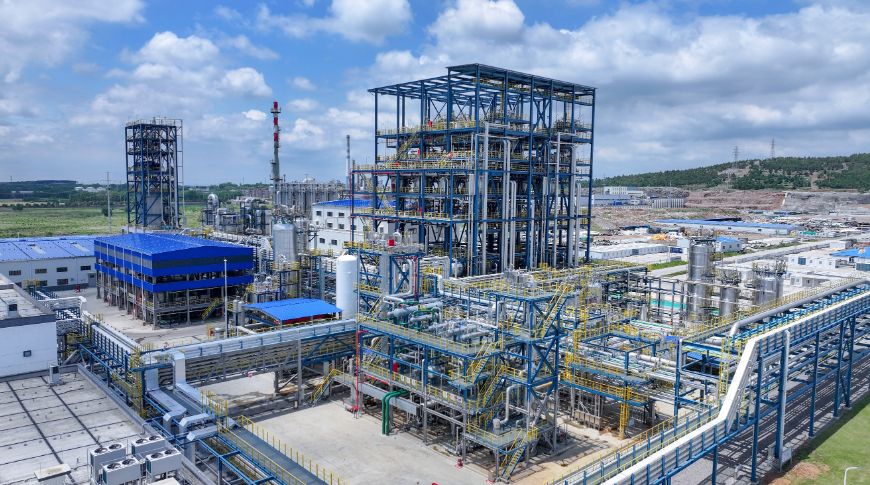
Image source: Lianhong Xinke
As a national-level “green factory,” Levima Advanced Materials has always upheld innovation-driven development and actively explored green and low-carbon development pathways. The company has established four major business segments: new energy materials, bio-based materials, electronic materials, and specialty materials, and has developed a series of green products and green technologies, including photovoltaic encapsulation materials, new energy battery materials, and PLA biodegradable materials. The successful commissioning of the PPC unit will help further enhance the company’s innovation intensity and green content in its development, enrich its product portfolio, and strengthen its core competitiveness in the bio-based materials sector.
Why Lianhong?
Understanding this project requires a grasp of Levima Green’s integrated industrial chain structure.
Lianhong Xinke's integrated project, Lianhong Gerun, planned in Tengzhou, Shandong, has its upstream starting point at the Methanol-to-Olefins (MTO) unit (capacity of 1.3 million tons, to be put into operation in 2025). It extends downstream to the Propylene Oxide (PO) production unit (capacity of 300,000 tons, expected to be successfully commissioned in 2025), which then produces PPC (5,000 tons, to be launched in 2026) through the copolymerization of propylene oxide and carbon dioxide. Once the entire industry chain is connected, the two core raw materials for PPC—propylene oxide and carbon dioxide—will be sourced from internal production, eliminating reliance on external procurement.
This is a rare example of vertically integrated design in the biodegradable materials industry. For a basic chemical material that is highly cost-sensitive, in-house production of raw materials means having structural initiative in pricing and profit margins. It is also worth noting that, in addition to PPC, the integrated project of Levima Green has simultaneously been equipped with EVA (photovoltaic encapsulation film material) and polyether polyol units, forming an industrial landscape that runs in parallel across new energy materials and biodegradable materials. The project has also been listed as a key major industrial project in Shandong Province and serves as the core implementation anchor for Levima Advanced Materials’ “four parks, one center” nationwide industrial layout.
PPCLow cost and green attributes become important selling points.
PPC is a relatively niche player in the biodegradable materials arena, and there have been few large-scale industrialization cases for a long time. Compared to the more well-known PLA (polylactic acid) and PBAT, PPC exhibits significant differences in its performance profile and has a distinct positioning logic.
From a performance perspective, PPC’s most outstanding advantage lies in its gas barrier properties: its oxygen barrier performance is 6 times that of PLA and 24 times that of PBAT. It also offers a good balance of stiffness and toughness, high transparency, and excellent water retention and moisture preservation properties, in...It has clear technical advantages in film applications such as agricultural mulch film, food cling film, and express delivery bags.。
PPC also has obvious limitations: its glass transition temperature is approximately 25–37°C, its processing window is relatively narrow, and its heat resistance is inferior to that of PLA. It is not suitable for high-temperature applications and requires modified formulations to broaden its application boundaries.
What truly makes the industrialization logic of PPC viable is its cost advantage. According to calculations by Professor Zhang Xinghong’s team at Zhejiang University based on a 10,000-ton-scale plant, the production cost of PPC is about 7,824 yuan per ton, with only an approximately 400-yuan gap compared with petroleum-based PE, which has a market price of 8,000 to 10,000 yuan per ton. By comparison, PLA resin is priced at around 17,000 to 22,000 yuan per ton, while PBAT is around 11,000 to 12,000 yuan per ton.
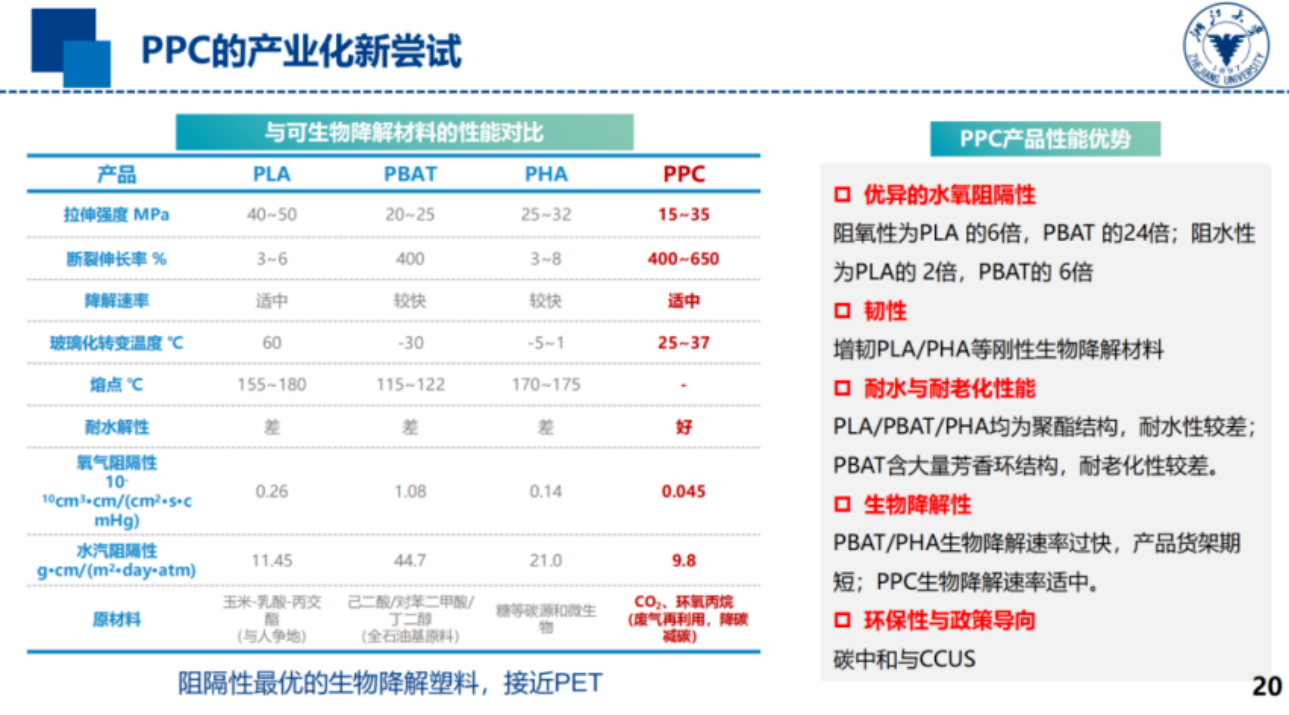
Image source: China Chemical Information Weekly
It should be noted that the above cost data are estimates made by an academic team, and Levima Green has not yet disclosed its actual mass production costs. However, given its structural advantage of fully self-produced raw materials, the industry generally believes that its cost control capability is among the leading in the sector.
Another major selling point of PPC is its carbon sequestration attribute: CO₂ accounts for more than 40% of the product’s weight, and each ton of PPC produced can fix approximately 0.42 tons of carbon dioxide. After use, it can fully degrade into CO₂ and water within 6–12 months. Against the backdrop of growing attention to carbon accounting, this feature opens up potential incremental opportunities for PPC in green procurement systems for agricultural films, packaging, and other applications.
Industry Landscape: China Is the Only Home Ground for Industrialization
To understand the industry significance of PPC, it must be viewed from the perspective of international competition.
Japan and the United States are the earliest countries to initiate basic research on PPC, but as of now, neither country has achieved industrial production.China has become the only main stage for the global PPC industry.
There are not many participants in the industrialization of PPC in China. According to available information, Taizhou Bangfeng Plastics in Zhejiang was one of the earliest enterprises to achieve industrialization, with capacity once reaching the 10,000-ton level, but it has now been deregistered; Inner Mongolia Mengxi Group, Huafon Group, Henan Tianguan, Zhongke Jinlong, and other enterprises have production capacity plans ranging from several thousand to tens of thousands of tons.After the production of the 50,000-ton facility by Lianhong Gerun, it has become the largest single-unit PPC producer in the world, with significant scale advantages.
From a more macro perspective on industry trends, the large-scale promotion of biodegradable materials faces two long-term bottlenecks: the price is much higher than that of traditional petrochemical-based materials, and there is a significant performance gap. PLA and PBAT have significantly increased production capacity in recent years, but prices remain high, and the performance shortcomings of both (PLA is too brittle, and PBAT lacks sufficient strength) limit their penetration in specific scenarios. If PPC can deliver on cost estimates in mass production, it will fundamentally change the market perception that "degradable materials are always more expensive."
It is expected that over the next 3 to 5 years, the PPC industry will enter a phase of rapid penetration, with industry capacity growth maintaining around 20% and output growth exceeding 50%. In the agricultural film sector alone, a 100,000-ton-scale industrial cluster is expected to emerge, driving the biodegradable materials industry from policy-driven growth to market-driven growth.
Subsequent challenge: mass production is just the beginning
The successful commissioning of the plant is a crucial step in the industrialization process, but it is by no means the end.
The core challenges that Hongge Run faces in the upcoming period lie in three aspects:
First, continuous verification of mass-production stability—the 50,000-ton-scale facility still needs to accumulate data from actual production in terms of batch-to-batch consistency and long-term operational stability.
Second, downstream formulation and application development — PPC has a narrow processing window and limited heat resistance, so entering specific application scenarios requires downstream companies to work together on modification and adaptation. This is a process that takes time.
Third, market pricing and channel establishment—even if there is a cost advantage, traditional markets such as agricultural films and packaging have relatively long procurement decision chains, and switching to alternative materials also requires a certification cycle.
In addition, from the raw material perspective, propylene oxide is one of the most important feedstocks for PPC. Although Lianhong Grin’s 300,000-ton-per-year PO facility has already commenced operation, the domestic market supply-demand balance for PO itself has shown significant volatility. The value of in-house production in ensuring stable supply and cost control will continue to be tested in actual operations.
From a broader perspective, the commissioning of the Liaohong Gelun PPC facility occurs at a: global policies on biodegradable materials are shifting from being dominated by the European Union to a multi-polar approach, and China's "14th Five-Year Plan" is further clarifying its policy direction towards green materials. This external environment provides a favorable window for the market penetration of PPC.
The successful commissioning of the world's first 50,000-ton PPC industrialized facility is significant not only for Lianhong's own performance and product structure optimization but also for validating a technological pathway that previously existed only in academic calculations for the entire industry: CO₂ is not just waste gas that needs to be reduced; it can also serve as a competitively priced production raw material.
Editor: Lily
Main material sources: DT Insight Sustainability, China Chemical Information Weekly, Legend Holdings WeSpace, Coal-based High-end New Materials, Hecheng Chuang, HC Plastics Network, etc.
【Copyright and Disclaimer】This article is the property of PlastMatch. For business cooperation, media interviews, article reprints, or suggestions, please call the PlastMatch customer service hotline at +86-18030158354 or via email at service@zhuansushijie.com. The information and data provided by PlastMatch are for reference only and do not constitute direct advice for client decision-making. Any decisions made by clients based on such information and data, and all resulting direct or indirect losses and legal consequences, shall be borne by the clients themselves and are unrelated to PlastMatch. Unauthorized reprinting is strictly prohibited.
Most Popular
-
Layoffs, Divestments, Plant Closures While Pouring Billions: BASF Undergoes Major Transformation!
-
Ascend Adipic Acid Hit By Force Majeure, Market Expects Supply Resumption In Mid-September
-

Raw Material Supply Shortage! INEOS Phenol Declares Force Majeure on Phenol and Acetone Businesses
-
South Korea initiates anti-dumping investigation against Chinese PVC suspension resin! The target is Tianjin Bohua and Wanhua Chemical. How to break through?
-

Sixth national procurement set to be implemented: A “Reshuffling” Moment for the $10-Billion Medical Device Market