



China’s First Domestic COP Project in Zhejiang Breaks a 30-Year Japanese Technology Stranglehold
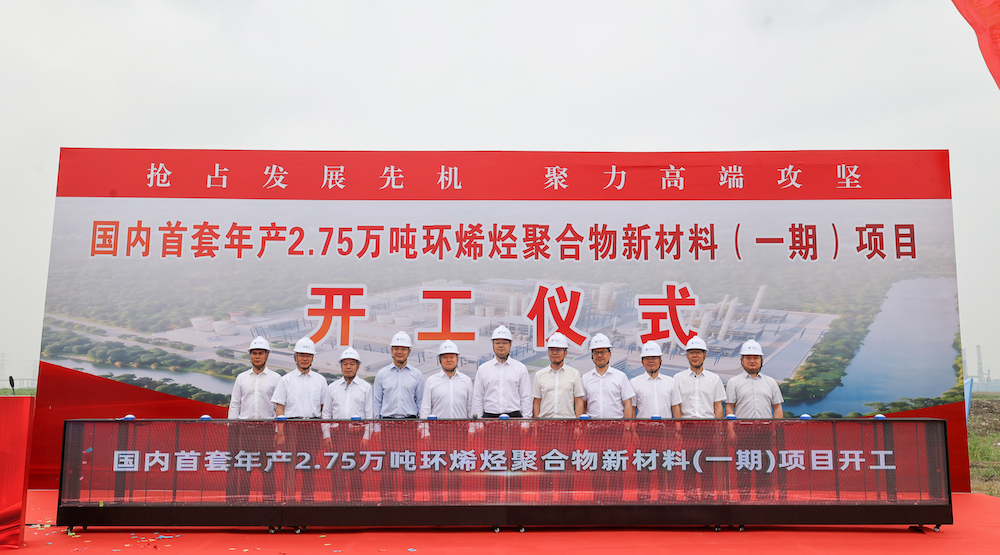
On the morning of May 28, the first domestic cyclo olefin polymer (COP) new material project in China, with an annual production capacity of 27,500 tons (Phase I), officially broke ground in the Ningbo Petrochemical Economic and Technological Development Zone.
This major project of the "Thousand Projects, Trillion Yuan" initiative in Zhejiang Province, with a total investment of 1.536 billion yuan, is contracted by China Chemical SEDIN Ningbo Company as the EPC general contractor. The first phase will establish a 5,000 tons/year COP resin production line, marking a significant step in the industrialization and mass production of this critical material, which has been monopolized by Japanese companies for 30 years.
It is understood that the project will be constructed in two phases: Phase I is scheduled to be completed and put into operation in December 2027, while Phase II will include key monomer raw material units, establishing a closed-loop industrial chain from monomer synthesis to polymer production. Ultimately, the project will achieve a total production capacity of 27,500 tonnes per year, with the goal of forming a stable supply capacity of 20,000 tonnes per year for COP resin and film products within five years.
Huansitin New Materials (Ningbo) Co., Ltd. was established in May 2021 and is a leading specialized and innovative enterprise in China focused on the research, development, production, and application of COP (Cyclic Olefin Polymer). The company’s core team has been deeply engaged in the polymer materials field for decades, building a comprehensive independent intellectual property system. They have overcome four key technologies: cyclic olefin monomer synthesis, metallocene catalyst development, polymerization process, and high-purity purification. The product performance is benchmarked against the high-end grades of Japan's Zeon Corporation.
The project received approval for record filing on March 12, 2026; on March 25, an EPC general contracting agreement was signed with China National Chemical Engineering Saiding (Ningbo) Company; on April 1, the construction land planning permit was obtained; and on May 28, construction officially commenced. The entire preliminary process was efficient and smooth. The total investment in the project is 1.536 billion yuan. Led by Ningbo Kaitou Fund, Zhenhai District’s state-owned enterprise Zhongpu Holdings, together with the industrial fund, invested 165 million yuan. Currently, the project is being advanced in two phases.
COF monopolized by Japan
Previously, the global high-end cyclic olefin polymer (COP) production capacity was dominated by Japanese companies, forming an absolute monopoly.
Japan's Zeon — the world's largest COP manufacturer, accounting for nearly 90% of the global COP market. Current production capacity is 42,000 tons per year (Mizushima plant 41,600 + Kawasaki plant 400); in March 2026 construction began on a new 12,000 tons per year COP unit, and after it starts production in the first half of 2028 total capacity will reach 54,000 tons per year. It offers three major COP brands/models: ZEONEX® (general-purpose optical grade), ZEONOR® (high-heat-resistant medical grade), and ZEONOR® Film (optical film grade).
Japan’s JSR is the world’s second-largest supplier. It has an annual capacity of about 5,000 tons (at the Chiba plant), all of which is high-end optical-grade and semiconductor-grade COP capacity; its branded product line is the ARTON® series.
As the world’s largest consumer of COP, China’s domestic demand in 2024 is approximately 30,000 tons, over 90% of which relies on imports. High-end optical-grade and medical-grade products, in particular, are entirely priced by overseas suppliers, with prices as high as RMB 180,000–220,000 per ton, severely constraining cost control and supply chain security for downstream optical, medical, and electronics industries.
However, it is important to distinguish that COC is often confused with COF. In fact, COF is another type of cycloolefin copolymer with ethylene/propylene, and its technical barriers are lower than those of homopolymer COP. The global production capacity is about 40,400 tons per year. The main producers are Japan's Polyplastics (the world's largest COC manufacturer), Mitsui Chemicals of Japan, and others. Currently, domestic companies such as Tuoxian Technology, Wuxi Acoly, and Liaoning Luhua Hongjin have achieved mass production of COC.
What is COP material?
Cyclic olefin polymer (COP) is hailed as "optical gold"; it is a high value-added thermoplastic engineering polymer that offers an irreplaceable combination of properties.
Its light transmittance exceeds 92%, approaching that of optical glass, and it has an extremely low birefringence, making it an ideal material for manufacturing smartphone camera lenses, automotive lenses, and AR/VR optical modules. With a high heat distortion temperature, it can withstand sterilization at 121°C, and is widely used in medical products such as vaccine vials, pre-filled syringes, and bio-detection chips. Its impurity content is extremely low, meeting semiconductor-grade cleanliness requirements, so it can be used in wafer carriers and chip packaging materials. At the same time, it also features low water absorption, excellent insulation, and good biocompatibility, offering broad application prospects in fields such as 5G communications and high-end food packaging.
As a milestone event in the field of high-end new materials in China, the core value of the Huanxitin Ningbo project lies in achieving independent and controllable full industrial chain of COP. Once completed, this project will completely fill the domestic gap in large-scale and high-end COP production, providing stable core material support for three major national strategic industries: optical displays, healthcare, and electronic semiconductors, fundamentally reversing China's passive situation of being constrained by others in this critical material field.
Commencement Site Conditions
Lin Bin, Secretary of the Zhenhai District Party Committee and Secretary of the Party Working Committee of the Ningbo Petrochemical Zone, attended the ceremony and announced the commencement of construction for the project. Sun Dahai, a member of the District Party Committee Standing Committee, Deputy Director of the Management Committee of the Ningbo Petrochemical Zone and Deputy Secretary of the Party Working Committee, delivered a speech on site. Ningbo Petrochemical Zone leaders Jiang Jianye and Yu Jingjun, Bai Ran, Chairman of Huanxiting New Materials, relevant officials from the Ningbo Kaitou Fund, and representatives of the project team from China Chemical Saideng Ningbo Company jointly witnessed this historic moment.
To ensure the project was implemented efficiently, the Ningbo Petrochemical Zone set up a dedicated service task force to provide full-process support for approvals, land allocation, and supporting infrastructure, enabling the project to move from filing to commencement in just over two months.
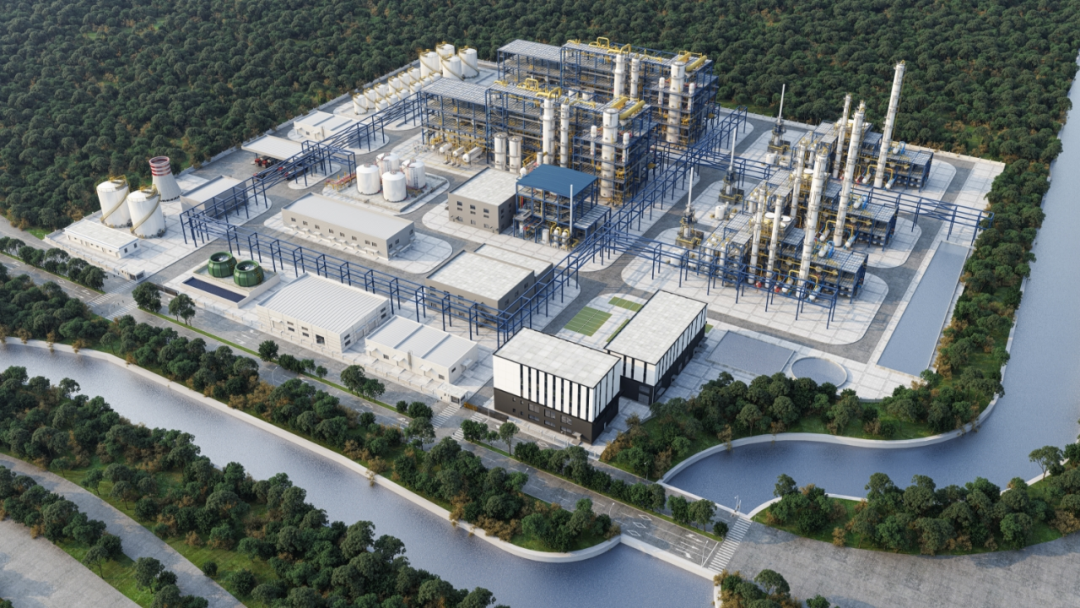
The commencement of the Copolymerized Styrene-Acrylonitrile (COP) project is a significant breakthrough in the independent innovation of China’s high-end new materials industry. It will not only break the long-term foreign monopoly and safeguard the security of the national industrial and supply chains, but also drive Ningbo to become a national hub for the new materials industry, injecting strong momentum into the high-end transformation of China’s manufacturing sector.
【Copyright and Disclaimer】The above information is collected and organized by PlastMatch. The copyright belongs to the original author. This article is reprinted for the purpose of providing more information, and it does not imply that PlastMatch endorses the views expressed in the article or guarantees its accuracy. If there are any errors in the source attribution or if your legitimate rights have been infringed, please contact us, and we will promptly correct or remove the content. If other media, websites, or individuals use the aforementioned content, they must clearly indicate the original source and origin of the work and assume legal responsibility on their own.
Most Popular
-

[overseas news] celanese and toray announce price hikes; basf: European Chemical Industry to Face a Decade of Consolidation
-
Covestro To Cut Antwerp PC Production Capacity, Close Bisphenol A Plant
-

[Overseas News] US Just Relaxed Rebates for Aluminum Can Stock, Saudi Arabia Turns Around and Imposes 38.7% Tax on Aluminum Can Lids
-
China’s First Domestic COP Project in Zhejiang Breaks a 30-Year Japanese Technology Stranglehold
-

Austrian Injection Molding And Automation Manufacturer Expects 10% Revenue Growth To €330 Million In 2026