



China's Volkswagen Sees Growing Export Business
Currently, influenced by market competition in the automotive industry, the role of multinational giants in China is changing.
Recently, Volkswagen Group CEO Oliver Blume revealed that Volkswagen has started exporting complete vehicles from China to the Middle East, Southeast Asia, and other regions, and plans to further introduce new models developed and produced in China to markets such as Africa and South America. A Volkswagen China spokesperson stated that they have always been involved in export business. Based on current information, it appears that Volkswagen intends to increase the proportion of its export business from China.
This may signal a shift in Volkswagen's strategy in China: the country will not only be its largest "single market" globally, but also one of its global "manufacturing and export bases."
Export business is expanding.
Bloom pointed out that China's R&D technologies and products have extremely fast market response speed and cost advantages, enabling them to reach regions that were previously difficult to efficiently cover from European bases. Currently, Volkswagen is not only exporting complete vehicles to the Middle East and Southeast Asia, but also plans to launch brand-new models developed in China to markets with great potential such as Africa and South America.
It is reported that Volkswagen is gradually shifting its focus on the research and development and production of some models targeting emerging markets to China. On the one hand, it aims to reduce development costs and shorten product cycles through localized R&D. On the other hand, it leverages China's mature supply chain system and complete vehicle manufacturing capabilities to enhance the price and delivery competitiveness of exported models. For markets such as the Middle East, Southeast Asia, and Africa, these products are more realistically appealing in terms of configuration, cost, and adaptability.
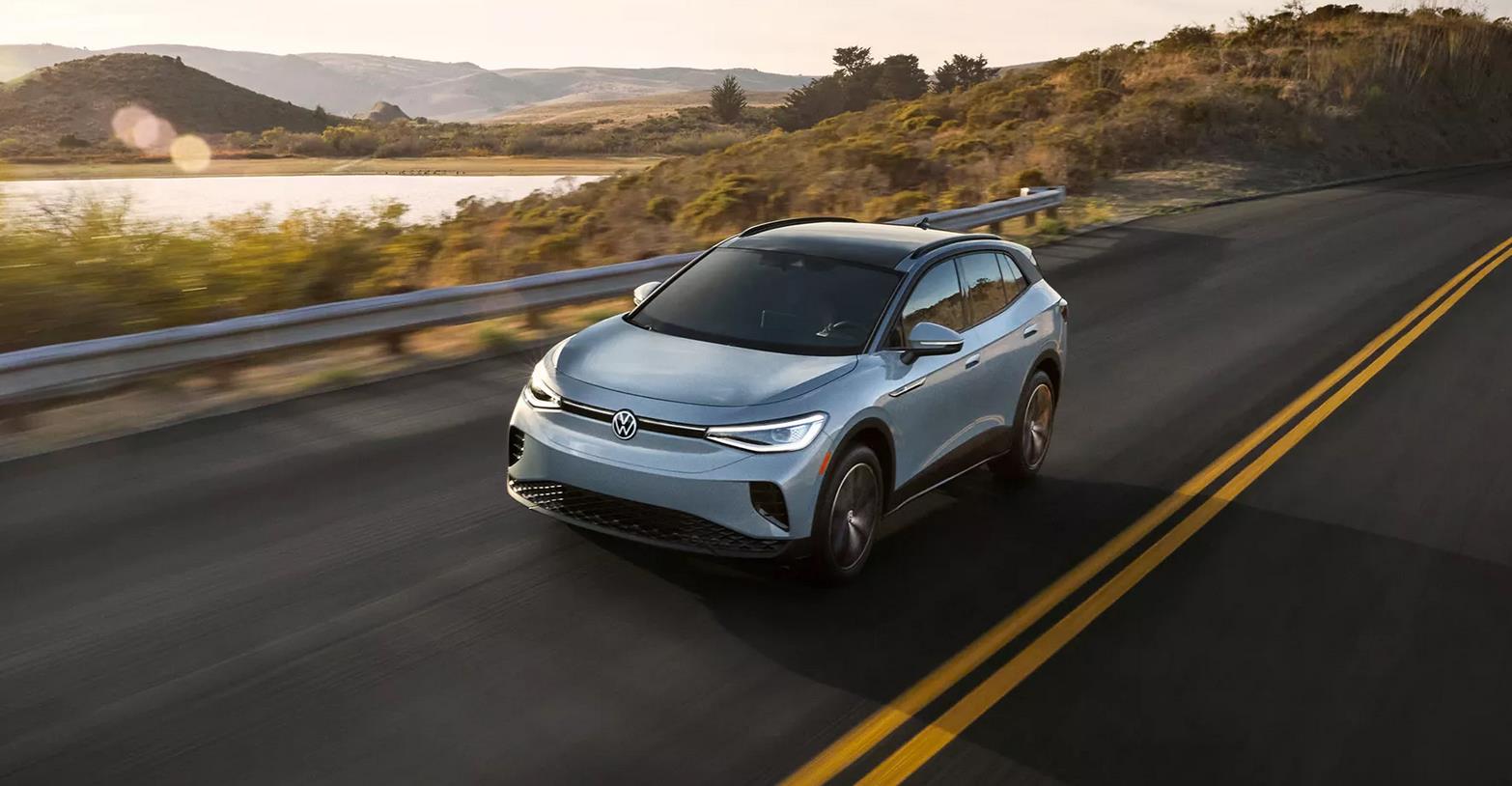
Image source: Volkswagen
This shift is also closely related to the real-world pressures Volkswagen faces in the Chinese market. For a long time, Volkswagen's production layout in China has primarily served the huge domestic consumption demand. However, with local brands like BYD dominating the electric vehicle race, Volkswagen is facing the serious challenge of declining sales – its deliveries in China have fallen from over 4 million units before the pandemic to about 2.7 million units last year.
In this context, digesting some production capacity and spreading fixed costs through exports has become a more pragmatic approach. Compared to simply downsizing, expanding exports can maintain the stability of the manufacturing system while providing new revenue streams for Chinese businesses.
Although its overall sales volume in China is unlikely to return to its peak in the short term, Volkswagen has a clear goal: to increase its market share in China from the current 11% to 15% by 2030. The growing export business will provide the core impetus for this goal.
"Domestically produced cars, sold worldwide."
Volkswagen is not alone in selling China-made cars to the global market. In fact, an increasing number of multinational automakers are incorporating China into their global export networks. Companies such as General Motors, BMW, Kia, Beijing Hyundai, and Ford have all been making relevant arrangements in recent years.
Under the leadership of President Sam Wu, Ford China has turned profitable in 2023 and achieved a full-year net profit of approximately $600 million in 2024 by reshaping its brand positioning, focusing on high-margin models, and optimizing its production capacity layout.
The core growth behind this achievement is the export business. In 2023, Ford China's vehicle export volume exceeded 100,000 units for the first time; in the first half of 2024, export volume increased by 45% year-on-year, reaching 75,000 units. Currently, Ford regards China as an important global export base, with products sold to the Middle East, Southeast Asia, and the Americas, among other regions.
Ford's global CEO Jim Farley once explicitly stated that in order to enhance competitiveness in international markets such as ASEAN and Australia, it is essential to "fully leverage the advantages of Ford China's rapidly growing export business."
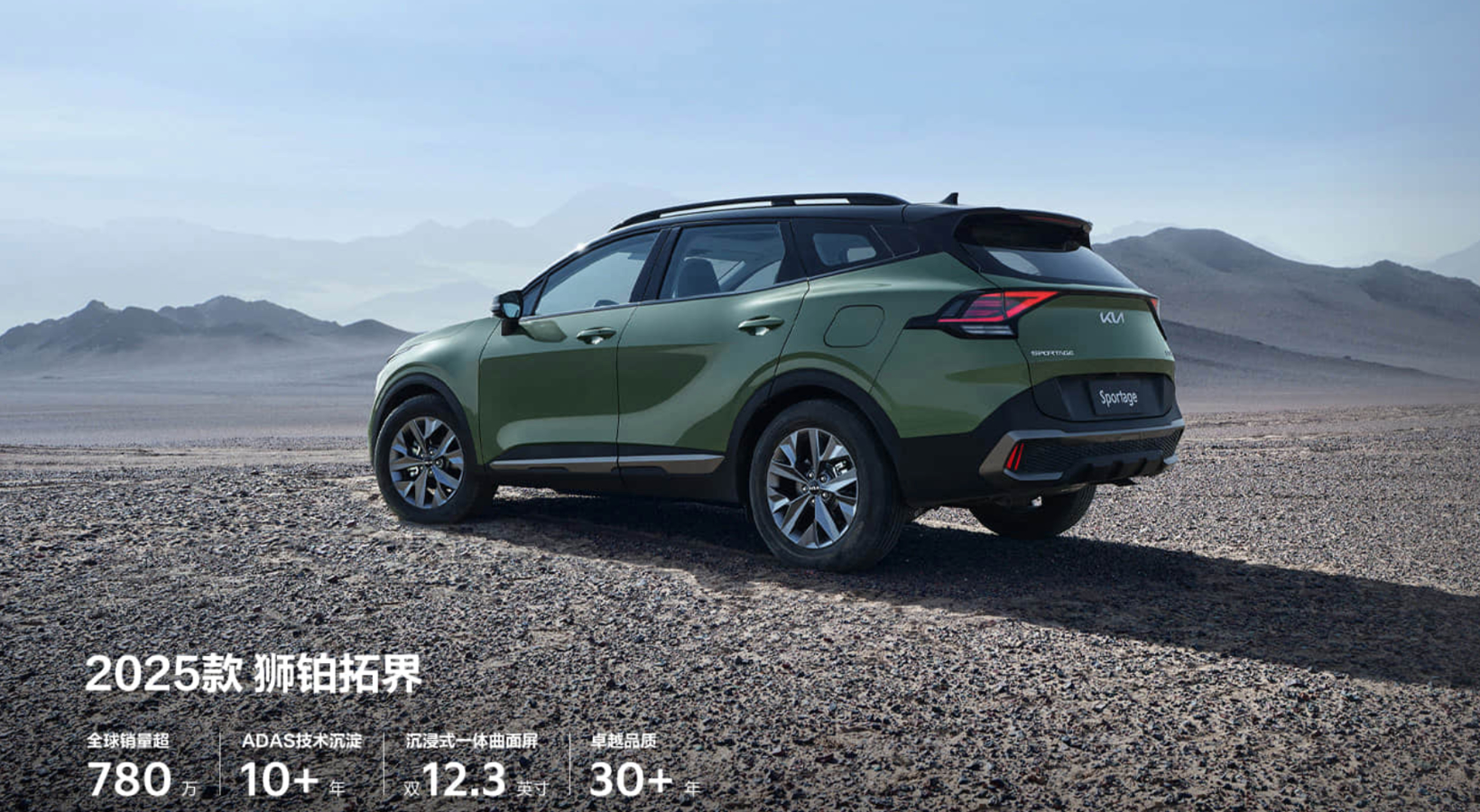
Image source: Yueda Kia
Yueda Kia also demonstrated strong operational resilience. In 2025, Yueda Kia's cumulative sales reached 254,000 units, a year-on-year increase of 2.3%, achieving positive growth for two consecutive years. This is due to the "domestic and export sales going hand in hand" pattern: to date, Yueda Kia has built an export lineup including EV5 and Sportage Ace, with cumulative exports of 530,000 vehicles, spanning 89 countries and regions around the world.
Other brands are also accelerating their deployment. Beijing Hyundai, through its "In China, For the World" strategy, achieved explosive growth of 400% in its export business in 2024, with export volume exceeding 50,000 units. Companies like BMW and General Motors are also continuously increasing their global allocation of R&D and production capacity in China, leveraging China's supply chain advantages to empower global products.
Multinational car company Why has China been progressively transformed into an export bridgehead?
One reason is to alleviate the pressure of capacity utilization: the capacity utilization rate of foreign brands in the Chinese market has dropped to around 50%. In the context of fierce local competition, exporting to absorb idle capacity is an inevitable choice to maintain factory operations and preserve the supply chain system.
Secondly, China's automotive industry chain exhibits a very high degree of integration in electrification and intelligence. Coupled with relatively low manufacturing costs, Chinese-made vehicles possess strong cost-performance competitiveness in overseas markets, making them well-suited for markets along the "Belt and Road" initiative, such as Central Asia and Africa.
Third, with the domestic market mired in a "price war," the higher gross profit margins in overseas markets have become one of the "lifelines" for companies to turn losses into profits. As seen from the experiences of Ford China and Yueda Kia, exports have become a new growth curve supporting the long-term survival of foreign car companies in China.
From "China for China" to "China for the World," the transformation of foreign automakers' operating logic in China essentially reflects a re-evaluation of the overall strength of China's automotive industry. The choices of Volkswagen, Ford, and Kia demonstrate that China has become an irreplaceable R&D and manufacturing hub in their global strategies.
【Copyright and Disclaimer】The above information is collected and organized by PlastMatch. The copyright belongs to the original author. This article is reprinted for the purpose of providing more information, and it does not imply that PlastMatch endorses the views expressed in the article or guarantees its accuracy. If there are any errors in the source attribution or if your legitimate rights have been infringed, please contact us, and we will promptly correct or remove the content. If other media, websites, or individuals use the aforementioned content, they must clearly indicate the original source and origin of the work and assume legal responsibility on their own.
Most Popular
-
Key Players: The 10 Most Critical Publicly Listed Companies in Solid-State Battery Raw Materials
-
Vioneo Abandons €1.5 Billion Antwerp Project, First Commercial Green Polyolefin Plant Relocates to China
-

EU Changes ELV Regulation Again: Recycled Plastic Content Dispute and Exclusion of Bio-Based Plastics
-
Clariant's CATOFIN™ Catalyst and CLARITY™ Platform Drive Dual-Engine Performance
-

List Released! Mexico Announces 50% Tariff On 1,371 China Product Categories