



EU Requires All Chargers to Have USB-C Ports and Detachable Cables in Three Years, Pushes for Universal Charging
According to the tech media techAU, the European Union will implement new regulations starting from December 2028 (three years from now), requiring all external power adapters sold in the EU to be equipped with a USB-C interface, covering devices such as routers, computer monitors, and smart home hubs.Aiming to provide a more unified charging experience.。
According to reports, many electronic devices have relied on proprietary "circular power ports" or fixed cables permanently connected to power adapters for years. Once the cable is damaged or the adapter is lost, the entire device often becomes unusable and ultimately ends up as "electronic waste" buried in landfills.
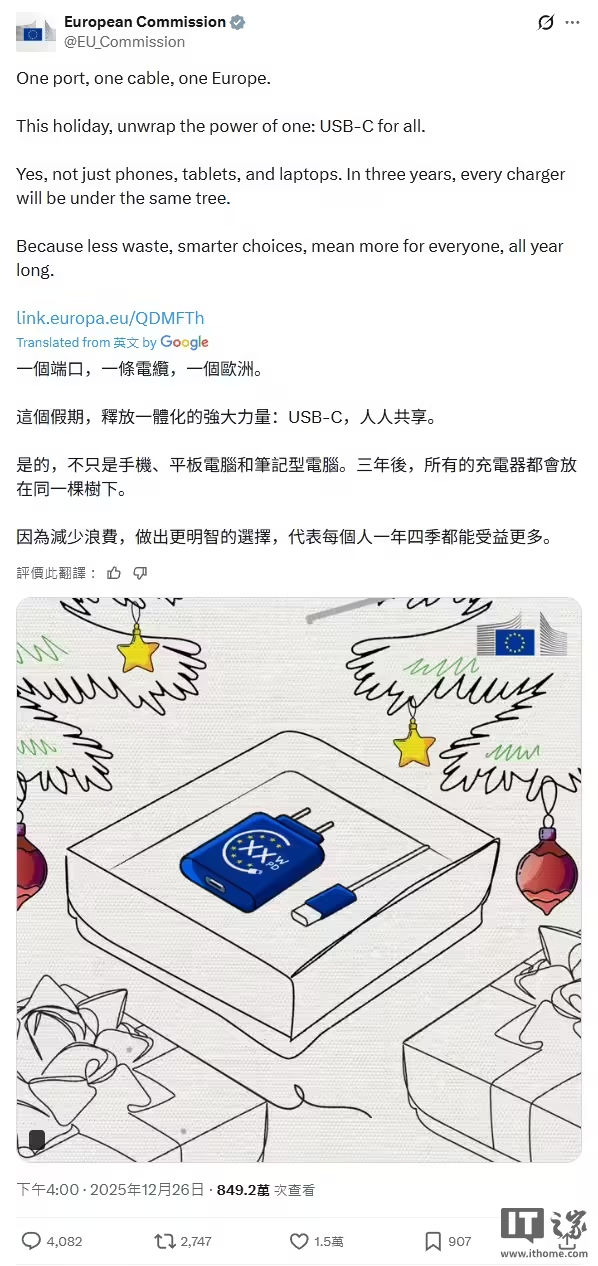
The new regulations not only require chargers to use USB-C interfaces but also mandate that cables must be detachable. This way, if the cable is damaged, users only need to buy a new USB-C charging cable.
The new regulations will cover devices with a maximum power of 240W, including low-power optical modems and high-performance gaming monitors. This means that in the near future, a high-quality GaN gallium nitride charger will be able to power all the devices on your desktop.
At the same time, this regulation can be traced back to the Radio Equipment Directive (RED), which requires that all smartphones, tablets, and cameras launched after the end of 2024 must be able to charge using a USB-C interface.
After April 2026, laptops will also be included in the mandatory requirement for USB-C interfaces. The industry has several years to improve the PD fast charging protocol before the mandatory standard arrives in 2028.
The European Commission stated that the new mandatory standards will bring significant environmental benefits, predicting that by 2035, the overall energy consumption of chargers will be reduced by 3%, which translates into substantial greenhouse gas emissions reductions. The new regulations also introduce stricter no-load power consumption standards, meaning that chargers will consume even less electricity when plugged into the wall but not in use.
In addition, the European Union predicts that by 2035, these mandatory standards will save consumers 100 million euros per year (IT Home note: approximately 826 million yuan at current exchange rates). Furthermore, the EU will introduce a "universal charger" label to help consumers identify compliant products, while clearly displaying the maximum output power of chargers, allowing consumers to quickly find the suitable charger.
However, it is worth noting that the EU does not mandate that chargers must only use the USB-C interface, but rather promotes a universal interface. French journalist Nicolas Lellouche interviewed an EU lawmaker in 2017, and at that time, the lawmaker revealed that if the alliance responsible for the USB standard decides to adopt a round USB-D interface in the future, the European Commission will take notice and initiate a transition process.
In addition, brands can provide two types of cables as needed, as long as one of them is a USB-C interface. For example, a computer that supports USB-C and a brand-specific standard may offer higher charging power with the proprietary standard cable.
【Copyright and Disclaimer】The above information is collected and organized by PlastMatch. The copyright belongs to the original author. This article is reprinted for the purpose of providing more information, and it does not imply that PlastMatch endorses the views expressed in the article or guarantees its accuracy. If there are any errors in the source attribution or if your legitimate rights have been infringed, please contact us, and we will promptly correct or remove the content. If other media, websites, or individuals use the aforementioned content, they must clearly indicate the original source and origin of the work and assume legal responsibility on their own.
Most Popular
-
Key Players: The 10 Most Critical Publicly Listed Companies in Solid-State Battery Raw Materials
-

Vioneo Abandons €1.5 Billion Antwerp Project, First Commercial Green Polyolefin Plant Relocates to China
-

EU Changes ELV Regulation Again: Recycled Plastic Content Dispute and Exclusion of Bio-Based Plastics
-

Clariant's CATOFIN™ Catalyst and CLARITY™ Platform Drive Dual-Engine Performance
-

List Released! Mexico Announces 50% Tariff On 1,371 China Product Categories