



EU Scraps Tax Exemption for Packages Below €150 to Take Action Against Shein and Temu
The EU plans to curb the disorderly influx of low-priced Chinese goods.

Image source: Ascannio/Shutterstock.com
The European Union plans to intensify its crackdown on low-priced imports from China and other non-EU countries. In the future, parcels valued at less than 150 euros will no longer enjoy tax exemptions. This move aims to more effectively address low-priced imports conducted through online retail platforms, such as Shein and Temu. According to the European Commission, in 2024, 91% of e-commerce imports valued at no more than 150 euros will come from China.
Shein, Temu, AliExpress, and other companies will have to pay fees for their parcels shipped to the EU in the future. EU finance ministers reached a consensus on November 13th. According to an EU spokesperson, the EU finance ministers in Brussels agreed to impose tariffs on low-priced parcels "as soon as possible by 2026." This move is in response to the significant increase in the number of parcels from China. Previously, these low-priced goods could often be imported for free. Dutch Finance Minister Eelco Heinen stated that it is time to "control" the flood of low-priced Chinese parcels. Additionally, the new regulation aims to prevent fraudulent activities: it is estimated that 65% of parcels sent to the EU are deliberately undervalued during customs declaration to enjoy exemptions. According to authorities, this is detrimental to the EU's small and medium-sized enterprises because they cannot compete with the lower selling prices. Moreover, the exemption has prompted merchants to split large orders into small parcels for shipping, which has also resulted in more packaging waste.
Currently, the European Union grants a customs duty exemption for small parcels originating from third countries, valued at no more than 150 euros, and delivered directly to consumers. The EU proposed as early as May to abolish this exemption and impose a handling fee of 2 euros per parcel, which will also be implemented starting in 2026. The European Commission initially proposed to eliminate the tax exemption policy in 2028. However, due to the large influx of parcels into the EU, many businesses have protested. EU Trade Commissioner Maros Sefcovic suggested to EU finance ministers that the so-called minimum tax exemption threshold be abolished in the first quarter of 2026. In a letter to the finance ministers, he wrote that the planned timetable is "not in line with the urgency of the situation." He emphasized that European industries, particularly the retail sector, have repeatedly stressed the need to eliminate this competitive distortion without delay.
Implementing this measure is challenging: customs authorities are currently under pressure. Therefore, Alien Mulyk, Head of European and International Public Affairs, warns against merely adopting symbolic policies: "The cancellation of tax-free allowances is an important first step towards achieving fairer competitive conditions. However, for this measure to be effective, digitization needs to be realized as soon as possible, customs and market regulatory agencies need to be better equipped, and a unified system should be established within the internal market." In fact, a digital platform for recording and controlling small packages will not be fully operational until 2028 at the earliest. To alleviate operational pressure, member states hope to introduce a temporary solution next year.
German business community accuses the government of inaction on Temu and Shein.
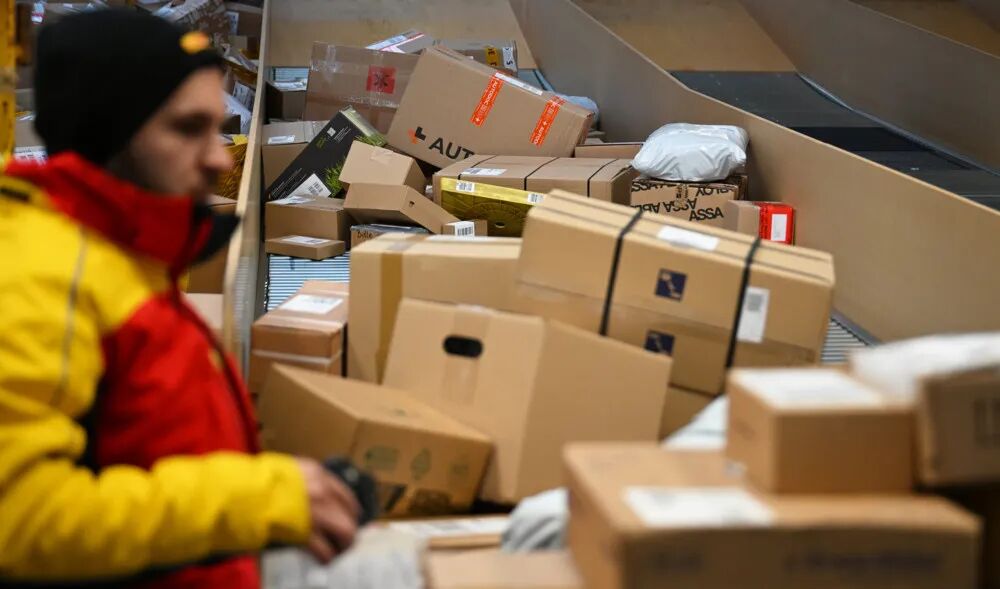
Image Source: Wolf von Dewitz/dpa
Günther Althaus, the chairman of the German Association of Medium-Sized Enterprises, stated that this decision is "a necessary step for Europe to achieve fair competition." He called on customs authorities to be "equipped with personnel and digitalization in order to truly control the increasing flow of goods." German Finance Minister Lars Klingbeil said that this measure sends a signal that "we do not want cheap goods from China, we want to protect our market." He emphasized that this policy must be implemented as soon as possible.
However, the federal government remains cautious about whether to follow France's example of intensively inspecting Shein packages at airports. A spokesperson for the German Ministry of Finance stated that no potential measures would be announced in advance. Customs has been continuously conducting risk-based and random inspections of goods packages from online retailers. German Minister of Economic Affairs Katherina Reiche did not directly mention Shein and Temu at the trade conference in Berlin. She stated that the goal is to strengthen the legal enforcement of online retail.
The trade association has criticized the federal government for its inaction regarding these controversial shopping platforms. Alexander von Preen, the chairman of the German Trade Association, stated that this is "inaction assistance" for small and medium-sized enterprises, businesses, and manufacturers. Shein and Temu systematically violate European consumer protection, tax, and environmental standards every day. "This undermines the internal market." The issue is not a lack of regulation, but rather a failure of enforcement.
In recent years, online retail has led to an exponential increase in the number of small, low-cost parcels entering the European Union. According to the European Commission, the EU receives approximately 12 million parcels daily in 2024, significantly more than in the previous two years. Shopping platforms Shein and Temu are particularly popular. According to the latest ranking by the German Trade Institute EHI, Shein has become the seventh-largest online store in Germany in 2024. Temu ranks fourth among marketplace platforms. Shein and Temu send about 400,000 parcels daily to German customers. In 2024, sales for these two platforms in Germany ranged between 2.7 billion and 3.3 billion euros, with over 14 million Germans shopping on these platforms last year.
Shein and Temu are controversial, with politicians, trade representatives, and consumer advocates criticizing product quality, lack of controls, and unfair competitive conditions. They are calling for better protection in online shopping and, in part, for stricter regulations. Recently, a study by the German Product Testing Foundation showed that out of 162 products tested that were priced below 150 euros, 110 did not meet EU standards.
【Copyright and Disclaimer】The above information is collected and organized by PlastMatch. The copyright belongs to the original author. This article is reprinted for the purpose of providing more information, and it does not imply that PlastMatch endorses the views expressed in the article or guarantees its accuracy. If there are any errors in the source attribution or if your legitimate rights have been infringed, please contact us, and we will promptly correct or remove the content. If other media, websites, or individuals use the aforementioned content, they must clearly indicate the original source and origin of the work and assume legal responsibility on their own.
Most Popular
-
Dow, Wanhua, Huntsman Intensively Raise Prices! Who Controls the Global MDI Prices?
-

Clariant Unveils Cost-Cutting Plan Details, Plans to Shut Down Multiple Plants
-
[Today's Plastics Market] General Materials Weakly Fluctuate, Engineering Materials Steadily Rise
-

New Breakthrough in Domestic Adiponitrile! Observing the Rise of China's Nylon Industry Chain from Tianchen Qixiang's Production
-

Daily Review: Polyethylene Prices Under Weak Consolidation, Sellers Face Significant Pressure to Move Inventory