



Foreign Trade Enterprises Take Note! Renminbi Exchange Rate May Break 7 By The End Of March 2026
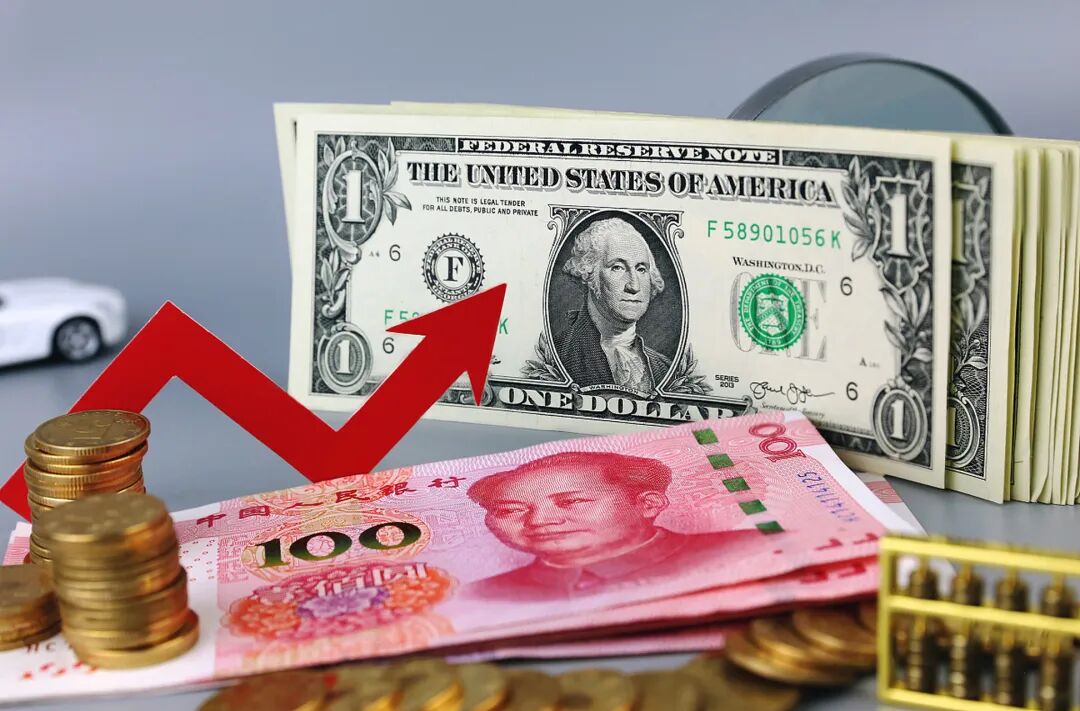
The Central Economic Work Conference held in December clearly stated the need to maintain the basic stability of the RMB exchange rate at a reasonable and balanced level.
According to Bloomberg data, the target may be to stabilize the RMB exchange rate at around 7 yuan to 1 dollar by the end of March 2026.
This move is to balance multiple objectives.
⚠️ Protecting Exporters: This move aims to safeguard the competitiveness of export enterprises and avoid the impact caused by the rapid appreciation of the RMB. In November 2025, exports grew by 5.9% year-on-year, exceeding expectations. Rapid appreciation would weaken the dollar pricing competitiveness of export goods, leading to a compression of corporate profits. Additionally, this helps prevent exporters from massively flocking to exchange currencies, which could trigger capital flow volatility and further promote RMB appreciation.
⚠️ Suppressing Carry Trade: Carry trade leverages the interest rate differential between China and the US (where the US dollar interest rate is higher than the Chinese yuan), profiting by borrowing yuan to buy dollars. However, gradual appreciation makes the exchange rate gains from holding dollars insufficient to cover the cost of the interest rate differential, reducing the attractiveness of the trade.
RMB appreciation trend: Since April 2025, the RMB has been continuously strengthening against the US dollar, with a cumulative appreciation of approximately 3.7% year-to-date. The pace of appreciation is relatively stable, with an increase of about 1% every 60 days.
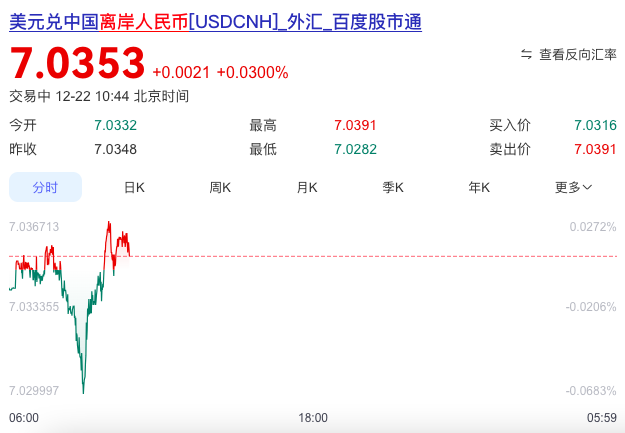
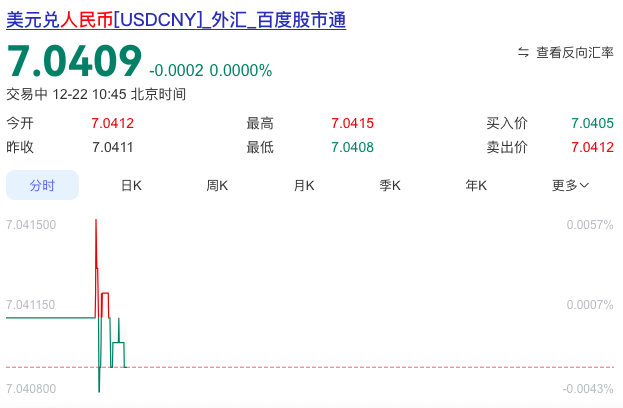
Recently, the RMB reached a 14-month high. On December 22, the offshore RMB exchange rate fell to a low of 7.0282, while the onshore RMB exchange rate dropped to a low of 7.0408.
The appreciation of the RMB is mainly benefiting from the increased demand for foreign exchange settlement by exporters at the end of the year and the overall weakening of the dollar.
📌 Weakening Dollar: On December 11, the Federal Reserve lowered interest rates by 25 basis points as expected, causing the dollar index to continue its decline (falling below 100) and further narrowing the interest rate differential between China and the U.S. This directly drove the appreciation of non-U.S. currencies like the yuan, compressing the interest rate gap between the dollar and the yuan. The probability of the Federal Reserve maintaining interest rates in January is 75.6%, and the probability of a cumulative 25 basis points cut by March is 41.9%. The trend of a weaker dollar may continue, supporting a moderate appreciation of the yuan.
📌 Strong demand for foreign exchange settlement: The seasonal characteristics of exporters' foreign exchange settlement behavior before the Spring Festival, along with the concentrated explosion of foreign trade enterprises' settlement demand at the end of the year, lead to a significant increase in the demand for RMB. Additionally, overseas workers will also remit their wages earned over the past year back to the country. With multiple factors combined, the demand for RMB reaches its highest level of the year.
⚠️ Central Bank Action: Rapid appreciation in the short term can impact multiple parties, which the central bank is also unwilling to see. A fluctuating appreciation in the exchange rate may better align with the central bank's expectations. Since December 2025, the central bank's reference rate has often been seen as a "strong signal," with the RMB to USD reference rate consistently being adjusted in the opposite direction, meaning the reference rate is weaker than the market rate. This indicates that the central bank is sending signals to "stabilize the exchange rate" and guide the exchange rate to fluctuate in both directions.
⚠️ The systemic undervaluation of the RMB exchange rate will be gradually corrected: Since 2023, the RMB has been systematically undervalued by about 6%. However, the previously feared foundational concerns are gradually dissipating: On one hand, the independence of cross-border payments has increased, which should compress the risk premium of the RMB. The market's previous concerns about the risk of RMB cross-border payment channels being "choked" have been dispelled by the improvement of the multilateral central bank digital currency bridge project. On the other hand, the market's reconstruction of the perception of the power balance between China and the US will gradually transmit to the currency. The governance practice during the first year of Trump's 2.0 administration has led the market to gradually realize that the hard power of the US is no longer what it used to be, while the continuous accumulation of China's hard power should gradually be reflected in an increase in financial and monetary influence.
From a long-term perspective, the systemic undervaluation of the renminbi in recent years lacks a sustainable basis, and there is hope for gradual correction in the future. The possibility of significant appreciation of the renminbi against the US dollar is worth noting.
【Copyright and Disclaimer】The above information is collected and organized by PlastMatch. The copyright belongs to the original author. This article is reprinted for the purpose of providing more information, and it does not imply that PlastMatch endorses the views expressed in the article or guarantees its accuracy. If there are any errors in the source attribution or if your legitimate rights have been infringed, please contact us, and we will promptly correct or remove the content. If other media, websites, or individuals use the aforementioned content, they must clearly indicate the original source and origin of the work and assume legal responsibility on their own.
Most Popular
-

Key Players: The 10 Most Critical Publicly Listed Companies in Solid-State Battery Raw Materials
-

Vioneo Abandons €1.5 Billion Antwerp Project, First Commercial Green Polyolefin Plant Relocates to China
-

EU Changes ELV Regulation Again: Recycled Plastic Content Dispute and Exclusion of Bio-Based Plastics
-
Clariant's CATOFIN™ Catalyst and CLARITY™ Platform Drive Dual-Engine Performance
-

List Released! Mexico Announces 50% Tariff On 1,371 China Product Categories