



From Compliance to Competitiveness: Alpla’s Circular Design and Recycling Practices Driven by PPWR
Recyclability is gradually shifting from a voluntary quality requirement to a mandatory regulatory provision. The EU's new Packaging and Packaging Waste Regulation (PPWR) clearly stipulates that by 2030, all packaging must be recyclable and must contain a legally mandated proportion of post-consumer recycled material. Alpla, a pioneer in the global packaging and recycling industry, has already integrated the recycling process directly into its production.
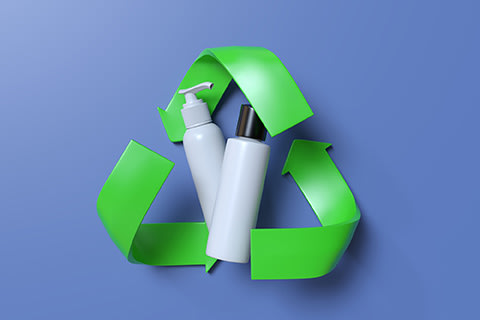
Only recyclable packaging can ensure enterprises’ long-term access to raw materials and secure market entry.
Enterprises are facing increasingly stringent regulatory requirements, continuously rising raw material costs, and increasingly tight supply chain pressures. At the same time, building a circular material flow can reduce reliance on primary raw materials and reduce waste generation.
Whether packaging can ultimately be recycled to a large extent is determined at the design stage. The selection of raw materials, color matching, composite structure design, and the use of additives directly determine whether the packaging can be efficiently recycled or whether it leads to the loss of valuable resources. Therefore, recyclable design has become a key factor in creating sustainable packaging and ensuring the future market competitiveness of products.
Core Points of the Packaging and Packaging Waste Regulation (PPWR)
Starting in 2030, the EU will implement a mandatory standard requiring a minimum material recycling rate of 70% for all packaging. This regulation classifies packaging recyclability into three levels.
A grade: The recovery rate can reach 95%
Grade B: Recovery rate can reach 80%
C Level: The recycling rate can reach 70% (minimum qualifying threshold)
Packaging rated as C will gradually be phased out of the market.
Meanwhile, regulations mandate the minimum percentage of post-consumer recycled (PCR) content in packaging design.
Food grade PET packaging: 30%
Food contact grade non-PET plastic packaging: 10%
Single-use beverage bottle: 30%
Other plastic packaging: 35%
By 2040, the addition ratios of recycled materials across categories will be further increased, ranging from 25% to 65%.
Recycled materials face a shortage crisis.
The implementation of the Packaging and Packaging Waste Regulations may significantly increase the cost of plastic packaging. Companies need to make comprehensive adjustments in design, production, and procurement to meet recyclability standards and the legal requirements for the addition of recycled materials.
In light of this, the German Mechanical Engineering Industry Association (VDMA) forecasts that a supply shortfall of recycled plastics may emerge. Such supply bottlenecks and the resulting price increases will exert significant pressure on the market and consumers.
Importing low-cost recycled materials may temporarily increase supply and alleviate price pressures. However, suppliers from countries with lower environmental and labor standards and significant energy cost advantages pose a threat to Europe’s domestic recycling industry. Under stricter regulatory environments and higher cost structures, European recyclers struggle to compete. Returns on corporate investments in recyclability-by-design and domestic recycling capacity may decline, and high-quality post-consumer recycled material supply chains could become unstable—ultimately leading to deteriorating raw material quality, heightened import dependency, and significant procurement risks.
In the long term, whether Europe can rely on its own material flow to produce a sufficient amount of high-quality post-consumption recycled materials and build an autonomous circular economy system depends on three key elements: recyclability by design, an efficient plastic recycling system, and breakthroughs in the research and development of new recycling technologies.
Preemptive layout, victory in the future.
As a leading company in the rigid plastic packaging industry, Alpla has fully integrated recycling processes into its production. The company's CEO, Philipp Lainer, said: "We have built a complete recycling system from recycling bales to the production of post-consumer recycled materials in Europe, without relying on low-cost imported raw materials." With its own recycling facilities and a closed-loop production model, the company promotes the circular economy while ensuring production stability and material quality.
Apra's case demonstrates that companies which proactively implement design for recyclability, establish high-quality post-consumer recycled material supply chains, and develop efficient recycling processes will gain regulatory compliance assurance, stable production systems, and long-term market competitiveness. The Packaging and Packaging Waste Regulation clearly conveys a core message: the circular economy does not begin at the waste management stage, but at the very inception of product design. Companies that firmly embed circular principles into the design phase lay a solid foundation for their own sustainable development.
【Copyright and Disclaimer】This article is the property of PlastMatch. For business cooperation, media interviews, article reprints, or suggestions, please call the PlastMatch customer service hotline at +86-18030158354 or via email at service@zhuansushijie.com. The information and data provided by PlastMatch are for reference only and do not constitute direct advice for client decision-making. Any decisions made by clients based on such information and data, and all resulting direct or indirect losses and legal consequences, shall be borne by the clients themselves and are unrelated to PlastMatch. Unauthorized reprinting is strictly prohibited.
Most Popular
-

Layoffs, Divestments, Plant Closures While Pouring Billions: BASF Undergoes Major Transformation!
-
Ascend Adipic Acid Hit By Force Majeure, Market Expects Supply Resumption In Mid-September
-

Raw Material Supply Shortage! INEOS Phenol Declares Force Majeure on Phenol and Acetone Businesses
-
South Korea initiates anti-dumping investigation against Chinese PVC suspension resin! The target is Tianjin Bohua and Wanhua Chemical. How to break through?
-

Sixth national procurement set to be implemented: A “Reshuffling” Moment for the $10-Billion Medical Device Market