



From "Device Upgrade" To "System Innovation": Technology Integration Leading Industry's Net Zero Leap
The global manufacturing industry is at a dual turning point of intelligence and low carbonization. The traditional model that has long relied on manual experience and fixed process routes is becoming increasingly inadequate in the face of net-zero carbon targets and diversified market demands.
The transformation of the plastics and rubber industry and the construction industry, as two major foundational industries, is particularly urgent.The construction sector consumes over one-third of the world's energy and generates a corresponding proportion of carbon emissions.。
As an important material supplier, the plastic and rubber industry is also facing the issues of high energy consumption in the production process and the carbon footprint of the product life cycle. Against this backdrop, the "experience-oriented" production mode is transitioning to "data-driven intelligent decision-making."
Screw mixing and reactive extrusion, as the core processes of plastic and rubber processing, are achieving a transformation from mere processing equipment to a hub connecting "material design" and "intelligent processing" through technological innovation.
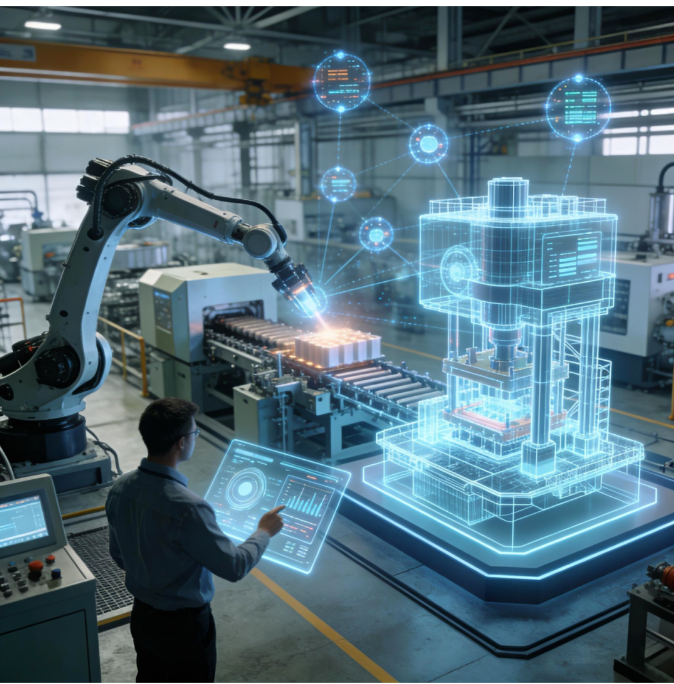
Institute of Materials and Chemical Research at ITRI collaborates with National Tsing Hua University for development."Recursive Deep Embedding Network" model can analyze the dynamic relationships between screw element arrangement, operating conditions, and chemical reactions.Achieved prediction and optimization of product quality.
This AI-driven intelligent process enables the reaction extrusion to have the capabilities of being learnable, predictable, and optimizable.
The breakthrough in low-carbon depolymerization technology is equally noteworthy. For example, in the case of high carbon footprint plastic PC, researchers have developed...This reduces the energy consumption for depolymerization by about 30% compared to traditional methods.
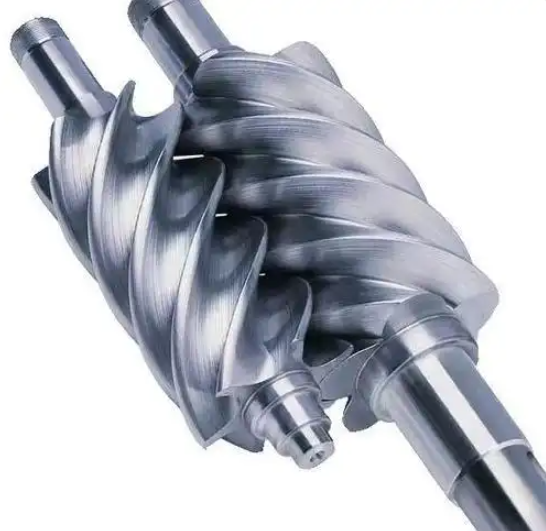
This technology can rapidly achieve partial depolymerization under low temperature and low pressure, and can handle PC/ABS waste containing impurities. The oligomers and bisphenol A in the depolymerization products can be reused for low-carbon coatings and polyurethane adhesives, achieving the dual goals of chemical recycling and high-value utilization.
In the field of recycling, physical recycling combined with kneading/blending and compatibilization technology has successfully solved the recycling challenges of cotton, polyester, and other difficult-to-separate blended fibers. This technology allows fibers to be uniformly dispersed in thermoplastic resin, producing high-fiber-content recycled composite material masterbatches, and has already achieved mass production in cooperation with domestic industry partners.
The carbon emissions in construction can be divided into two main categories: "embodied carbon" and "operational carbon," which refer to the energy consumption during the production phase of building materials and the energy consumption during the usage phase of the building, respectively.
To achieve net-zero building goals, both the material side and the usage side must be considered, achieving a reduction in carbon emissions throughout the entire lifecycle through intelligent management, energy creation, and energy-saving technologies.
Perovskite solar window technologyThe "Luban No. 2" energy-generating window developed by Taiwan's perovskite technology research represents a new direction for integrating solar energy into architecture.The dimensions are 2.1×1.1 meters, combining both power generation and thermal insulation functions.。
After adopting inert gas encapsulation technology, the generation of water vapor and fog has been effectively suppressed, extending the lifespan of the module. This technology allows architects and designers to freely define the visual style of energy-generating materials while balancing energy output and spatial aesthetics.
The first "perovskite zero-carbon building" in Taiwan, inaugurated by the National Center for Research in China, serves as a demonstration site for third-generation solar energy, showcasing the innovative concept of "buildings as power plants." This building utilizes next-generation perovskite solar energy materials, which possess physical properties such as thermal insulation, waterproofing, wind resistance, and noise reduction. It also integrates a smart energy management system to effectively schedule energy production and usage.
Energy consumption in the building sector accounts for more than 30% of global energy consumption. Developing energy-saving technologies applicable to both new and existing buildings has become an important industrial proposition. Building digital twin technology, focusing on simulation and optimization, utilizes software computational techniques to provide an innovative approach to building energy conservation.
The digital twin model can provide good training data for artificial intelligence in its early stages.Based on physical performance control and environmental feedback characteristics, it can not only "cultivate" artificial intelligence in the early stages but also simulate operational scenarios when artificial intelligence is deployed to real sites.Verify the stability of the training results.
Haier's AI central air conditioning system, built on an MCU+NPU dual-core architecture, establishes a large AI model, enhancing instruction processing capability to millions per second. This allows buildings to autonomously perceive environmental changes and dynamically adjust energy consumption. Compared to traditional equipment, this system operates with approximately 15% energy savings, achieving a comprehensive unit operation energy-saving effect of 30%.
The digital transformation and green upgrading of traditional industries are accelerating integration.Technological innovation in the plastic and rubber industry and the construction sector has evolved from optimizing a single link to facilitating collaborative transformation across the entire industry chain.。
In the plastic and rubber industry, screw technology is evolving from traditional processing equipment into a smart hub that integrates AI, chemical reactions, physical mixing, and sustainable design.
The "Extruder Edge Control System" developed by Guilin Rubber Institute can deploy AI algorithms on edge computing nodes near the equipment. This allows the extruder to adjust in real-time based on operating conditions during continuous operation.Intelligent Self-Learning and Adaptive ControlAutonomous optimization of production has improved data security and response speed.
Coperion has equipped its extruders with the C-BEYOND digital platform, whichLifecycle ManagerBased on actual operational data, it can predict the maintenance needs of key components such as gearboxes, achieving predictive maintenance.Calculate the energy consumption and carbon emissions per kilogram of product.Transform sustainable goals into specific manageable production indicators.
The construction sector similarly exhibits a trend of technological integration. Perovskite energy-generating windows combine power generation and thermal insulation functions; building twin AI technology enables energy monitoring, simulation, and optimized management; and real-time monitoring technology for ready-mixed concrete processes improves process yield and stability through data sensing and intelligent analysis.
As the global pursuit of net-zero carbon emission goals becomes increasingly urgent, the green and intelligent transformation of the plastics, rubber, and construction industries will continue to accelerate. From AI-driven process optimization to the establishment of a circular economy model, and to the self-sufficiency of building energy, technological integration is reshaping the competitiveness and sustainability of traditional industries.
【Copyright and Disclaimer】The above information is collected and organized by PlastMatch. The copyright belongs to the original author. This article is reprinted for the purpose of providing more information, and it does not imply that PlastMatch endorses the views expressed in the article or guarantees its accuracy. If there are any errors in the source attribution or if your legitimate rights have been infringed, please contact us, and we will promptly correct or remove the content. If other media, websites, or individuals use the aforementioned content, they must clearly indicate the original source and origin of the work and assume legal responsibility on their own.
Most Popular
-
Dow, Wanhua, Huntsman Intensively Raise Prices! Who Controls the Global MDI Prices?
-

Clariant Unveils Cost-Cutting Plan Details, Plans to Shut Down Multiple Plants
-
[Today's Plastics Market] General Materials Weakly Fluctuate, Engineering Materials Steadily Rise
-

New Breakthrough in Domestic Adiponitrile! Observing the Rise of China's Nylon Industry Chain from Tianchen Qixiang's Production
-
Daily Review: Polyethylene Prices Under Weak Consolidation, Sellers Face Significant Pressure to Move Inventory