



Geely's Acquisition of SAIC-GM's Old Factory Is Just the Beginning, Planning for 5 Million Annual Production Capacity?
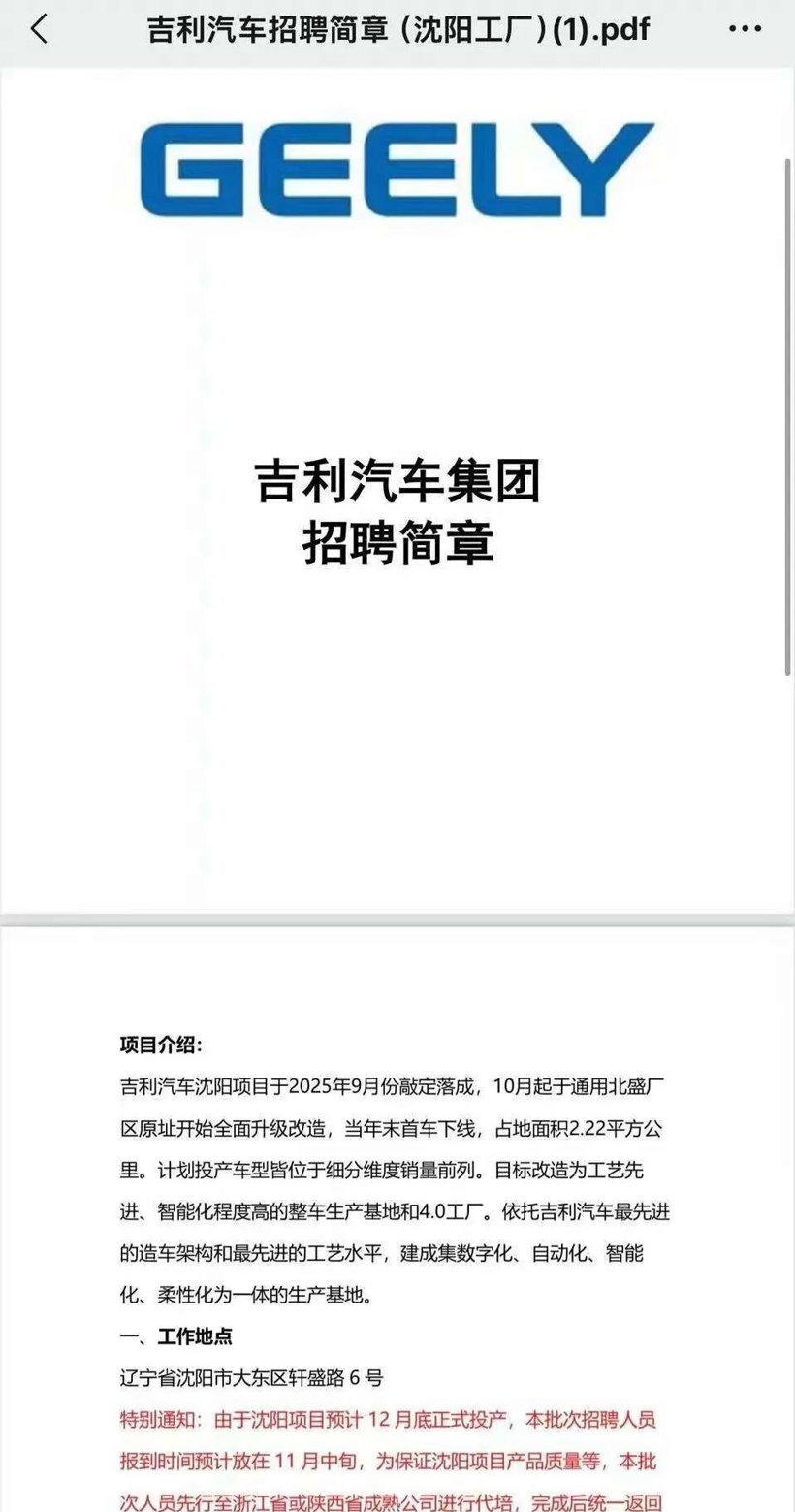
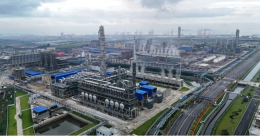
Recently, there have been reports that Geely Automobile has taken over the former SAIC-GM Beisheng Plant (Phase III) in Shenyang, which is currently undergoing upgrades and renovations. It will subsequently be used to supplement the production capacity of Geely Galaxy.
This new energy brand, Geely Galaxy, which currently has the opportunity to catch up with BYD and has completed its annual sales target of one million units two months early in October this year, is facing the sweet trouble of "capacity chasing orders."
The author has also confirmed this news from the recruitment information of Geely Automobile's Shenyang factory. The information indicates that the base covers an area of 2.22 square kilometers, and the planned models for production are all among the top in their respective segments in terms of sales. The goal is to transform it into a vehicle production base and 4.0 factory with advanced processes and a high degree of intelligence, with plans to achieve the first vehicle off the production line by the end of this year.
In addition, to enhance the production capacity supply of Geely Galaxy, Geely also plans to transform the Lotus sports car factory located in Wuhan. The project was signed in September this year and is expected to be implemented in the first half of 2026.
According to statistics from "Auto Commune," Geely Automobile currently has 16 major bases nationwide. They are primarily concentrated in Zhejiang, with additional bases planned in Hunan, Guiyang, Sichuan, Xi'an, Hebei, Shanxi, and Shandong. The actual planned production capacity exceeds 4.5 million vehicles.
If we also take into account Geely's plans to expand production capacity through "leasing + renovation," as well as its layout of overseas factories, Geely Automobile's total annual production capacity is expected to exceed 5 million units, clearly aiming at the goal of becoming the largest car manufacturer in the domestic market.
According to Geely's internal statement that "next year is a big year for products," combined with its capacity planning and layout, when do you think Geely will truly become the number one car company in China?
01New car is popular, Geely "borrows" production capacity?
Before the news of Geely's acquisition of the GM Baojun factory was officially disclosed, there were already signs of the situation. In February 2025, the SAIC-GM Baojun factory will be fully shut down, after which it was announced that the land of the southern factory will be converted for commercial and residential development, while the northern factory (i.e., Phase III) will be retained.
As one of the old industrial bases in Northeast China, Shenyang was once also a major automobile hub. Companies such as Brilliance, BMW, Jinbei, and General Motors, along with their manufacturing bases, supported the local industrial foundation and formed an automotive industry cluster. However, with the decline of enterprises like Brilliance, Jinbei, and General Motors, and BMW's market share in the luxury car segment being eroded by Chinese new energy vehicles, Shenyang now needs to introduce strong automotive companies to support its development.
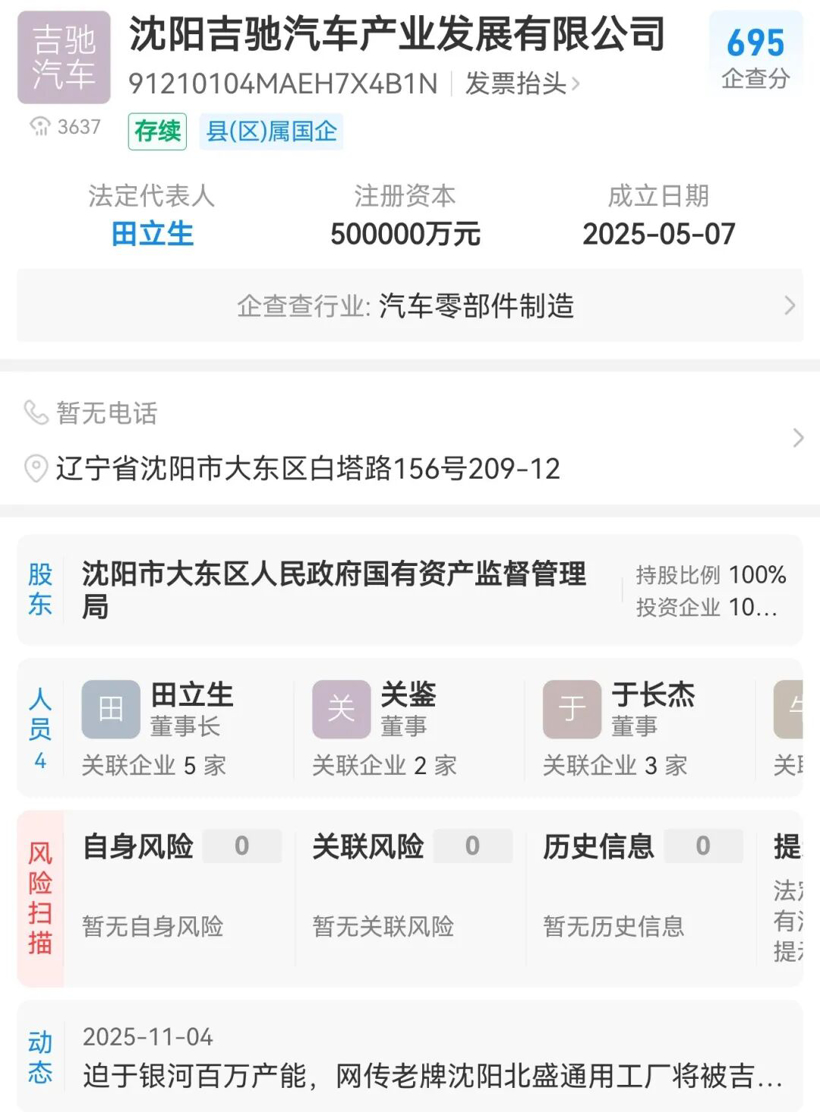
In May this year, Shenyang Jichi Automobile was established. Although all the capital behind it comes from Shenyang's state-owned assets, the inclusion of the character "Ji" in its name is self-explanatory. At that time, it was reported that the company would invest 890 million yuan to renovate and upgrade the base. Almost simultaneously, there were rumors in Shenyang that Geely would take over the Beisheng factory.
After that, recruitment websites showed that "Geely Automobile Shenyang Base" is intensively hiring positions such as welding engineers and new energy production line technicians, with a preference for those "familiar with electric vehicle production line transformation." This demand for talent structure and positions suggests that this traditional gasoline vehicle factory will be transformed into a dedicated base for new energy.
In September of this year, the Geely Shenyang project was officially finalized, and recruitment for production line staff began shortly thereafter. Starting in October, the factory will undergo a comprehensive transformation and upgrade. This joint venture base, which once had an annual production capacity of 500,000 vehicles, has officially entered a new era belonging to Chinese brands.
The core reason why Geely is so eager to "borrow" production capacity everywhere is that its latest series of new cars, from Geely Galaxy to Lynk & Co and then to Zeekr, far exceed expectations.
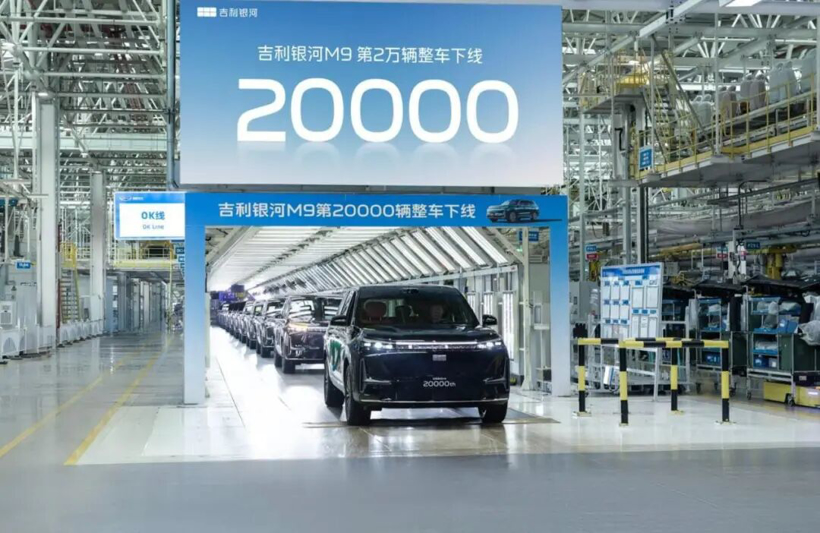
"Although the current daily production is around 700 units, the production capacity is seriously insufficient. Currently, only about 10,000 units are allocated to the Galaxy M9, with around 20,000 orders still pending. Moreover, every month, there are about 20,000 new orders." This was stated by a relevant person in charge at the Geely Qiantang base, which produces the Galaxy Xingyao 8 and M9, during the ceremony on October 31, where 20,000 new Galaxy M9 cars rolled off the production line. The Galaxy Xingyao 8 and Galaxy M9 are both selling very well, and there are currently many cars owed to customers.
Moreover, the large flagship SUVs like Lynk & Co 900 and Zeekr 9X have production capacities that cannot meet the market demand for orders. According to insiders from Lynk & Co and Zeekr, the production capacity for Lynk & Co 900 is only around 7,000 units and is currently operating at full capacity. The initial production capacity for Zeekr 9X is only about 5,000 units, but since its launch, the number of orders has far exceeded Zeekr's expectations. Currently, it takes at least half a year to receive a car after placing an order.
According to the data released by Geely in October, the Geely Galaxy achieved its annual sales target of 1 million units two months ahead of schedule. Among the 11 models currently on sale under the Geely Galaxy brand, 7 models have entered the ten-thousand-unit club, demonstrating the brand's recognition and popularity in the market, even amid tight production capacity.
"There is a serious shortage of cars, and production capacity is severely insufficient..." The author learned from insiders involved in multiple models at Geely that it’s not just these few large vehicles with insufficient production capacity; models like Geely Xingyuan, Galaxy A7, and Galaxy Xingyao 6 are also bestsellers.
However, the question is, does Geely really lack production capacity? According to preliminary statistics and verification by "Automotive Community," Geely currently has 16 major bases with a planned annual production capacity of over 4.5 million vehicles. This year, Geely is expected to achieve annual sales of 3 million vehicles, meaning there is about 1.5 million in surplus capacity that is not fully utilized. Even if Geely targets sales of 4 million vehicles next year, the current production capacity is entirely sufficient.
Geely's acquisition of the Beisheng factory from SAIC-GM in Shenyang and the takeover of the Lotus factory in Wuhan serve two core purposes: one is to expand production capacity, and the other is to adjust capacity, market, and industrial layout.
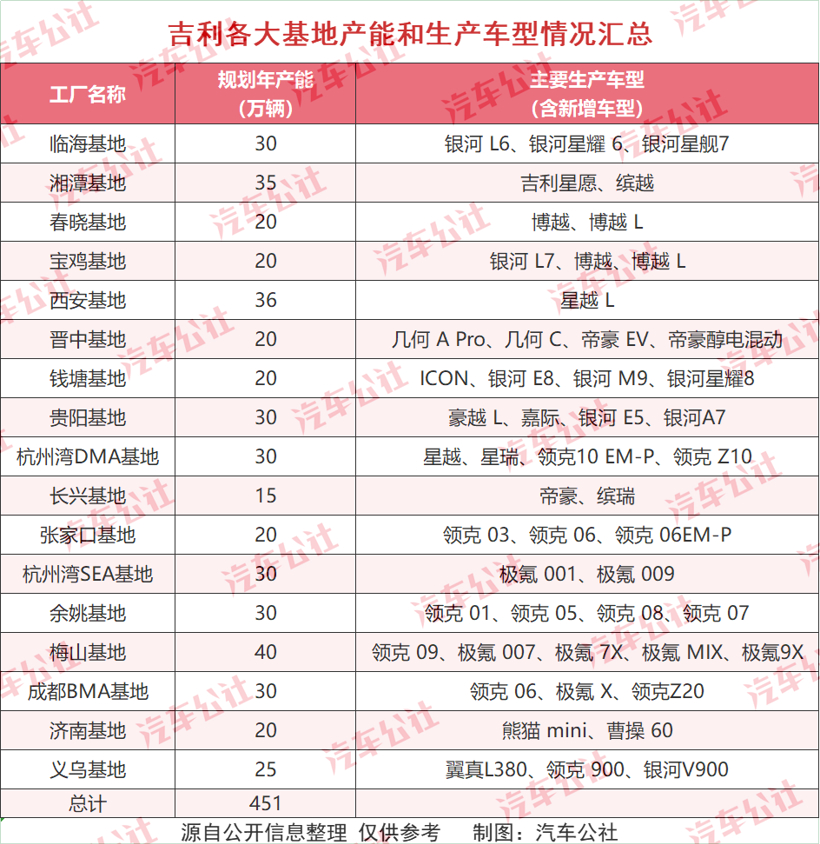
From the capacity layout map of Geely's bases, the headquarters is located in Zhejiang, and currently, there are eight major bases primarily covering the East China and South China markets. As for the coverage of bases nationwide, the northernmost bases are Zhangjiakou, Jinzhong in Shanxi, and Jinan in Shandong, which can cover the northern market; Chengdu and Guiyang can cover the southwestern market, while Xi'an and Baoji can cover the northwestern market. Currently, the Xiangtan base in Hunan covers the central market.
As the demand for new energy increases and penetration gradually grows, some imbalances have emerged in Geely's new energy layout. Particularly in the western, northern, and central regions, there is a contradiction between the surge in sales and the capacity gap. Moreover, if products are transported to the market from more distant bases, it will increase logistics and management costs. In today's era of gradually thinning profits, the closer the base is to the market, the more advantageous it is for the company.
Therefore, from the market perspective, the potential for new energy penetration in the Northeast market constitutes a key attraction. According to data from the China Association of Automobile Manufacturers, in the first half of 2025, the penetration rate of new energy vehicles in the Northeast region was only 18.2%, far below the national average of 35%. Geely's decision to establish a base in Shenyang not only allows for "local manufacturing" to reduce logistics costs but also leverages geographical advantages to promote Geely's hybrid models suitable for cold regions. Currently, in this area, the new energy vehicle market is predominantly dominated by BYD.
Therefore, reflecting on the announcement by Geely Holding Group (including Geely Auto, Volvo, Farizon Commercial Vehicles, etc.) in January this year, aiming for a total vehicle sales of 5 million units by 2027, it seems that the external communication was somewhat conservative.
02Capacity is a double-edged sword.
The rise and fall of the SAIC-GM BeiSheng plant is a microcosm of the changes in the joint venture model of China's automotive industry. The "golden decade" of the joint venture era has officially come to an end, and a new chapter of independent development is being opened.
The joint venture base established in Shenyang in 2004 had a peak annual production capacity of 500,000 vehicles and 450,000 engines. The Buick GL8 and Chevrolet Equinox produced here once dominated the Northeast market for a long time. However, as SAIC-GM's sales have continued to decline from a peak of 2 million units in 2017 to 435,000 units in 2024, its capacity utilization rate has dropped to only 22%. The shutdown of the Beisheng factory has become inevitable.
When General Motors transferred its Northeast base to Geely, it essentially acknowledged the leading position of Chinese brands in the fields of new energy and intelligence.
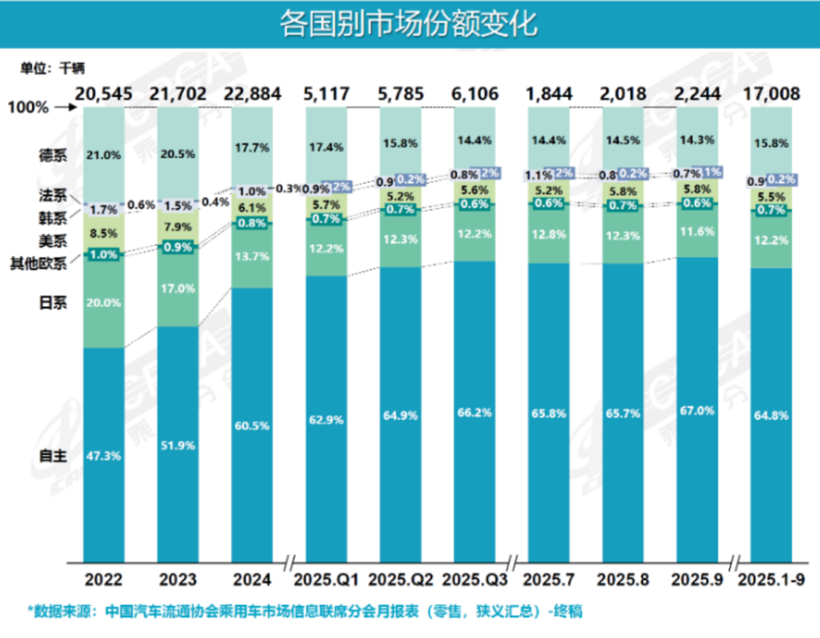
Data from the China Association of Automobile Manufacturers (CAAM) shows that the market share of joint ventures has dropped from 60% in 2020 to 31.3% in 2025, while the share of domestic brands is approaching 70%. At the same time, the market share of domestic brands in the new energy sector has exceeded 60%, while that of joint ventures is still below 10%. The exit of production capacity from giants like General Motors and Volkswagen has provided an opportunity for leading domestic brands such as Geely and BYD to expand. This transformation is not only occurring in Shenyang but will also unfold nationwide in the future. Against the backdrop of the national policy controlling new production capacity, acquiring old factories has become the optimal solution for leading companies to "expand capacity indirectly."
In fact, in June this year, Li Shufu, Chairman of Geely Holding Group, stated at the 2025 China Automotive Chongqing Forum that there is a "serious overcapacity" in the global automotive industry. Therefore, Geely has decided not to build new car production plants or expand the capacity of existing factories, and will instead maximize pragmatic cooperation and resource restructuring.
Therefore, capacity upgrades are achieved through acquisitions (such as Shenyang Beisheng and Wuhan Lianhua Racing Cars) and the transformation of existing bases (such as Hangzhou Bay and Chengdu factories). This model not only avoids the approval thresholds for new factory construction but also allows for the rapid acquisition of mature production lines and existing supply chain resources, laying a foundation for production and sales targets.
It is worth mentioning that these bases, governments, and investors in dire straits are eager to welcome a new strong player to solve issues related to tax revenue, employment, and development. Geely's current "low-price" entry demonstrates its keen business acumen and insight as a Zhejiang businessman.
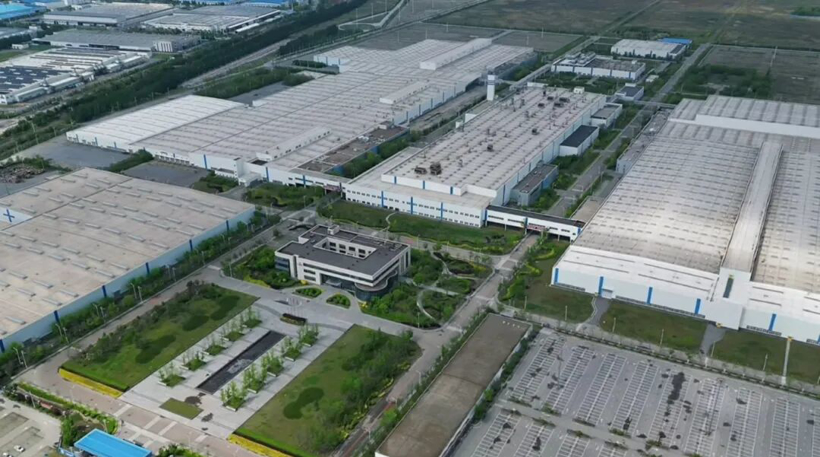
Taking the Beisheng factory in Shenyang as an example, Geely has not yet established any significant commercial organization related to passenger car manufacturing in the area, aside from having its parts system, the Dito Industrial Holdings Group, set up in the Huishan Economic Development Zone of Shenyang. According to industry analysis, the initial renovation funds for the base are provided by the local state-owned assets supervision and administration commission, and there is a possibility that Geely and the local government may share industrial profits and distribute market risks in the future.
After all, expanding production capacity is not a one-time deal, and just because Geely's new cars are popular now doesn't guarantee they will continue to sell well in the next year or two. The market changes rapidly, and competitors are emerging relentlessly. Countless stories from the past tell us that success can lead to madness; once you embark on the path of capacity expansion, you have to bear the risks of market fluctuations and the potential decline of the enterprise. Many past joint venture automakers have experienced the cycle from glorious expansion to decline and even selling their factories, illustrating that expansion can be a double-edged sword.
The key to capacity expansion lies in "precision" and "flexibility," requiring a match with market growth pace and the ability to quickly adjust. Success depends on the company's judgment of market cycles, its own strength, and profound insight into the future market landscape. Having suffered a setback in expansion before, will Geely successfully achieve its annual sales target of 5 million units this time?
【Copyright and Disclaimer】The above information is collected and organized by PlastMatch. The copyright belongs to the original author. This article is reprinted for the purpose of providing more information, and it does not imply that PlastMatch endorses the views expressed in the article or guarantees its accuracy. If there are any errors in the source attribution or if your legitimate rights have been infringed, please contact us, and we will promptly correct or remove the content. If other media, websites, or individuals use the aforementioned content, they must clearly indicate the original source and origin of the work and assume legal responsibility on their own.
Most Popular
-
Key Players: The 10 Most Critical Publicly Listed Companies in Solid-State Battery Raw Materials
-
Vioneo Abandons €1.5 Billion Antwerp Project, First Commercial Green Polyolefin Plant Relocates to China
-

EU Changes ELV Regulation Again: Recycled Plastic Content Dispute and Exclusion of Bio-Based Plastics
-
Clariant's CATOFIN™ Catalyst and CLARITY™ Platform Drive Dual-Engine Performance
-

List Released! Mexico Announces 50% Tariff On 1,371 China Product Categories