



Honda And Suzuki's India-Made SUVs To Drive Japan's Car Imports To New Highs
According to Nikkei News, despite the continued weakness of the yen, Japanese automakers such as Honda and Suzuki are building a cost-competitive production model in India by leveraging low labor costs. By 2025, Japanese cars produced overseas will be imported into Japan.Car salesPoised to reach a record high.

WR-V; Image source: Honda Motor.
On December 4th, data from the Japan Automobile Importers Association showed that in the first 11 months of 2025, the sales of Japanese passenger cars and commercial vehicles produced overseas increased by 19% year-on-year, reaching 102,332 units. Therefore, for the whole year of 2025, the sales of Japanese passenger cars and commercial vehicles produced overseas are expected to exceed the 107,092 units recorded in 1995—this is the highest record since statistics began in 1988.
In the 1990s, Japan's automotive industry experienced intense trade friction with the United States. At that time, the exchange rate of the yen against the dollar rose to about "1 dollar to 90 yen," prompting the Japanese government to expand automobile imports to alleviate trade tensions, which temporarily led to a surge in the import volume of Japanese cars produced in the United States.
In 2025, although the exchange rate of the yen against the dollar has fallen below "150 yen to 1 dollar," raising import costs, thanks to the support of production bases in India, Japan's automobile import volume is still expected to set a new annual record.
Honda will import the WR-V compact SUV from India starting in 2024. In the first 11 months of 2025, the company's imported car sales in the Japanese market reached 35,043 units.
Suzuki will begin importing the India-produced Fronx SUV and other models starting in October 2024. During the same period (the first 11 months of 2025), the company's imported car sales in Japan surged approximately 800% year-on-year, reaching 39,009 units.
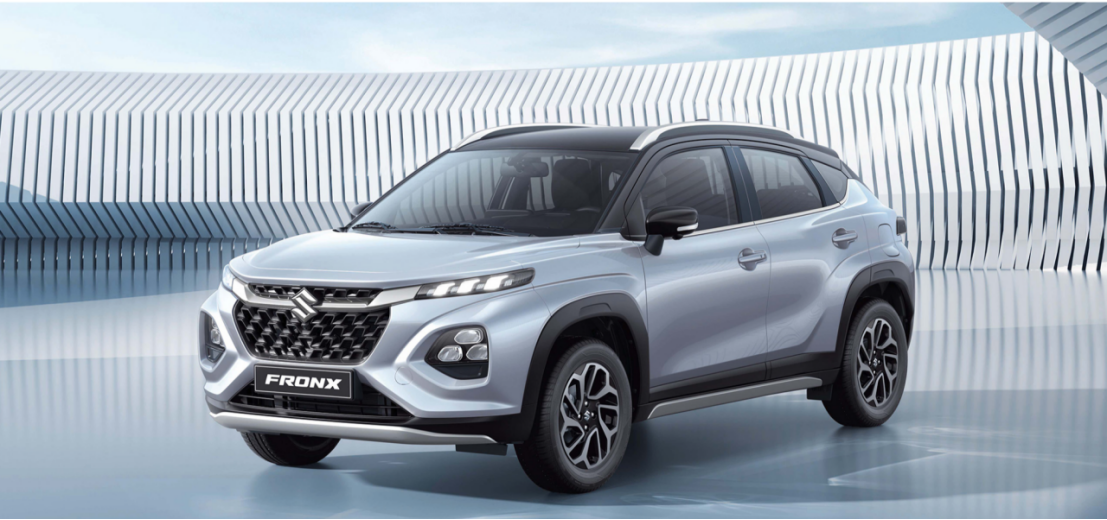
Fronx; Image Source: Suzuki
According to a survey released by the Japan External Trade Organization, the average monthly wage for ordinary workers of Japanese manufacturers in the New Delhi region of India is 37,583 Indian Rupees (approximately 420 USD at current exchange rates), while in the Tokyo region of Japan, it is 295,849 Japanese Yen (about 2,910 USD). This means that the labor costs in India are about one-fifth of those in Japan.
India's rapid rise as a global automotive manufacturing powerhouse is also a key factor. It is reported that Suzuki in India... Suzuki's total production in India has reached 2.6 million vehicles, far exceeding its domestic production capacity of 1 million vehicles. Suzuki Motor Corporation President Toshihiro Suzuki stated, "The technological level in India is improving, and the product quality is no longer significantly different from the models produced in Japan."
In 2024, car sales in India reached 5.22 million units, surpassing Japan's 4.42 million units, ranking third globally after China and the United States.
The Indian market, with a population of 1.4 billion, is expected to continue growing, while car sales in Japan are declining due to an aging population and population decrease, potentially remaining below 5 million for the sixth consecutive year in 2025.
Against the backdrop of high inflation in Japan, even with a weak yen, positioning India as a global export base and expanding local production can still provide cost advantages for automakers. Honda plans to produce its global strategic electric vehicle 0 Alpha in India and import it to the Japanese market for launch in the fiscal year 2027.
The import volume of American-made Japanese cars may also increase. After tariff negotiations with the United States, Japan plans to simplify the certification process for American-made cars, making it easier for these models to enter the Japanese market.
In October of this year, the Trump administration announced that Toyota plans to export its cars produced in the United States to Japan; Nissan is also considering taking similar measures.
Before the global financial crisis in 2008, Japan's annual automobile production capacity exceeded 10 million units and was competing with the United States for the title of the world's largest automobile producer. Since then, Japan's annual production capacity has dropped to 8.23 million units, ranking third globally, and it is at risk of being surpassed by fourth-place India (6.01 million units).
Sanshiro Fukao, a senior researcher at the Itochu Research Institute, stated, "Japan's cost competitiveness has relatively declined, and a fundamental reform of the domestic production model is imperative."
【Copyright and Disclaimer】The above information is collected and organized by PlastMatch. The copyright belongs to the original author. This article is reprinted for the purpose of providing more information, and it does not imply that PlastMatch endorses the views expressed in the article or guarantees its accuracy. If there are any errors in the source attribution or if your legitimate rights have been infringed, please contact us, and we will promptly correct or remove the content. If other media, websites, or individuals use the aforementioned content, they must clearly indicate the original source and origin of the work and assume legal responsibility on their own.
Most Popular
-

Key Players: The 10 Most Critical Publicly Listed Companies in Solid-State Battery Raw Materials
-

Vioneo Abandons €1.5 Billion Antwerp Project, First Commercial Green Polyolefin Plant Relocates to China
-

EU Changes ELV Regulation Again: Recycled Plastic Content Dispute and Exclusion of Bio-Based Plastics
-
Clariant's CATOFIN™ Catalyst and CLARITY™ Platform Drive Dual-Engine Performance
-

List Released! Mexico Announces 50% Tariff On 1,371 China Product Categories