



Is the Automotive Chip Shortage Coming Back?
At the beginning of 2026, the automotive chip shortage seems to be making a comeback.
During a live stream in early January, Xiaomi Group Chairman Lei Jun stated frankly that the new Xiaomi SU7 is facing memory cost pressure with quarterly jumps, and the memory cost per vehicle is expected to increase by several thousand yuan.
Almost simultaneously, NIO founder Li Bin also stated that memory price hikes have become the biggest cost pressure for the automotive industry this year, even advising consumers to "buy cars sooner rather than later." The head of supply chain for Li Auto even directly warned that the supply fulfillment rate of automotive storage chips in 2026 might be less than 50%.
Wells Fargo, UBS, and S&P Global, among other leading institutions, have issued warnings that global automakers may face severe production disruptions and soaring costs as early as 2026. This unease is already manifesting in concrete ways on automotive production lines: GAC Honda was forced to adjust its production schedule in January 2026 to cope with the ripple effects of semiconductor supply shortages.
In reality, the automotive industry is no stranger to the "chip shortage." Over the past few years, the specific categories in short supply have changed, from MCUs and power semiconductors to memory chips today. All signs indicate that chip shortages seem to be a persistent issue for the automotive industry.
Chip shortage, a persistent problem
This year's chip shortage is a bit different from the one in 2021.
The chip shortage in 2021 was triggered by the pandemic, supply chain disruptions, and demand mismatch. The current pressure, highly concentrated in the memory chip sector, is a result of the explosive expansion of artificial intelligence (AI) infrastructure.
Automotive memory chips are responsible for storing and rapidly reading and writing vehicle control software, sensor data, in-vehicle entertainment content, autonomous driving algorithms, and log information. With the increasing popularity of smart cockpits, advanced driver-assistance systems (ADAS), and centralized electronic architectures, the demand for storage capacity per vehicle continues to rise. A mainstream L2-level new energy vehicle now requires around 150GB of storage for the cockpit alone, several times more than two or three years ago.
This means that for intelligent vehicles, storage chips are no longer "auxiliary components" but are the infrastructure supporting the operation of the entire vehicle's electronic architecture.
In this round of chip price increases and shortages, DRAM products such as DDR4 and DDR5 are the most significantly affected.
Currently, global memory chip giants such as Samsung, SK Hynix, and Micron Technology are allocating their limited wafer capacity and capital expenditures towards the more profitable and in-demand AI sector, particularly High Bandwidth Memory (HBM) and server-grade DDR5 chips. The explosive growth in demand for high-performance memory from AI data centers has squeezed the already limited procurement space for the automotive industry.
In November, Reuters reported that... Due to the global boom in AI data center construction, which has led to a shortage of some storage chips, Samsung Electronics has raised the price of these storage chips by up to 60% this month compared to September.

Image source: Samsung
Reportedly, the automotive industry is at a significant disadvantage in this resource allocation. According to estimates from multiple research institutions, automotive DRAM accounts for less than 10% of the global market, making it difficult to compete with cloud computing and AI customers in terms of both procurement scale and profit contribution. At the same time, the long certification cycles and high reliability requirements of automotive-grade chips prevent automakers from quickly switching models or alternative solutions.
Unlike in the past when chips were unavailable, more car manufacturers now face a situation where they can buy chips but at an out-of-control cost, and they can't buy more even if they want to due to limited production capacity. As for domestic substitution, it's not impossible in the short term, but the difficulty is substantial. Domestic memory manufacturers have made significant progress in technology and production capacity, but still need time to accumulate experience in automotive-grade certification, stable supply capability, and economies of scale.
Beyond memory chips, the costs of other chips are also becoming uncontrollable due to rising raw material costs.
In the past few days, many chip companies have issued price increase letters. ChipOne Technology stated that, in view of the current severe supply and demand situation and huge cost pressure, after careful consideration, it has decided to adjust the prices of MCU, Nor flash and other products, with a price increase ranging from 15% to 50%, effective immediately. It also emphasized that if costs fluctuate significantly again in the future, prices will be adjusted accordingly.
Guoke Micro has also issued price increase letters to customers, announcing that starting from January, the price of co-packaged 512Mb KGD (Known Good Die) products will increase by 40%, the price of co-packaged 1Gb KGD products will increase by 60%, and the price of co-packaged 2Gb KGD products will increase by 80%. Pricing for products with external DDR will be notified separately.
This structural contradiction has already begun to manifest in reality. Previously, Honda China adjusted its production pace due to semiconductor supply issues. Although the official statement emphasized that the impact was controllable, losses had already been incurred. At the end of last year, Nio adopted a new technical solution for the rear entertainment expansion function of the new ES8 because of a chip shortage, reducing two features.
Chip shortage, how to solve it?
The automotive industry's chip shortage issue is unlikely to be resolved in the short term. Multiple international organizations predict that global DRAM demand growth will continue to outpace supply growth over the next two to three years, and the supply-demand gap may further widen in 2026. Meanwhile, major memory manufacturers' new production lines are generally scheduled to go into operation in 2027 or even after 2028, making it difficult to generate substantial incremental capacity in the short term.
In this context, the automotive industry's response strategy can only be "multi-pronged." In the short term, leading automakers are trying to mitigate the impact of supply fluctuations by pre-booking production capacity, signing long-term procurement agreements, and adjusting configuration options. However, these measures are more about buffering than fundamentally solving the problem.
In the long run, the localization of chips is undoubtedly an unavoidable direction. On one hand, domestic memory chip manufacturers are accelerating their production expansion, with some companies already entering the automotive-grade market.
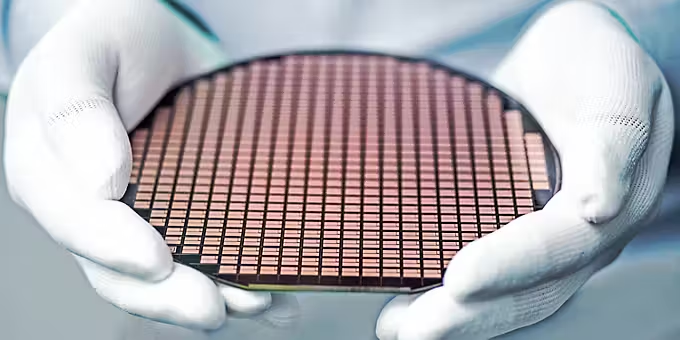
Image source: Infineon (same below)
On the other hand, automakers are also becoming more proactive in the chip supply chain, enhancing their influence through joint development, equity investments, and other means. For instance, car manufacturers like Li Auto and NIO have begun to secure supply by signing long-term capacity guarantee agreements, and even directly participating in joint investments with local memory manufacturers. This shift from being a "pure buyer" to a "deep participant" is becoming an industry trend.
Leading companies like Tesla and BYD are attempting to achieve self-sufficiency in core control units by independently developing AI chips or establishing semiconductor production lines.
In addition, the reconstruction of the electronic and electrical architecture is equally important. By improving chip versatility and reducing reliance on single models, car manufacturers are expected to alleviate future supply risks to some extent.
Moreover, compared to the risk of a complete production shutdown a few years ago, the current pressure is more reflected in cost and localized supply shortages, which also provides a window of opportunity for domestic chip manufacturers to enter the automotive supply chain.
【Copyright and Disclaimer】The above information is collected and organized by PlastMatch. The copyright belongs to the original author. This article is reprinted for the purpose of providing more information, and it does not imply that PlastMatch endorses the views expressed in the article or guarantees its accuracy. If there are any errors in the source attribution or if your legitimate rights have been infringed, please contact us, and we will promptly correct or remove the content. If other media, websites, or individuals use the aforementioned content, they must clearly indicate the original source and origin of the work and assume legal responsibility on their own.
Most Popular
-
Key Players: The 10 Most Critical Publicly Listed Companies in Solid-State Battery Raw Materials
-

Vioneo Abandons €1.5 Billion Antwerp Project, First Commercial Green Polyolefin Plant Relocates to China
-

EU Changes ELV Regulation Again: Recycled Plastic Content Dispute and Exclusion of Bio-Based Plastics
-

Clariant's CATOFIN™ Catalyst and CLARITY™ Platform Drive Dual-Engine Performance
-

List Released! Mexico Announces 50% Tariff On 1,371 China Product Categories