



Latest! United States Market Orders Surge! Trump Tariff Case Goes to Trial on Wednesday! Today ABS Up 120 at Highest
After the joint arrangement for the China-U.S. Kuala Lumpur economic and trade consultations was released, how has the foreign trade situation changed?
Shenzhen Yantian Port is the most concentrated port area for North American routes in South China, handling over a quarter of the national export volume to the United States.
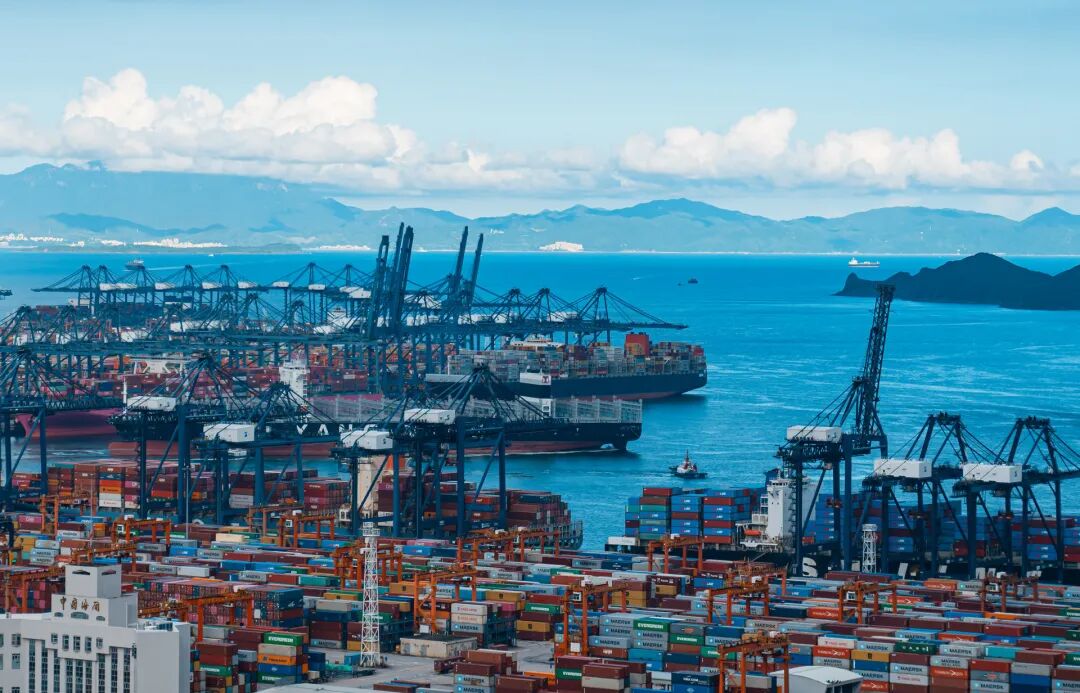
On October 31, there were a total of 8 vessels on the American line docked at Yantian Port, with a handling volume of 50,000 TEUs, accounting for nearly 60% of the port's total handling volume for that day.
Kang Hongjun, the duty manager of the Operations Service and Development Department at Yantian International Container Terminal, stated that recent high-level interactions between China and the United States have released positive signals. Many customers are also arranging shipments promptly. As market confidence recovers, the operation volume at Yantian Port is expected to gradually increase.
The China-U.S. Kuala Lumpur economic and trade consultations have achieved positive results, which is also a significant benefit for foreign trade enterprises.
A cross-border logistics company stated that previously, there was a cautious approach in the shipping schedule for certain types of goods on the US route. After the joint arrangement for the China-Malaysia Kuala Lumpur economic and trade consultations was announced, there has been a noticeable increase in inquiries from customers about shipments to the US.
The sales director of a cross-border logistics company in Shenzhen stated that transportation and customs clearance costs are expected to decrease by about 10%. As soon as the policy was announced, we received inquiries from several North American clients who had previously suspended cooperation. They are all re-planning their shipping schedules for the Christmas season. In less than 24 hours, our inquiries for shipments to the U.S. have increased by more than 30%.

In a foreign trade company in Shenzhen that specializes in the design and manufacturing of printed circuit boards and electronic components, the person in charge stated that after the announcement of the joint arrangement for the China-U.S. Kuala Lumpur economic and trade consultations, some American customers have already begun to contact them.
The founder of a certain circuit board design and manufacturing company in Shenzhen mentioned that currently, some American clients are proactively reaching out to see if they can bring their business back to us.
A person in charge of a cross-border e-commerce business for pet supplies and home appliance products stated that most of his customers are in the U.S. market. He mentioned that after a meeting with some American buyers at noon, the products they had ordered at the beginning of the year had been stalled due to tariff issues, but now they can be put back on the agenda.
The general manager of a cross-border e-commerce company in Shenzhen stated that as long as our design and research capabilities and market insight can be improved in the foreseeable future, customers will continue to come in continuously.
Not only in Shenzhen, but also foreign trade enterprises and freight forwarding companies in Zhejiang, Shanghai, and other regions have felt positive changes.
In a company in Cixi, Ningbo, Zhejiang, which is engaged in the research and manufacturing of auto parts, workers are busy producing battery pack components for a new energy vehicle, preparing them for shipment to the United States. According to the company’s manager, currently, about 60% of the company's export orders come from the United States. After the China-U.S. Kuala Lumpur trade consultation joint statement was released, American customers immediately sent order emails.
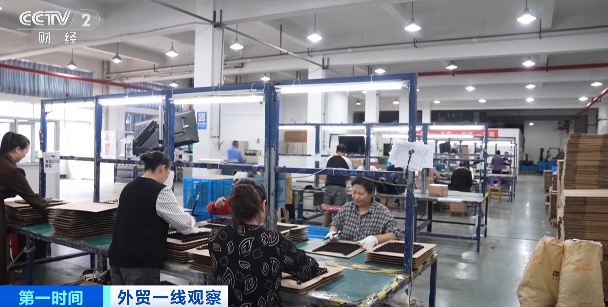
Ye Yang, the general manager of a certain auto parts company in Ningbo, Zhejiang, stated that among the orders we received immediately, one American customer requested us to airlift 90,000 units of a bracket-type product right away, and we still have two to three hundred thousand orders in production.
In a company in Shanghai that mainly engages in the agency of goods exported to the United States, the person in charge stated that the results of the new round of economic and trade consultations between China and the United States have brought positive changes, which can reduce transportation costs. Currently, the inquiry volume from customers on US routes has already increased.
The operations director of a Shanghai freight forwarding company noted that, based on backend data, customer inquiries for the U.S. route have increased by about 10% to 20% on October 31.
The Supreme Court will hear the Trump tariff case on November 5th! It may stop collecting tariffs and return the tariffs already collected.
This Wednesday (November 5), the U.S. Supreme Court will officially hear the Trump tariff case and hold oral arguments on the legality of Trump's implementation of a global tariff policy using the International Emergency Economic Powers Act (IEEPA).
The debate will take place on November 5th, lasting about 80 minutes, with a lawyer from the Trump administration (possibly Acting Attorney General D. John Sauer) representing the government, while the plaintiffs include former Acting Attorney General Neal Katyal (representing small businesses) and another lawyer (representing 12 states).
According to authoritative analysis and market data from various parties in the United States, the probability of the Trump administration losing the case is estimated to be between 50% and 80%. This is primarily due to lower courts consistently ruling the tariffs as illegal (including the Court of International Trade and the Federal Circuit Court of Appeals), as well as analyses of how the nine justices of the Supreme Court may interpret the boundaries of emergency powers.
The majority opinion (5 votes from the 9 justices are needed) determines the prevailing party.
Trump himself stated on November 2 that he would not attend the debate.
Trump posted a lengthy message on Truth Social saying: "The tariff case next week is one of the most important cases in American history. If the President cannot use tariffs, we will be at a great disadvantage globally, especially when competing with 'great powers.' In a real sense, we will be defenseless! During the nine months I had the honor of serving as President, tariffs brought us tremendous wealth and national security. During my short tenure, the stock market hit record highs multiple times, with almost no inflation, and national security was unmatched. Our recent successful negotiations with China and other countries put us in a favorable position precisely because tariffs served as leverage to reach fair and sustainable agreements. If the President cannot quickly and flexibly use the power of tariffs, we will be defenseless and it could even lead to the nation's downfall. The only ones opposing us are the foreign countries that have been taking advantage of us for years, those who hate our country, and the Democrats, because our support rate is incredibly high. I will not be going to court on Wednesday because I do not want to distract from the importance of this decision. In my view, this will be one of the most important and far-reaching decisions made by the United States Supreme Court. If we win, we will become the wealthiest and safest country in the world, by far. If we lose, our country could fall to the level of a near third-world country—pray to God this does not happen!"

The tariffs involved in this case include:
⚠️ Fentanyl Tariffs: Import goods from China, Mexico, and Canada are subject to tariffs on the grounds that these countries have failed to prevent the flow of illegal drugs like fentanyl into the United States. The rates are 20% for China (reduced to 10% on November 10), 25% for Mexico, and 35% for Canada.
⚠️ Global Reciprocal Tariffs: Impose reciprocal tariffs of 10%-40% on almost all trading partners, such as 40% on Myanmar, 39% on Switzerland, 20% on Vietnam, and 34% on China (currently effective at 10%), on the grounds that trade deficits pose an "extraordinary threat" to U.S. national security and economy. This also eliminates the "de minimis exemption" for low-value imports.
Today's plastic prices

【Copyright and Disclaimer】The above information is collected and organized by PlastMatch. The copyright belongs to the original author. This article is reprinted for the purpose of providing more information, and it does not imply that PlastMatch endorses the views expressed in the article or guarantees its accuracy. If there are any errors in the source attribution or if your legitimate rights have been infringed, please contact us, and we will promptly correct or remove the content. If other media, websites, or individuals use the aforementioned content, they must clearly indicate the original source and origin of the work and assume legal responsibility on their own.
Most Popular
-
Dow, Wanhua, Huntsman Intensively Raise Prices! Who Controls the Global MDI Prices?
-

Clariant Unveils Cost-Cutting Plan Details, Plans to Shut Down Multiple Plants
-
[Today's Plastics Market] General Materials Weakly Fluctuate, Engineering Materials Steadily Rise
-

New Breakthrough in Domestic Adiponitrile! Observing the Rise of China's Nylon Industry Chain from Tianchen Qixiang's Production
-

Daily Review: Polyethylene Prices Under Weak Consolidation, Sellers Face Significant Pressure to Move Inventory