



Long strips, clumps, and black dots please stay away! a practical guide for smoother plastic pellet cutting
The quality of pelletizing, as a key step in the production process of modified plastics, directly affects the appearance, processing performance, and user experience of the product. Long strip, continuous grain, black spots, discoloration, etc.These common plastic granulation issues not only lead to resource waste but also affect product consistency and customer trust.
This article will analyze the causes and solutions of these plastic pellet issues, helping companies avoid pitfalls in production and improve product quality.
Long strips refer to plastic particles whose length exceeds twice the normal size, a common issue in the pelletizing process.
Problem cause:The main causes of long strips include unstable or broken strips when the machinery is started, the strip not moving straight and becoming skewed when entering the pelletizer, and wear or notches on the pelletizer blades.
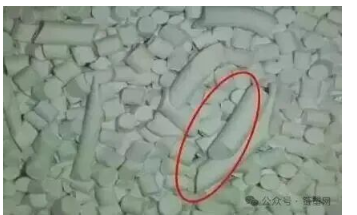
Solve the strip problem.
Adjust the material strip orientation and cooling.Adjust the direction of the strands entering the pelletizer and the length of the cooling water to ensure the strands enter the pelletizer in a straight line.
Handle broken threads promptly.In case of broken yarns during production, promptly adjust the process parameters to prevent continuous occurrence of long yarns.
Regular maintenance of tools:Regularly inspect and replace the granulator's moving blade to ensure the tool remains in optimal working condition.
Screening process:Use a vibrating screen to sieve strips, effectively separating strips and normal particles.
Agglomeration refers to the condition where two or more particles are stuck together and cannot be separated. This not only affects the appearance of the product but also seriously impacts the smooth progress of subsequent processing.
Problem causes:Frequent breakage during drawing and insufficient cooling water length, leading to inadequate cooling and shaping of the strands, are the main reasons for pellet agglomeration. When the strands are not sufficiently cooled, the particles that still retain heat tend to stick together easily after cutting.
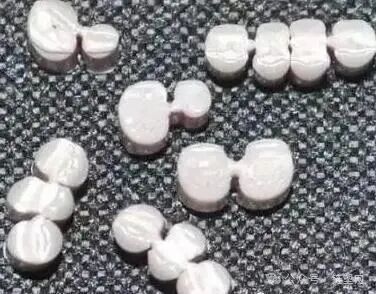
Solve the problem of consecutive characters.
Select the appropriate guide bar wheel:Choose a guide wheel with the appropriate width for drawing strips to prevent the strips from sticking to each other.
Optimize the cooling system.Adjust the length of the cooling water to ensure that the material strip is fully cooled and shaped.
Screening processing:The same can be achieved by using a vibrating screen to remove clumps, improving product uniformity.
Advanced cooling technology:For soft materials, a liquid nitrogen cryogenic conveyor belt can be used to rapidly cool the particles to -10°C within 3 seconds after they exit the die head, achieving surface hardening and preventing sticking.
The black spot issue refers to the occurrence of black or discolored spots on the surface or inside of plastic particles. These black spots not only affect the appearance of the product but may also reduce the mechanical properties of the product.
Problem causes:Incomplete cleaning of equipment, impurities or black spots inherent in the raw materials, localized carbonization of the screw, and an unclean production environment are the main sources of the black spot issue.
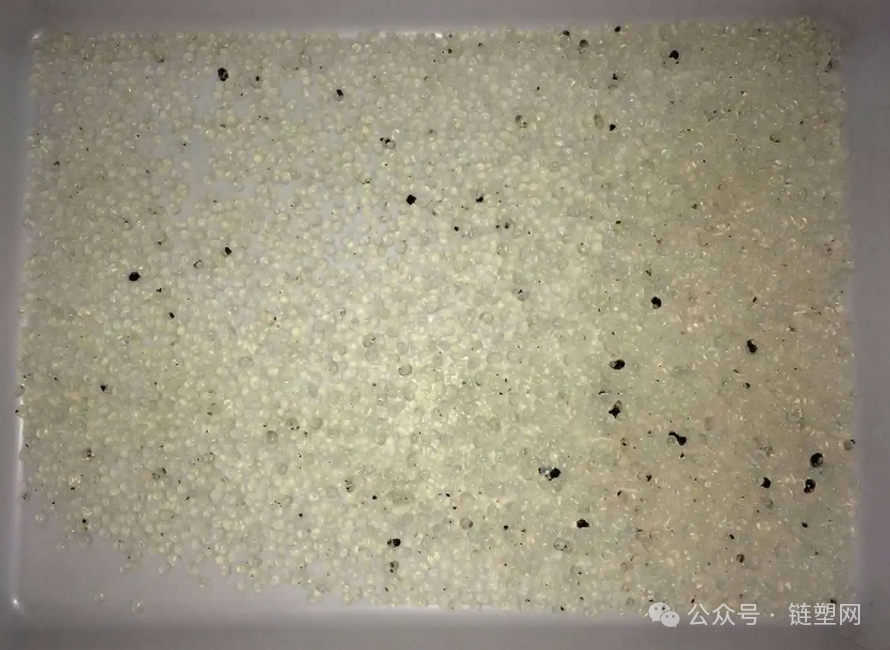
Resolve the black dot problem.
Complete equipment cleaning:Before switching production, thoroughly clean the machine and arrange personnel to check and confirm to prevent cross-contamination.
Strict raw material inspection:Strengthen incoming material inspection, with particular attention to the quality of raw materials that are prone to carry impurities, such as mineral powder and flame retardants.
Control the processing temperature.Strictly control the cylinder temperature and material residence time to prevent overheating and carbonization.
Keep the environment clean.Keep the production environment clean and ensure isolation between machines for different color products.
The color change issue manifests as a sudden change in product color during the production process, resulting in a significant deviation from the standard color. For products where appearance is important, this can lead to an entire batch being deemed unqualified, causing substantial waste.
Causes of the problem:Uneven mixing, inadequate cleaning of machines, excessively high processing temperatures leading to pigment decomposition, and excessive shear strength causing localized overheating are all key factors leading to discoloration.
Solve the discoloration problem.
Optimize the mixing process:Strictly follow the process requirements for mixing to ensure uniformity.
Ensure the equipment is clean.After clearing the machine, confirmation is required to ensure that no residual materials from the previous batch remain.
Control the processing temperature.Control the extrusion temperature to avoid the thermal decomposition of the pigment.
Optimize screw combination:By optimizing the screw combination, reduce shear strength to prevent local overheating.
Solving the issue of plastic pelletizing requires systematic thinking and attention to detail. From the import of raw materials to the export of products, from equipment maintenance to process optimization, from employee operations to environmental management, each step can be a source of quality problems or a lever for quality improvement.
【Copyright and Disclaimer】The above information is collected and organized by PlastMatch. The copyright belongs to the original author. This article is reprinted for the purpose of providing more information, and it does not imply that PlastMatch endorses the views expressed in the article or guarantees its accuracy. If there are any errors in the source attribution or if your legitimate rights have been infringed, please contact us, and we will promptly correct or remove the content. If other media, websites, or individuals use the aforementioned content, they must clearly indicate the original source and origin of the work and assume legal responsibility on their own.
Most Popular
-
Dow, Wanhua, Huntsman Intensively Raise Prices! Who Controls the Global MDI Prices?
-

Clariant Unveils Cost-Cutting Plan Details, Plans to Shut Down Multiple Plants
-
[Today's Plastics Market] General Materials Weakly Fluctuate, Engineering Materials Steadily Rise
-
New Breakthrough in Domestic Adiponitrile! Observing the Rise of China's Nylon Industry Chain from Tianchen Qixiang's Production
-
Daily Review: Polyethylene Prices Under Weak Consolidation, Sellers Face Significant Pressure to Move Inventory