



New Materials Giants Enter, Another Hundred-Billion-Dollar Sub-Sector for Robotics!
The explosion of the robotics industry has driven significant demand for new materials, such as lightweight composites, thermal management technologies, and long-endurance batteries. Simultaneously, it has boosted key components including lead screws, reducers, joint modules, and dexterous hands.
Among them, dexterous hands are the most popular.
The humanoid robot battlefront has shifted to dexterous hands. As the "final centimeter" of interaction between robots and the outside world, their technological maturity directly determines the boundaries of robotic applications. The intensity of this sector is evidenced by dexterous hands becoming the core battleground of the robotics segment at CES 2026, as well as the domestic track in 2025 seeing over 55 financing events totaling more than 7.5 billion yuan.
While the market size for dexterous hands has not yet been fully realized, a consensus has formed within the industry: whoever masters the most dexterous "hand" holds the key to the practicality of humanoid robots.
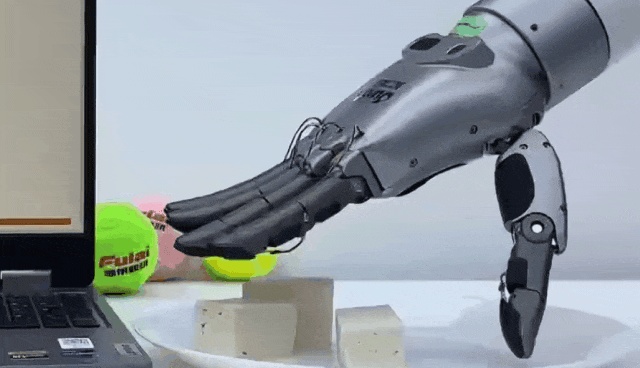
Numerous dexterous hand manufacturers are currently in operation, with many robotics companies developing their own related technologies. In the Beijing-Tianjin-Hebei region, these include Lingxin Qiaoshou, Insitu Robotics, Kunwei Technology, Blue Point Touch, Agile Robots, Star Motion Era, Soft Robot, Galaxy Universal, and TASHAN Technology. In the Yangtze River Delta region, companies like Lingqiao Intelligence, Strong Mind Technology, WAIN Electric, DingZhi Technology, Zhejiang DDIN Technology, LimX Dynamics, Hekuan Technology, Wuzhou New Century, Unitree Robotics, Aoyee Technology, Hengli Hydraulic, and Kepler are prominent. In the Greater Bay Area, companies such as DAHL Robotics, Leadshine Technology, Topband, Daimeng Robotics, Topband (listed again), UBTECH, PASINI, and Yihai Yuanshi are active. Notably, LimX Dynamics recently completed the spin-off and independent establishment of its dexterous hand business, forming a new company named "Critical Point" to seize the large market opportunity.
In terms of materials for dexterous hands, mainstream bionic dexterous hands primarily rely on high-strength lightweight transmission materials, flexible sensing materials, and precision structural materials. Among these, lightweight materials remain highly sought after, while electronic skins are also gaining increasing attention.
Electronic skin is a flexible tactile sensor or thin-film sensor capable of mimicking the functions of human skin, sensing external pressure and tactile changes, and converting these physical signals into electrical signals.
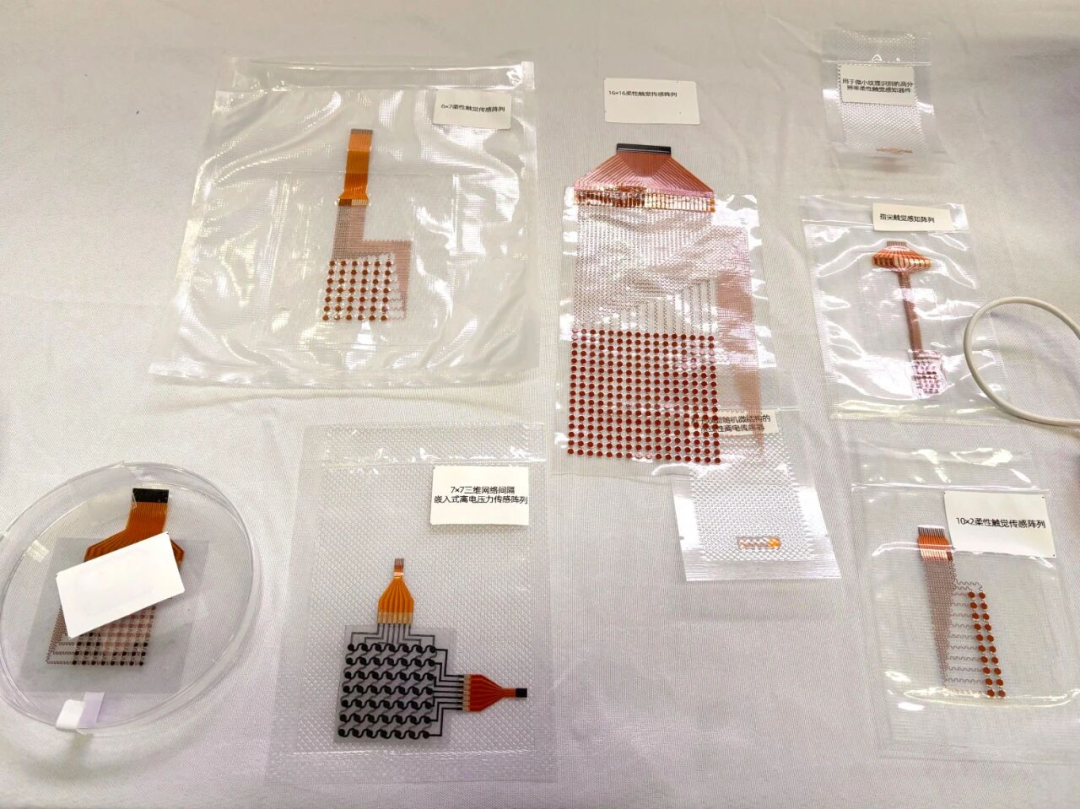
[DT New Materials] has learned that several leading new material companies have stated their recent strategic layouts.
Lushan New Materials, a leading photovoltaic encapsulation materials manufacturer, recently announced the launch of its new generation of electrically-decoupled, dual-modal electronic skin product. Utilizing integrated pressure-temperature dual-modal sensing technology, its electronic skin's individual sensors can simultaneously and independently perceive the magnitude of external contact force and changes in object surface temperature.
Folai New Material, a leader in functional coating composite materials, officially launched its third-generation tactile sensing system in November, integrating "flexible materials + chips + algorithms + large models." The resolution of its electronic skin products has surpassed 0.1mm, featuring full-surface 3D force sensing capabilities and achieving mass production and supply, such as for the Linker HandO6.
Tianan New Material, a leader in polymer composite surfacing materials, has stated that its independently developed EB (Electron Beam) irradiated polymer material can simulate the elasticity and extensibility of human skin. In October 2024, Tianan New Material entered into a strategic partnership with Taisan Technology, an artificial intelligence tactile sensing company, to jointly advance the development and application of electronic skin technology.
Wynca, a leading silicone enterprise, stated that the dielectric active polymer materials developed by the company can be widely applied in silicone soft sensors, endowing them with excellent electrical properties, flexibility, self-healing capabilities, and biocompatibility. Furthermore, the company has established a joint laboratory for robot materials with the Zhejiang Humanoid Robot Innovation Center. This collaboration focuses on functional silicone rubber materials, aiming to design ultra-high simulation and lightweight material structures, and to develop silicone rubber materials with signal transmission and tactile sensing functions.
In addition, Xingye Technology announced a 15 million yuan indirect investment in Zhongqing Robotics, and will sign a cooperation agreement with Suzhou Nanostar Electronics Co., Ltd. in 2025 to jointly develop flexible electronic skin based on natural leather and bio-based materials; Dongfang Electric Heating stated that its electronic skin has been sampled by leading robotics companies; Jinghua New Material's subsidiary Jingzhigan launched the world's first high-density three-dimensional force full-palm electronic skin solution in August last year; Riying Electronics' electronic skin products have confirmed demand with domestic and international embodied intelligence customers, completed sample production, and achieved sampling for some key customers; Pan Asia Micro-Permeable announced the signing of a strategic cooperation agreement with Suzhou Nanostar Electronics Co., Ltd.Deepen cooperation in the field of ePTFE film electronic skin for robots.。
Material-wise, the structure of electronic skin tactile sensors typically includes multiple layers: starting from the bottom, the sensor substrate, commonly made of materials such as polyimide (PI), polydimethylsiloxane, PDMS-TPE, TPU, silicone materials, and hydrogels. The dielectric layer, often uses materials like aluminum oxide (Al2O3), silicon dioxide (SiO2), polyvinyl alcohol (PVA), and polyvinylidene fluoride-tetrafluoroethylene (PVDF-TFE). Conductive materials for the sensor's contact points include metal thin films, indium tin oxide (ITO), graphene, eutectic gallium-indium (EGaIn), silver nanowires (AgNWs), liquid metal, graphene, and carbon nanotubes. The topmost layer is the sensing area.
Among these, TPU boasts outstanding mechanical properties and strong plasticity. On the downstream application side, it can be combined with PP, PC, PVC, and PA6 to form plastic alloys, or with LFT to create composite materials, which is expected to unlock new growth potential under the trend of the humanoid robot industry. According to Global Growth Insights, the global electronic skin market is projected to reach $6.44 billion by 2025 and grow to $111.53 billion by 2035, with a potential ten-year compound annual growth rate (CAGR) of 33%.
Abundant resources, great opportunities, now is the time to strategize.
【Copyright and Disclaimer】The above information is collected and organized by PlastMatch. The copyright belongs to the original author. This article is reprinted for the purpose of providing more information, and it does not imply that PlastMatch endorses the views expressed in the article or guarantees its accuracy. If there are any errors in the source attribution or if your legitimate rights have been infringed, please contact us, and we will promptly correct or remove the content. If other media, websites, or individuals use the aforementioned content, they must clearly indicate the original source and origin of the work and assume legal responsibility on their own.
Most Popular
-

Key Players: The 10 Most Critical Publicly Listed Companies in Solid-State Battery Raw Materials
-

Vioneo Abandons €1.5 Billion Antwerp Project, First Commercial Green Polyolefin Plant Relocates to China
-

EU Changes ELV Regulation Again: Recycled Plastic Content Dispute and Exclusion of Bio-Based Plastics
-

Clariant's CATOFIN™ Catalyst and CLARITY™ Platform Drive Dual-Engine Performance
-

List Released! Mexico Announces 50% Tariff On 1,371 China Product Categories