



Planefibra Launches Composite Roofs to Replace Metal Roofs
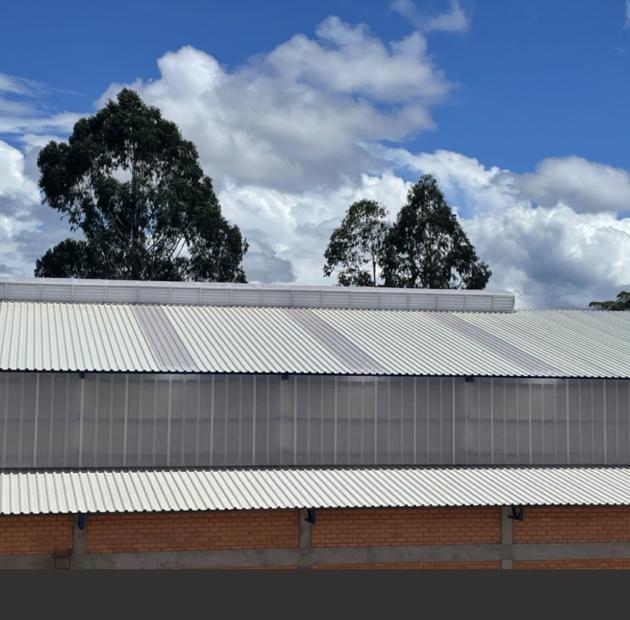
Brazilian company Planefibra has launched an opaque roofing material called Planemax, made from glass fiber reinforced polymer composites (GFRP). It is specifically developed for environments with significant corrosion, such as chemical plants, port warehouses, and industrial fertilizer sites, where traditional materials have a shortened lifespan.
Thermoplastic resin-based composite reinforcement bars have advantages such as multiple re-molding capability, high toughness, and good durability, which better meet the demands of marine engineering applications. In the construction of the No. 6 and No. 7 berths for the Luoyuan Bay Port area at Fuzhou Port, the owner and the construction unit successfully demonstrated the technical achievements obtained from the 2024 project "Performance Research and Demonstration of Thermoplastic Composite Reinforcement Bars" at the Non-Metallic Materials Innovation Center of Harbin Institute of Technology. The high-performance thermoplastic composite reinforcement bars developed in this project have enhanced the long-term service performance of the dock surface and the fender structure, providing a good demonstration effect for the large-scale application of thermoplastic composite reinforcement bars in dock engineering.
According to Planefibra, this new material can replace metal or fiber cement roofing materials—the latter often experiences performance degradation due to erosion by moisture and corrosive media. Corrosion causes significant economic losses worldwide. According to the Association for Materials Protection and Performance (AMPP), the annual economic loss due to corrosion globally accounts for approximately 3.4% of the global GDP, equivalent to about $2.5 trillion annually.
Against this background, composite materials are receiving increasing attention as structural alternative solutions exposed to chemical, saline, or humid environments.
The manufacturer claims that the product can last for more than ten years with "almost zero maintenance." In contrast, metal roofs typically last no more than five years in corrosive environments, while fiber cement materials may absorb water, potentially leading to leaks and structural overload.
The weight of the board is approximately 3.4 kilograms per square meter, while some fiber cement boards can weigh up to 17 kilograms per square meter. Over a ten-year usage period, it is expected to save up to 70% in overall costs. This product supports complete customization in color and surface treatment.
【Copyright and Disclaimer】The above information is collected and organized by PlastMatch. The copyright belongs to the original author. This article is reprinted for the purpose of providing more information, and it does not imply that PlastMatch endorses the views expressed in the article or guarantees its accuracy. If there are any errors in the source attribution or if your legitimate rights have been infringed, please contact us, and we will promptly correct or remove the content. If other media, websites, or individuals use the aforementioned content, they must clearly indicate the original source and origin of the work and assume legal responsibility on their own.
Most Popular
-
Key Players: The 10 Most Critical Publicly Listed Companies in Solid-State Battery Raw Materials
-
Vioneo Abandons €1.5 Billion Antwerp Project, First Commercial Green Polyolefin Plant Relocates to China
-
EU Changes ELV Regulation Again: Recycled Plastic Content Dispute and Exclusion of Bio-Based Plastics
-
Clariant's CATOFIN™ Catalyst and CLARITY™ Platform Drive Dual-Engine Performance
-

List Released! Mexico Announces 50% Tariff On 1,371 China Product Categories