


RecyClass Publishes Plastic Recycling Design Guidelines for Key Industries
March 5th —— RecyClass, the European plastic circular economy certification platform, recently released a new universal recycling evaluation protocol and for the first time introduced a specific "Design for Recyclability Guidelines" for plastic components in the automotive and electrical and electronic equipment (EEE) sectors.
The released documents cover multiple areas including vehicles, refrigerators and heat exchange equipment, as well as small appliances and information and communication technology (ICT) products. The guidelines aim to help manufacturers improve the recyclability of plastic parts and prepare for upcoming EU regulatory requirements.
This guide is built upon the work achievements of 2025. At that time, RecyClass launched the "Recyclability Assessment Protocol" for automotive and electrical and electronic applications, used to analyze the performance of commonly used plastics in these industries within existing recycling systems. The same year, six testing activities were conducted to verify the effectiveness of the protocol and collect data on the recyclability of specific materials and components.
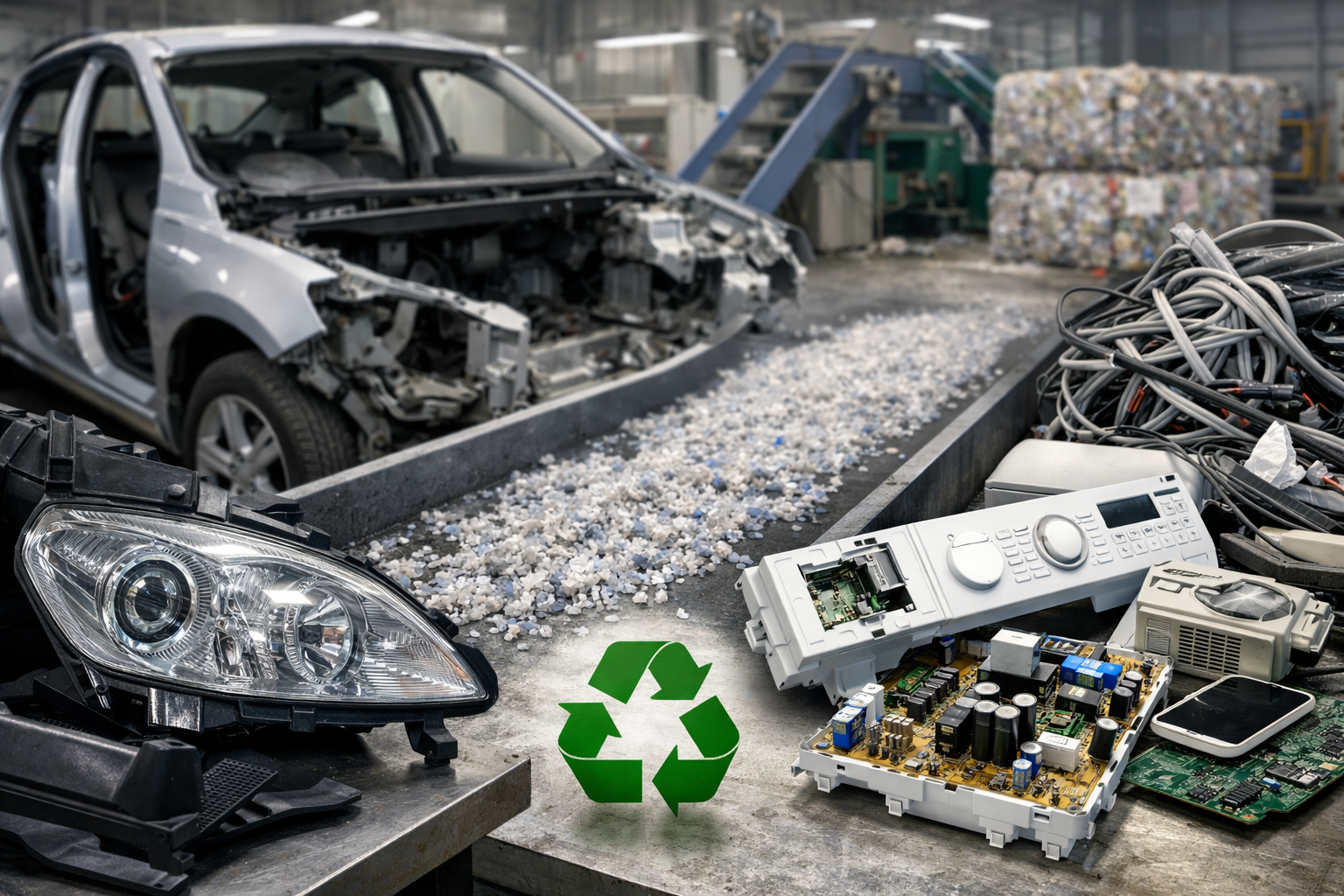
Moreover, RecyClass has also published a dedicated protocol for multi-material plastic components. This document investigates the impact of different polymer combinations and assembly methods on sorting efficiency, material purity, cross-contamination, and the quality of recycled materials, aiming to assist manufacturers in determining whether polymers can be recycled to a quality level suitable for re-use in automotive and electronic/electrical products.
These newly released guidelines and protocols provide a systematic framework for assessing the recyclability of plastic components in products with complex structures and diverse materials. As companies across the automotive and electronics supply chains respond to increasingly stringent regulations and seek to increase the use of recycled plastics in their products, these tools will play a crucial role.
【Copyright and Disclaimer】The above information is collected and organized by PlastMatch. The copyright belongs to the original author. This article is reprinted for the purpose of providing more information, and it does not imply that PlastMatch endorses the views expressed in the article or guarantees its accuracy. If there are any errors in the source attribution or if your legitimate rights have been infringed, please contact us, and we will promptly correct or remove the content. If other media, websites, or individuals use the aforementioned content, they must clearly indicate the original source and origin of the work and assume legal responsibility on their own.
Most Popular
-
From Compliance to Competitiveness: Alpla’s Circular Design and Recycling Practices Driven by PPWR
-

Deadly Impact: Hormuz Strait Blockade Sparks Shortage of Plastic Raw Materials, Threatening Shutdowns at Japanese and Korean Chemical Plants
-

BASF Delivers First Batch of Innovative Cathode Materials for Semi-Solid-State Batteries to Weilan New Energy
-

【Overseas News】Oil prices may surge to $120; Shell plans $83 billion acquisition of bp; Eu proposes cutting energy tax
-

Driving Intelligent Upgrades In Rubber And Plastics Industry! Preview Of Concurrent Activities At Chinaplas 2026 International Rubber & Plastics Exhibition (Part 2)