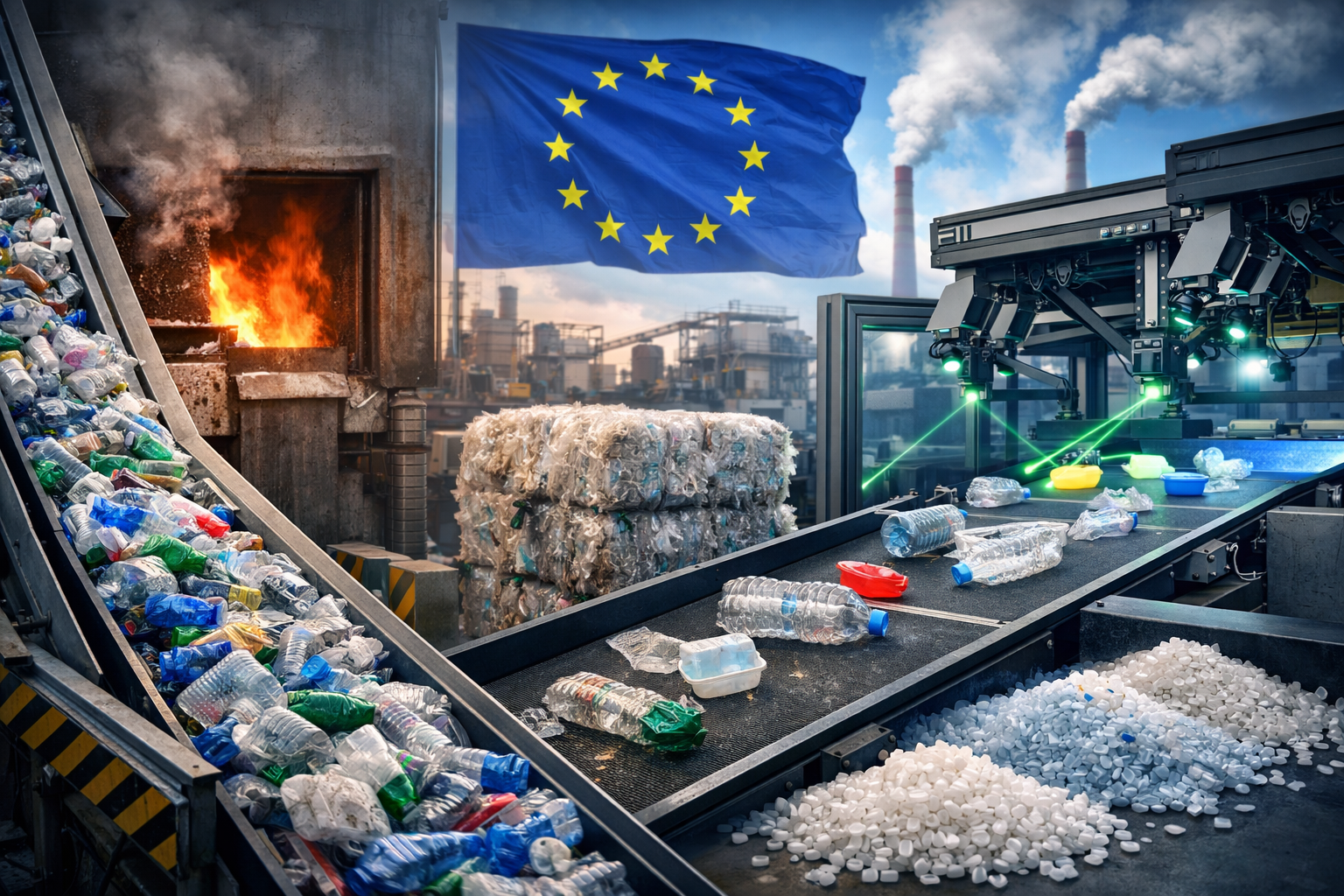



The study meticulously compared three scenarios for treating plastic packaging waste: direct incineration with energy recovery; limited or unsorted recycling; and high-quality recycling supported by advanced sorting technologies. The analysis indicates that the choice of recycling method plays a decisive role in climate performance. Within the simulated system, high-quality recycling demonstrated superior climate benefits, reducing climate impact by 27% compared to direct incineration. In sharp contrast, recycling without advanced sorting achieved only a 4% reduction in climate impact relative to incineration.
The limited climate benefits of low-quality recycling are closely tied to the type of materials that recycled plastics replace. High-quality recycling allows recycled materials to successfully substitute virgin fossil plastics, thereby effectively reducing reliance on new plastic production. However, insufficiently sorted recycling often leads to recycled plastics being used to replace materials like wood, and the use of wood does not fundamentally reduce overall plastic production. This explains why low-quality recycling performs poorly in terms of climate benefits.
The study also highlights that the availability of infrastructure is a critical factor limiting high-quality recycling. Currently, advanced sorting systems for high-quality recycling are not yet widely deployed across Europe. Analysis shows that a significant expansion of sorting and recycling infrastructure is essential to achieve substantial reductions in greenhouse gas emissions from plastic packaging and to improve material circularity. Only with comprehensive sorting and recycling facilities can high-quality recycling be successfully implemented, thereby fully realizing its potential for climate protection.
In the context of the upcoming EU Packaging and Packaging Waste Regulation, these findings are of particular practical significance. While increased recyclability requirements and mandatory recycled content quotas are indeed expected to improve the climate performance of plastic recycling, this is contingent on sufficient sorting and processing capacity. The scenarios explored in the study indicate that combining regulatory measures with advanced sorting technologies can lead to more plastic packaging being recycled at a quality level suitable for replacing virgin plastics, thereby contributing more significantly to climate protection.
Beyond climate impacts, this study also broadens its scope to the wider issue of resource security. Incineration and low-quality recycling reduce the supply of secondary raw materials, thereby increasing reliance on imported primary resources. Conversely, improving recycling quality can enhance Europe's material self-sufficiency and safeguard resource security by keeping plastics within a closed material loop, thus increasing the quantity of recycled raw materials available to industry.
Overall, this study suggests that the EU's current policy framework, which focuses solely on recycling rates, may overlook critical differences in the environmental performance of various recycling methods. Incorporating requirements related to recycling quality, sorting infrastructure, and climate outcomes into the policy system could significantly enhance the effectiveness of circular economy measures, providing strong support for the long-term resilience of Europe's plastics value chain and enabling the plastics recycling industry to play a greater role in climate protection and sustainable resource utilization.