



Trump "Secures" World's Largest Oil Reserve, Why Are Oil Prices Falling Instead of Rising?
Analysts told CNBC that Trump's move to overthrow Maduro in the oil-rich Venezuela is unlikely to impact the energy market in the short term.
Arne Lohmann Rasmussen, chief analyst and research director at A/S Global Risk Management, stated that although the scale of the U.S. action was unexpected, the market had already priced in the conflict in Venezuela and the potential disruption to oil exports.
Rasmussen pointed out that as a founding member of OPEC, Venezuela has the largest proven oil reserves in the world. However, this South American country currently produces less than 1 million barrels per day, accounting for less than 1% of global oil production.
He stated that Venezuela only exports about half of its production, or around 500,000 barrels. He also mentioned that at the time of the conflict, the global oil market was experiencing oversupply and relatively weak demand, which is a common pattern in the first quarter.
Rasmussen estimates that Brent crude oil prices will drop slightly this week compared to last Friday's closing price of $60.75.
"Although this is a huge geopolitical event that people generally expect to benefit or drive up oil prices," he said, "the crux of the matter is that there is still an oversupply of oil in the market, which is why oil prices will not soar."
Bob McNally, an analyst at Rapidan Energy, stated that he had advised clients before the weekend that about one-third of Venezuela's oil production is at risk. He does not predict that all of Venezuela's output will be cut off, telling CNBC that this would not pose a significant risk to the oil market in the short term.
In 2025, the oil market recorded its largest annual decline in five years. The global benchmark Brent crude fell by about 19% last year, while U.S. crude dropped nearly 20%. The market has been under pressure as OPEC+ increased production after years of cuts. U.S. daily production also hit a record high, slightly above 13.8 million barrels.
Analysts told CNBC that the likelihood of increasing Venezuela's oil production has risen with the change in government, which could lead to further declines in oil prices.
MST Financial's energy research director Saul Kavonic estimates that if a new government in Venezuela leads to the lifting of sanctions and the return of foreign investors, export volumes could approach 3 million barrels in the medium term.
Goldwyn, an energy industry consultant and former senior energy official in the State Department under the Obama administration, stated: "If there's any impact, Venezuela's future will have a bearish impact on the market because, apart from an increase (in exports), there really is no other direction."
At a press conference last Saturday, Trump stated that the current embargo on Venezuelan oil remains in effect. He also mentioned that American oil companies will invest hundreds of billions of dollars to rebuild Venezuela's energy sector. Trump did not provide details on which companies would invest or how the investments would be made, nor did he explain how the U.S. would "temporarily manage Venezuela with a team."
Godwin stated that given the uncertainty of the transitional government and future government in Venezuela, it is difficult to predict whether U.S. oil companies will invest.
"We learned from the government transitions in Iraq, Afghanistan, and other countries that transitions are difficult," he said. "No company would be willing to commit to investing billions of dollars in long-term operations without knowing the specific terms. And they cannot know what the terms are until they know what the government will be like."
Godwin added that companies, including ExxonMobil, are still waiting to recover the debt owed by Venezuela's national oil company, PDVSA.
According to McNally from Rapidan Energy, this is a complex proposition for American oil companies. He pointed out that oil producers have not forgotten the experience of being expelled from Venezuela in the early 21st century, when the country expropriated the assets of foreign oil companies. He added that if sanctions are lifted, having access to the world's largest oil reserves would be "tempting" for American oil companies.
But McNally stated that this requires decades of investment and hundreds of billions of dollars. He said that whether it is worth it boils down to a core question: Does the world need that much oil?
"Until the end of last year, the market consensus was that oil demand would stop growing within four years. Due to electric vehicles, fuel efficiency policies, and climate change policies, the oil era is over," McNally said.
As the United States and other countries weaken their climate policies and electric vehicle sales decline, the prospect of investing in Venezuela becomes more attractive.
"Suddenly, people started saying, 'Wow, we're going to need more oil,'" he stated.
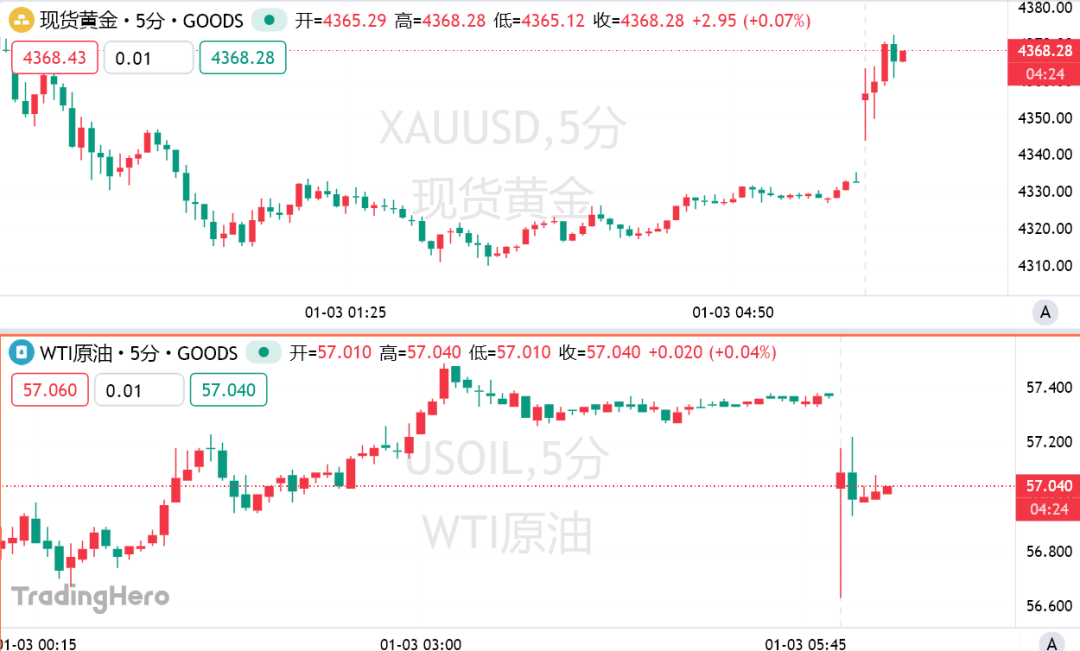
WTI crude oil opened 1% lower on Monday, and was quoted at $57 per barrel at the time of writing. Spot gold jumped at the opening on Monday, once breaking through $4,370 per ounce, with an intraday increase of 0.87%.
【Copyright and Disclaimer】The above information is collected and organized by PlastMatch. The copyright belongs to the original author. This article is reprinted for the purpose of providing more information, and it does not imply that PlastMatch endorses the views expressed in the article or guarantees its accuracy. If there are any errors in the source attribution or if your legitimate rights have been infringed, please contact us, and we will promptly correct or remove the content. If other media, websites, or individuals use the aforementioned content, they must clearly indicate the original source and origin of the work and assume legal responsibility on their own.
Most Popular
-

Key Players: The 10 Most Critical Publicly Listed Companies in Solid-State Battery Raw Materials
-

Vioneo Abandons €1.5 Billion Antwerp Project, First Commercial Green Polyolefin Plant Relocates to China
-

EU Changes ELV Regulation Again: Recycled Plastic Content Dispute and Exclusion of Bio-Based Plastics
-
Clariant's CATOFIN™ Catalyst and CLARITY™ Platform Drive Dual-Engine Performance
-
List Released! Mexico Announces 50% Tariff On 1,371 China Product Categories