


Since the second half of 2025, global memory chip prices have continued to rise. In the automotive sector, executives from several car companies stated that the price hikes and supply shortages of memory chips have put pressure on their enterprises.
In late December 2025, Meng Qingpeng, Vice President of Supply Chain at Li Auto, publicly stated that the automotive industry may face a storage chip supply crisis in 2026, with the fulfillment rate potentially falling below 50%. In early January 2026, NIO Chairman William Li mentioned during a media briefing that rising memory prices have become the industry's greatest cost pressure this year.
Will cars be more expensive for consumers to buy this year?
Public information shows that automotive storage chips, specifically designed to meet automotive-grade reliability and functional safety standards, are semiconductor devices primarily responsible for data and code storage. They handle the storage and high-speed reading and writing of information such as vehicle control software, calibration parameters, sensor data, vehicle status information, log events, and map data.
Automotive storage chips can be categorized into DRAM (dynamic random-access memory), NAND Flash (large-capacity storage), NOR Flash (boot and code storage), SRAM (high-speed cache), and EEPROM (small-capacity parameter storage). They are primarily used in intelligent cockpit infotainment systems, autonomous driving domain controllers for assisted driving, and remote communication units for vehicle-to-everything (V2X) systems.
In this round of memory chip price increases, which types have had a significant impact on the automotive sector?
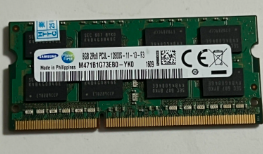
Multiple industry insiders told China-Singapore Jingwei that the price increase of DRAM memory modules has a significant impact on the automotive industry, becoming one of the core cost pressures facing car manufacturers, including both DDR4 and DDR5 memory modules.
"The automotive sector is currently facing severe shortages of DDR4 and DDR5 memory. Due to structural adjustments in the memory chip industry, with companies transitioning towards DDR5, DDR4 production capacity is tight. DDR5, on the other hand, is in high demand due to the growth in AI chip requirements," stated Bai Anqi, Minister of the Industry Research Department of the China Automotive Chip Industry Innovation Strategic Alliance, to China-Singapore Jingwei.
Vehicles have a huge demand for memory chips. Taking a mainstream L2-level new energy vehicle as an example, Bai Anqi said that the storage capacity required for the cockpit is about 150G, which requires DDR memory and UFS flash memory. Compared with two or three years ago, the capacity has increased by two to three times, and the cost is between 1000 yuan and 1500 yuan.
According to statistical data released by Beijing Hengzhou Bozhi International Information Consulting Co., Ltd. on January 22nd, the large-scale application of ADAS systems can increase single-vehicle storage demand by nearly 40%. The electrification transformation has driven the demand for high-performance, low-power automotive storage chips to grow by about 35%. The application of intelligent cockpits has driven the growth of automotive storage consumption by approximately 30%. The global automotive storage chip market is currently in a period of rapid growth, with market size expected to exceed $8.655 billion by 2032.
Despite strong demand, automotive DRAM's share among all categories is not significant.
In a late January research report, Wells Fargo noted that the automotive industry accounts for less than 10% of the global DRAM market, putting it at a disadvantage as chip manufacturers understandably prioritize higher-margin customers such as cloud and AI operators.
On one hand, demand is surging, while on the other hand, there are component shortages, which are also causing the prices of DDR4 and DDR5 to continue to rise.
Wang Chuang (pseudonym), the head of the intelligent technology field of a certain independent automobile company, cited an example, stating that a domestic new energy sedan priced close to 100,000 yuan with monthly sales of tens of thousands of units has a total RAM (Random Access Memory) of 28GB and a total ROM (Read-Only Memory) of 256GB for the entire vehicle. Before the price increase, its entire vehicle storage BOM (Bill of Materials) was less than 1,200 yuan, but it is now approaching 2,000 yuan. For mainstream new energy vehicles priced above 200,000 yuan, the increase in memory costs has exceeded 1,000 yuan.
"From the second half of 2025 to now, Micron's 32GB LPDDR5 has increased by 40% to 50%, but more models will use DDR4, so DDR4 is tighter and the increase is higher than DDR5," said Wang Chuang.
Deng Chenghao, Chairman of Deepal Auto, stated during a livestream in late January that the company's current production costs have risen by several thousand yuan. He noted that this cost pressure primarily stems from intense price fluctuations in power batteries and automotive memory chips.
Lei Jun, founder of Xiaomi, also stated in a live broadcast in early January: "Automotive-grade memory is currently increasing in price quarter by quarter. Last quarter, it rose by 40% to 50%, and it is said that it will increase again in the first quarter, with some reports even saying it will rise by 70%. Following this trend, the cost of automotive memory alone will increase by several thousand yuan this year. Coupled with the rising prices of bulk materials, the cost pressure is really immense."
According to a research report released by Morgan Stanley on January 19, the supply-demand gap in traditional memory chips is widening, and the industry is expected to usher in a new super cycle from Q2 2025 to 2026. Advanced process memory products such as DDR5 and HBM have strong capacity demand, squeezing capacity allocation for mature processes. In January 2026, leading companies are showing positive attitudes towards DDR4 procurement, and due to supply constraints, its price may increase by as much as 50% in the first quarter, with the upward trend continuing into the second quarter.
Compared to the cost pressure brought by rising memory prices, Wang Chuang said, car companies are more worried about whether the memory supply can be guaranteed.
Although the price increase has raised the cost of bicycles, it has not reached an excessively outrageous level. Things that can be solved with money are not difficult problems. Each car company has a different procurement system and faces different situations. Leading car companies and those with strong systemic capabilities will not be too worried for the time being. With economies of scale and their own strength, they will ensure supply through methods such as locking in production capacity in advance and long-term procurement agreements. Car companies with poor risk resistance may be affected more deeply. Wang Chuang further stated.
What other supply chain security measures do car manufacturers have? Huang Hua stated that there is currently no optimal supply chain security plan, and preemptively securing production capacity from domestic memory chip enterprises is one method.
"In the short term, automakers need to obtain as much production capacity as possible from various channels and also strive for supply from manufacturers, persuading them to allocate more of their share to the automotive field. From a long-term development perspective, automakers need to find alternative solutions, namely, seeking new supply channels," said Yuan Chengyin, Secretary-General of the China Automotive Chip Industry Innovation Strategic Alliance in an interview.
In response to the aforementioned issue, Volkswagen China recently told China Newsweek: "We have noted the relevant situation and are in close communication with local suppliers and partners. We are continuously monitoring and evaluating the situation, and actively exploring feasible alternative solutions to mitigate potential impacts. Our goal is to ensure supply stability while maintaining industry-leading cost competitiveness."
A person in charge from a mainstream chip design manufacturer believes that although the rise in memory prices has affected the automotive industry, its impact is far less than the chip shortage crisis a few years ago. This relatively moderate pressure, on the contrary, has created opportunities for domestic substitution of storage chips.
Bai Anqi stated that based on her understanding, car manufacturers have not yet changed their product definitions and strategies, and car prices have not increased. She suggested accelerating the capacity expansion of domestic memory chip manufacturers like CXMT to achieve domestic substitution as soon as possible.
A global automotive industry research report released by UBS on January 22nd indicates that due to the surging demand for AI servers, DRAM production capacity is heavily shifting towards High Bandwidth Memory (HBM). This shift is leading to a dual pressure of price increases and supply shortages for automotive-grade memory. The related impact is expected to gradually emerge starting from the second quarter of 2026.
How long will the rising memory prices and supply shortages last?
Regarding this, Yuan Chengyin stated: "It's highly unlikely that memory will be able to meet the demands of the automotive sector in the short term, because automotive-grade process line certification, equipment investment, and capacity expansion all require a certain amount of time to complete. Therefore, there will still be a trend of shortage and price increases in the next one to two years, unless AI demand declines rapidly."
Will car prices be more expensive for consumers this year due to the impact of rising memory prices?
Several industry insiders interviewed gave negative answers. Among them, Wang Chuang stated, "Based on the current competitive landscape of the industry, we will not raise prices. We have a clear scale advantage and can absorb some of the costs. I believe that in such a fiercely competitive environment, our peers will not raise prices in the short term."
In early January, Li Bin told CENS that the cost pressure from rising memory prices had not yet been passed on to end-user prices and was within NIO's tolerance. However, he also advised consumers to buy cars sooner rather than later.