



Zeekr, BYD, and XPeng Aggressively Target South Korea Market
It is well known that Japan and South Korea are relatively closed automotive markets globally, with consumers having a strong sense of national identity. Additionally, they have established numerous tariff and non-tariff barriers.
However, as China transitions into the largest automobile exporting country, these "fortress markets" which are difficult to penetrate are gradually being infiltrated by Chinese brand cars.
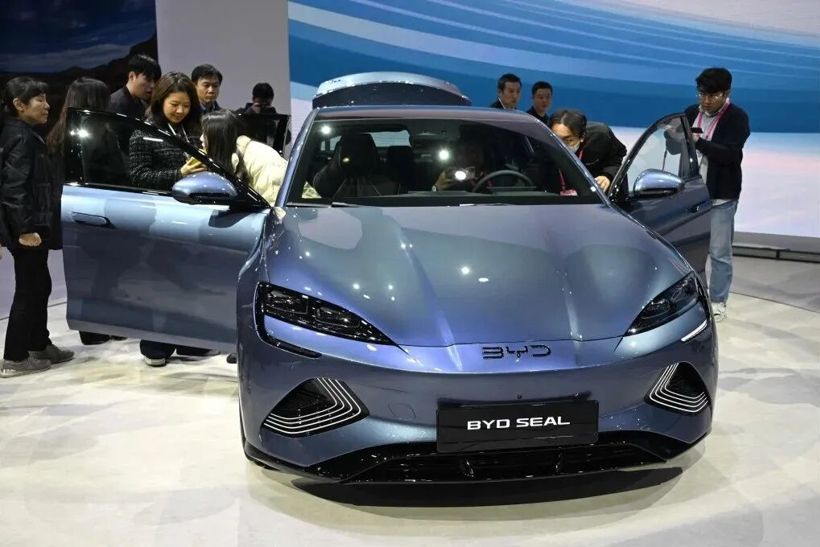
After entering the Japanese passenger car market in July 2022, BYD launched its first model, the Atto 3, in South Korea in January 2025, which corresponds to the Yuan PLUS in China. This global model name is also used in overseas markets such as ASEAN.
The starting price of the BYD Atto 3 in South Korea is 31.5 million won, approximately 152,000 yuan, which is nearly 40% higher than the minimum guidance price of 115,800 yuan in China. After subsidies in South Korea, the price can drop to the low 20 million won range, roughly around 130,000 yuan.
The Atto 3 Korean version has a range of 321 kilometers, with performance comparable to the Kia EV3 standard version, but it is approximately 8 million Korean won cheaper (about 38,000 RMB).
According to the current market performance, data from the Korea Automobile Importers & Distributors Association shows that in April this year, BYD shipped 543 cars to South Korea, surpassing Tesla to become the sales champion of imported electric vehicles for the month.
In the following months, BYD's sales in Korea remained at around 200 units per month, with cumulative sales reaching 1,578 units by August, ranking 14th among imported automotive brands.
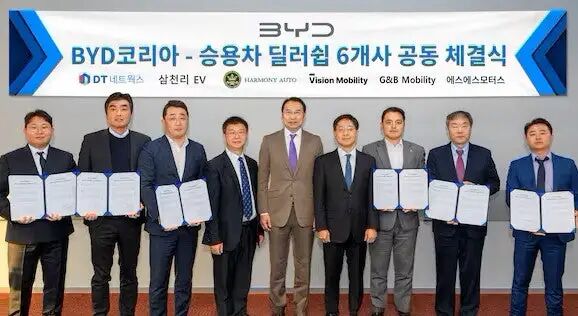
However, BYD's Seal has already been launched in South Korea, and the Sea Lion 7 is positioned to compete with the Tesla Model Y. The number of showrooms in South Korea has increased to over 30, and the number of service centers has risen to 25. For reference, Mercedes-Benz has 74 service centers in South Korea. Analysts believe that strengthening after-sales infrastructure will help consolidate BYD's market positioning as a "high-cost-performance challenger."
Relevant agencies predict that BYD's annual sales in South Korea will approach 5,000 vehicles.
After BYD, Zeekr is also targeting the Korean market. On November 28, Zeekr signed agreements at its headquarters in Hangzhou with four Korean dealership enterprises: H Mobility ZK, IronEV, KCC Mobility, and JK Mobility, to sell new energy vehicles in the Korean market.
Compared to BYD's value-for-money positioning in the Korean market, Zeekr is clearly targeting the high-end market. The parent companies of the four aforementioned dealership partners have long represented global high-end brands such as Audi, Mercedes-Benz, Peugeot, and Volvo.
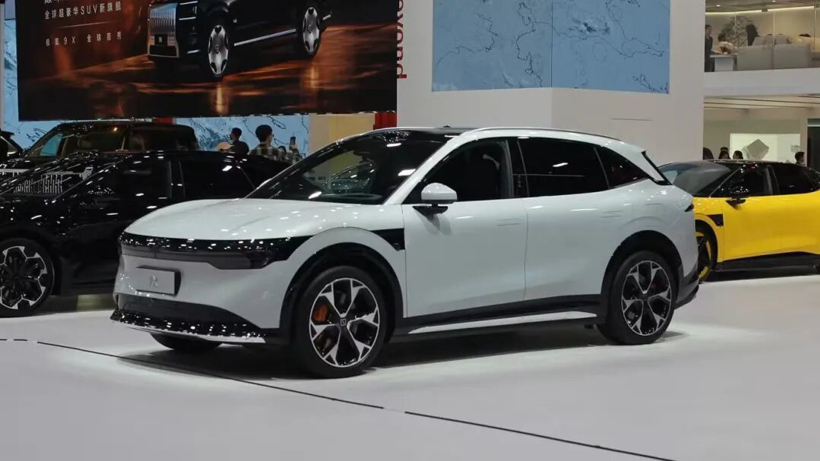
The first product from Zeekr to enter the Korean market will be the mid-sized electric SUV Zeekr 7X. This model will compete with Hyundai IONIQ 5 and Kia EV6, targeting the family SUV market with its spacious body, upscale interior, and high-performance battery system. Following this, there will also be Zeekr 007 and Zeekr X.
Zeekr plans to establish its network in Korea as early as the first quarter of 2026, utilizing the network of partner dealers to open showrooms in Seoul and the broader capital region.
A Korean automotive industry official said, "Zeekr's entry into the Korean market as a high-end brand will be a crucial test of whether Chinese electric vehicles can meet the expectations of Korean consumers."
XPeng Motors plans to launch the mid-size SUV G6 in South Korea in 2026, aiming to replicate BYD's successful path in the country.
The scale of the South Korean automobile market is at a relatively high level, with cumulative sales of around 1.38 million units from January to October this year, exceeding any single ASEAN country (only Indonesia, Thailand, and Malaysia have the potential to exceed one million units).
Currently, the United States and Europe are imposing tariffs of 100% and 45.3% respectively on Chinese new energy vehicles, prompting domestic car manufacturers to urgently seek alternative export routes.
For Chinese car manufacturers accelerating their overseas expansion, although the Korean market is relatively closed, cracking this "hard nut" would be an excellent demonstration of the strength of independent car companies.
【Copyright and Disclaimer】The above information is collected and organized by PlastMatch. The copyright belongs to the original author. This article is reprinted for the purpose of providing more information, and it does not imply that PlastMatch endorses the views expressed in the article or guarantees its accuracy. If there are any errors in the source attribution or if your legitimate rights have been infringed, please contact us, and we will promptly correct or remove the content. If other media, websites, or individuals use the aforementioned content, they must clearly indicate the original source and origin of the work and assume legal responsibility on their own.
Most Popular
-
Dow, Wanhua, Huntsman Intensively Raise Prices! Who Controls the Global MDI Prices?
-
Clariant Unveils Cost-Cutting Plan Details, Plans to Shut Down Multiple Plants
-
[Today's Plastics Market] General Materials Weakly Fluctuate, Engineering Materials Steadily Rise
-

New Breakthrough in Domestic Adiponitrile! Observing the Rise of China's Nylon Industry Chain from Tianchen Qixiang's Production
-
Daily Review: Polyethylene Prices Under Weak Consolidation, Sellers Face Significant Pressure to Move Inventory