



China Bids Farewell to "Russia Dependence"? Chinese Automakers Turn to South America's "New Continent"
A transportation revolution led by Chinese car brands has quietly reached its peak in Venezuela, located at the northern end of South America.
On January 4th, Gasgoo Auto learned that according to data provided by Cui Dongshu, the secretary-general of the Passenger Car Association, to industry media, from January to November 2025, China exported 17,099 vehicles to Venezuela, with an increase rate of 130%.
Among them, 10,201 passenger cars were exported, with a growth rate of 166%; 1,481 trucks were exported, with a growth rate of 99%.
In the Venezuelan market, once considered a "forbidden zone for investment," Chinese car companies are capturing a significant market share with remarkable localization strategies and flexible market adaptability, in this small market where annual sales are expected to rise to around 30,000 units.
Venezuela, a "newcomer" for Chinese car exports.
After experiencing severe inflation and economic turmoil, the Venezuelan automobile market once came to a standstill. It is this unique economic backdrop that created a distinctive opportunity for the entry of Chinese car brands.
According to publicly available information on the website of the Ministry of Commerce, the Venezuelan newspaper "Banking and Commerce Report" reported in October 2024 that Gonzalez, President of JAC Motors Venezuela, stated that the new car market sales in Venezuela are expected to be around 17,000 to 18,000 units in 2024, and may rise to 30,000 units in 2025, representing a 70% year-on-year increase.
At that time, reports indicated that the Jianghuai brand accounted for approximately 27% of the new car market share, with the main models being pickup trucks and trucks.
What is more noteworthy is the localization production strategy—95% of JAC Motors are assembled locally in Venezuela, with a monthly assembly capacity of approximately 500 units.
This "localized assembly, localized sales" model not only reduces the cost of whole vehicle imports but also creates local employment, earning dual recognition from both the government and consumers for Chinese brands.
Gonzalez, the president of JAC Motors Venezuela, emphasized that in recent years, Chinese car companies have continuously developed their technology, and their innovation capabilities have increasingly improved, highlighting China's strong manufacturing capabilities. In addition to automobiles, currently 90% of motorcycles on the Venezuelan market also come from China.
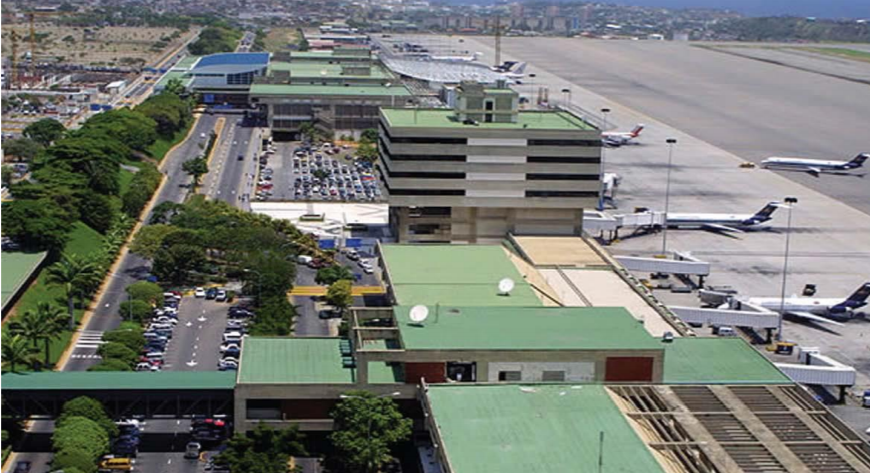
Image Source: Screenshot from the website of the National Ministry of Commerce
Changan Automobile also performed well.
In an exclusive interview with the Banking and Business Report on October 30, 2024, Roberto, a dealer for Changan Automobile in Venezuela, stated that Changan currently ranks third in the passenger car market in Venezuela. He expects sales in Venezuela to increase to 2,500 units in 2025, a year-on-year growth of 15% to 20%.
Changan Automobile's Venezuelan dealer Roberto stated that, according to data from the Venezuelan Automobile Industry Association, the sales of new passenger cars in Venezuela reached 520,000 vehicles in 2007. However, it fell to a low of 1,000 vehicles in 2018. The sales of new passenger cars in Venezuela are expected to be between 15,000 and 20,000 vehicles in 2024. Currently, restrictions limit the industry.Car salesThe main factor is the lack of financing support for car buyers.
Beyond Russia, the rise of the South American market in China's automotive export landscape.
The explosive growth of the Venezuelan market is not an isolated phenomenon, but rather a reflection of the overall strategy of Chinese automotive brands in the South American market.
According to data from the China Association of Automobile Manufacturers, in the first half of 2025, China's automobile exports reached 3.083 million units, an increase of 10.4% year-on-year.
As the Russian market declines, Chinese car manufacturers are seeking new growth opportunities globally.
According to data from the China Passenger Car Association, in the first nine months of 2025, China exported 5.71 million vehicles, a year-on-year increase of 21%. Among these, Mexico became the largest destination for Chinese car exports, followed by the UAE, with Russia becoming the third-largest destination for Chinese car exports.
This change reflects the quiet shift in the pattern of destinations for China's automobile exports. Over the past two years, Russia has consistently been the largest destination for Chinese automobile exports. However, factors such as import taxes, scrapping taxes, and challenges in car after-sales and maintenance have all affected the export business of Chinese automobiles to the Russian market.
Nowadays, Chinese car manufacturers regard South America as a key growth area and strategic depth for global expansion.
The data from the China Association of Automobile Manufacturers reveals a broader picture: in the top ten countries for Chinese automobile exports from January to November 2025, Mexico ranked first with 573,453 vehicles, experiencing a growth rate of 48%; Brazil ranked fourth with 285,122 vehicles, showing a growth rate of 31%. The growth rates for these two markets are both higher than the overall growth rate of 26% for China's complete vehicle exports.
This strategic shift is of great significance to Chinese car companies, as it not only reduces dependence on a single market but also enhances the ability to withstand global trade risks.
【Copyright and Disclaimer】The above information is collected and organized by PlastMatch. The copyright belongs to the original author. This article is reprinted for the purpose of providing more information, and it does not imply that PlastMatch endorses the views expressed in the article or guarantees its accuracy. If there are any errors in the source attribution or if your legitimate rights have been infringed, please contact us, and we will promptly correct or remove the content. If other media, websites, or individuals use the aforementioned content, they must clearly indicate the original source and origin of the work and assume legal responsibility on their own.
Most Popular
-

Layoffs, Divestments, Plant Closures While Pouring Billions: BASF Undergoes Major Transformation!
-
Ascend Adipic Acid Hit By Force Majeure, Market Expects Supply Resumption In Mid-September
-

Raw Material Supply Shortage! INEOS Phenol Declares Force Majeure on Phenol and Acetone Businesses
-
South Korea initiates anti-dumping investigation against Chinese PVC suspension resin! The target is Tianjin Bohua and Wanhua Chemical. How to break through?
-

Sixth national procurement set to be implemented: A “Reshuffling” Moment for the $10-Billion Medical Device Market