


China Innovation Medical Devices Approved 67 Items! Creating The World's First 5T MRI, Leading Intracranial Aneurysm Treatment Into Automatic Mode
The year 2025 is the "closing year" of the 14th Five-Year Plan. Looking back from the current point in time, the Chinese medical device industry has undergone profound changes over the past five years.
With the successive introduction of various supporting policies, China's high-end medical equipment industry has achieved leapfrog growth, giving rise to a number of domestically innovative high-end medical equipment enterprises and a series of major innovative achievements.
Mindray Medical and United Imaging Healthcare, among other leading domestic high-end medical device companies, act as "chain masters" by driving the upgrading of upstream and downstream supporting enterprises through product innovation and high-end development. The collaborative innovation effect of the industry chain is gradually emerging, with a batch of companies such as Kunshan Medical, Aike Medical, and Suzhou Boshi becoming specialized and sophisticated enterprises, known as "little giant" enterprises.
Under the continuous innovation of numerous domestic medical device companies, key technologies such as superconducting magnets and CT detectors have been successively conquered. The 5.0T whole-body MRI, the world's first 2-meter PET-CT, and the global first blood flow-guided mesh stent using mechanical balloon delivery technology have filled international gaps. Orthopedic surgical robots and third-generation artificial hearts are approaching or have reached internationally advanced levels.
The domestication of laparoscopic surgical robots allows hospitals to procure high-end medical equipment at lower costs, and patients undergoing surgery experience less trauma, reduced blood loss, and faster recovery. Stent products equipped with mechanical balloon delivery technology enhance surgical safety while significantly reducing operational difficulty, effectively shortening the learning curve for doctors and promoting technology dissemination. The breakthrough of the domestic 5T magnetic resonance imaging system significantly reduces the cost per patient examination. The continuous development of new models and new industries such as 5G+ orthopedic surgical robots enables patients thousands of miles away to receive precise surgical treatment guided by top experts.
These products are not imitations of internationally advanced products, but rather possess substantial innovations that are globally or domestically pioneering, addressing unmet clinical needs. This signifies that China's medical device industry has transitioned from "following" to "keeping pace," and in some areas, even began "leading."
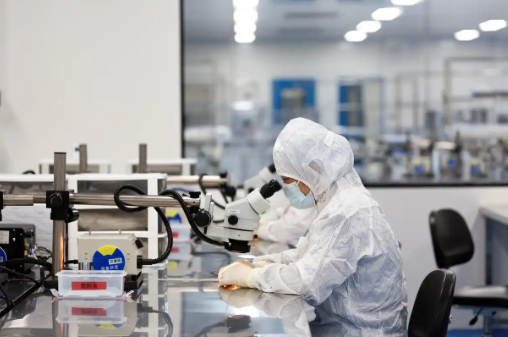
Continuous breakthroughs in high-end fields.
During the "14th Five-Year Plan" period, China's medical device industry has shifted from scale expansion to high-quality innovation. A notable change is the explosive emergence and rapid commercialization of original innovative that truly possess clinical value.
According to data from the National Medical Products Administration (referred to as "NMPA"), since the implementation of the 14th Five-Year Plan, the number of approved domestic innovative medical devices has been rapidly increasing. In 2024, the NMPA approved a total of 65 innovative medical device products for the market, setting a new record high. Data from Artery Network indicates that by November 2025, the number of approved innovative medical devices in China has reached 67, surpassing the total for the entire previous year.
At the same time, the "innovation" content of approved medical devices is continuously increasing. In recent years, many approved products have featured globally pioneering or domestically leading technologies, such as the next-generation artificial heart, blood flow-oriented mesh stent, more precise surgical robots, and internationally leading laparoscopic single-port surgical systems and intracranial thrombectomy stents. These innovations focus on major disease areas such as cardiovascular, neurological, and oncological conditions, truly meeting the clinical needs for high-end medical devices.
Especially, domestic in high-end medical devices have made breakthrough progress, with many products achieving original leadership in international competition.
Taking the "Navigation Positioning Microwave Ablation System" as an example, this product was developed by Zhenjiankang (Guangdong Hengqin) Medical Technology Co., Ltd. and was approved for market launch in September 2024. The Navigation Positioning Microwave Ablation System is the first microwave ablation surgical robot in China, designed for microwave ablation of solid tumors in adult livers. Compared to traditional microwave ablation devices, it innovatively integrates navigation positioning technology, respiratory tracking technology, and microwave ablation technology, and has been recognized by the drug regulatory authority as "a world first."
The world's first 5T magnetic resonance imaging system also comes from a Chinese brand. Previously, China relied almost entirely on imports for high-end MRI machines. In recent years, domestic brands have continuously made technological breakthroughs in the high-end field. In 2022, United Imaging's 5T MRI system was approved for sale in China, addressing the challenge of applying ultra-high-field MRI systems (3T and above) to the entire body globally. In 2024, data from Medical Equipment Digital Victory indicates that the localization rate of high-end MRI equipment (3.0T) in China has increased to 35.1%.
In the field of interventions, flow-diverting stents for neurointervention are recognized as products with high research and development difficulty, high technical barriers, and significant clinical value. However, traditional products face numerous challenges such as complex surgical procedures, difficulty in opening the stent tip, and a high risk of vascular rupture during surgery. With the continuous innovation by domestic medical device companies, these issues have been progressively resolved.
In 2022, the world's first blood flow-guiding dense mesh stent product, Lattice, utilizing mechanical balloon delivery technology and surface modification technology, was approved for market. This product was developed by Aike Medical, which was recognized as a "Specialized, Refined, Differential, and Innovative" small and medium-sized enterprise in Beijing in the same year, and in 2024, it was designated as a national-level "Specialized, Refined, Differential, and Innovative" Little Giant.
Lattice has been classified as an "Innovative Medical Device Product" by the drug regulatory authority and approved through the "green channel" review process. Behind this, Aike Medical's Lattice broke the traditional technology path of imitation and follow-up by domestic companies, achieving substantial innovation in the field of high-end neuro-interventional medical devices, specifically in blood flow-guiding dense mesh stents, which are urgently needed by the country.
Through a range of groundbreaking technological innovations, Aike Medical's Lattice series products can be more flexible and easier to reach distal vessels, significantly reducing the difficulty of surgical operations for clinicians, shortening surgery time, and improving patient cure rates and surgical safety. The industry believes that Lattice has ushered intracranial aneurysm treatment into the "automatic" era.
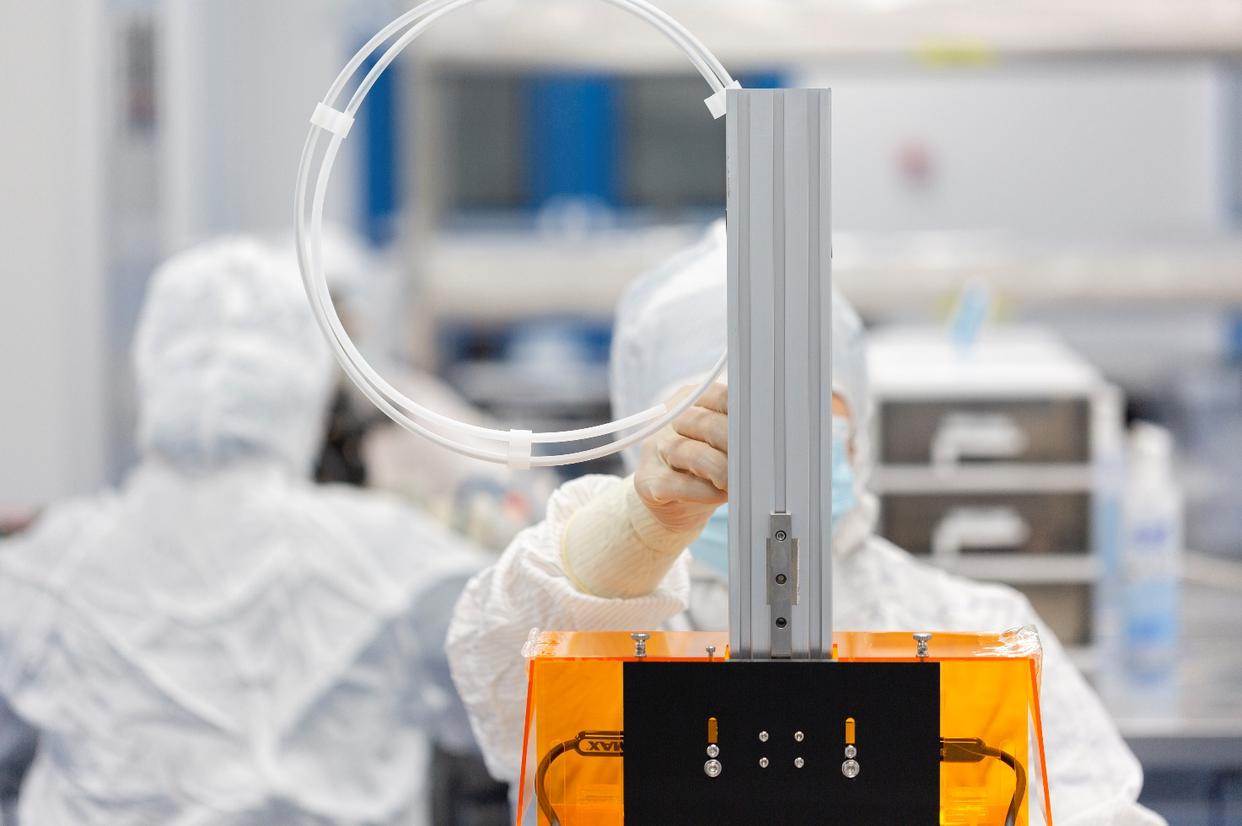
Significantly improve accessibility
The approval of high-end medical devices for market launch is just the first step; the more critical challenge lies in how to effectively enhance the clinical accessibility of these products, allowing more patients to receive treatment with a lower financial burden and more convenient pathways, ultimately benefiting from it.
Especially, how to expand product coverage to the grassroots market with a huge demand for medical devices has become a key focus for many enterprises. Under policy guidance, medical investment and resources are continuously being directed downward, and in the future, county-level and below hospitals and medical institutions will gradually become key areas for increased development.
Mindray Medical's cloud-based AI quality control solution enables its ultrasound and DR equipment to connect to cloud services, thereby accessing AI computing power to achieve AI quality control of standard ultrasound images. This AI technological innovation allows entry-level imaging equipment in remote areas or grassroots institutions to overcome hardware computing limitations, applying high-end intelligent technology to grassroots settings and enhancing the level and capacity of primary healthcare services.
In fact, there are increasing cases of domestic high-end medical devices improving accessibility through technological innovation and localization strategies.
The current mainstream procedure for treating intracranial aneurysms is "flow-diverting stent implantation," which boasts a high success rate and low recurrence rate. However, this technique has a long learning curve for traditional grassroots doctors, making it difficult to popularize in primary hospitals. Eako Medical's flow-diverting stent, with its breakthrough innovative design, significantly reduces the difficulty of surgery. Doctors in remote mountainous areas and county-level hospitals can perform the procedure after training, enabling the decentralization of neurointerventional surgery and greatly improving the accessibility of intracranial aneurysm treatment.
It is understood that Aiko Medical's related products have been used in over a thousand hospitals, covering not only well-known tertiary hospitals in first-tier cities but also county-level hospitals in relatively remote areas such as Yili Kazakh Autonomous Prefecture in Xinjiang. This is crucial for patients in emergency situations—once a cerebral aneurysm ruptures, the patient faces life-threatening danger in a short period of time.
United Imaging Healthcare's high-end imaging equipment has been widely adopted by hospitals at various levels across China. Its domestically produced PET-CT and other products not only ensure imaging performance reaches international advanced standards but also significantly reduce procurement and maintenance costs. This year, United Imaging Healthcare's 64-slice CT has won bids in county hospitals in Anhui, Guangdong, and other regions, gradually extending high-end imaging examination capabilities to county-level hospitals.
Furthermore, Chinese medical device brands have made breakthroughs in core technologies across several high-end fields, breaking the monopoly of foreign capital. For example, Mindray Medical, a leading domestic medical device company, ranks among the top three globally in terms of market share for categories such as anesthesia machines, ventilators, defibrillators, and ultrasound products.
In recent years, the overall market for CT in China has seen rapid progress in localization, especially with the growth of domestic brands. According to data from Medical Equipment Data Victory, in 2024, the market share of domestic brands in China's CT market increased from 34.8% in 2020 to over 53% in 2024; the localization rate of the domestic orthopedic surgical robot market exceeded 70%, an increase of approximately 6 percentage points year-on-year.
The core driving force behind this series of changes lies in the profound transformation of domestic medical devices from manufacturing to innovation. In the past, domestic medical device companies mostly competed in grassroots markets and low value-added sectors; now, in fields such as intracranial thrombectomy stents, artificial joints, and 5T magnetic resonance imaging, domestic products are gradually gaining more market share in high-end sectors by leveraging continuous technological breakthroughs and cost-performance advantages.
【Copyright and Disclaimer】The above information is collected and organized by PlastMatch. The copyright belongs to the original author. This article is reprinted for the purpose of providing more information, and it does not imply that PlastMatch endorses the views expressed in the article or guarantees its accuracy. If there are any errors in the source attribution or if your legitimate rights have been infringed, please contact us, and we will promptly correct or remove the content. If other media, websites, or individuals use the aforementioned content, they must clearly indicate the original source and origin of the work and assume legal responsibility on their own.
Most Popular
-

Continental Plans to Begin Sale of ContiTech in Early 2026
-
$4 Billion! Medtronic Makes Another Acquisition
-

BASF Delivers First Batch of Innovative Cathode Materials for Semi-Solid-State Batteries to Weilan New Energy
-

Why did a century-old european dental instrument giant relocate its manufacturing hub to china?
-
Profit and Revenue Growth Struggle to Conceal Debt Repayment Pressure; Success of Kingfa Sci & Tech's High-End Strategy Yet to Be Seen