



German Companies Fleeing Overseas, Germany's Chamber of Commerce Issues Warning
German companies are moving overseas in droves, and the German Chamber of Commerce has issued a warning.
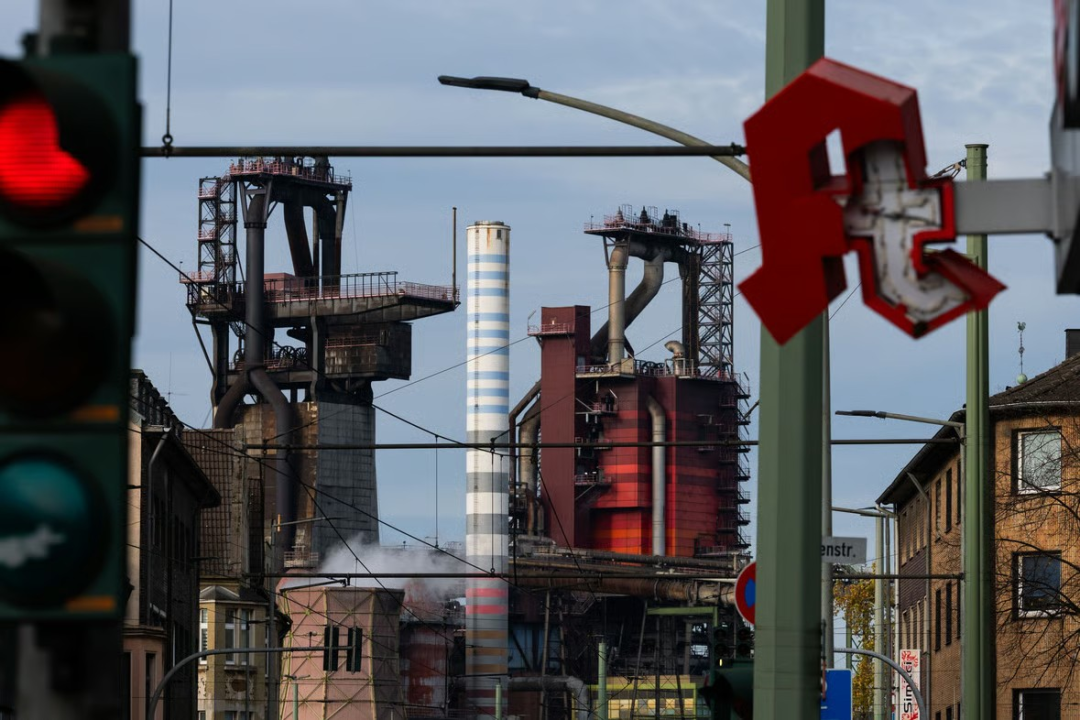
Image source: Rolf Vennenbernd/dpa
The German Chamber of Commerce and Industry (DIHK) believes that signs of deindustrialization are emerging in Germany. Small and medium-sized enterprises are likely to relocate production abroad or close down directly. This serves as a warning signal for employment, investment, and German industry.
The German Chamber of Commerce and Industry has warned that an increasing number of German companies are relocating abroad. "The danger is real," said Helena Melnikov, President of the German Chamber of Commerce and Industry, to the media recently. The industrial sector is particularly under great pressure, "We see clear signs of deindustrialization: small and medium-sized enterprises are moving production or even shutting down completely."
Since 2019, 400,000 industrial jobs have been lost. By 2025, the number of bankruptcies in the industrial sector alone will exceed 1,600, marking the highest record in 12 years. "This is a warning signal for Germany," emphasized the president of the German Chamber of Commerce and Industry. The reasons for this situation are rising labor and energy costs, high corporate taxes, and still burdensome bureaucratic hurdles. "If policymakers do not take decisive measures, it could lead to significant loss of added value and job losses," said Melnikov.
She pointed out that the economic outlook is weak. The German Chamber of Commerce and Industry predicts that the economic growth rate in 2026 will be only 0.7%. "This is not an economic recovery, but a small figure, partly because the number of days public holidays fall on weekdays in 2026 is reduced. After three years of stagnant economic growth, this is a weak signal," emphasized Melnikov. A current economic survey conducted by DIHK involving about 23,000 companies shows that only 15% of companies expect the economic situation to improve. One-third of the companies plan to cut investment, and one-quarter plan to lay off employees. "There is insufficient momentum to achieve a real recovery," said Melnikov. "The reforms implemented so far have not benefited businesses."
The unilateral interest rate cuts by the European Central Bank are insufficient to provide the necessary stimulus and cannot substitute for the urgent reforms needed in Germany. "Companies that cannot see long-term prospects will not invest even if financing costs are reduced," stated the President of the German Chamber of Commerce and Industry. The European Central Bank has reduced the benchmark interest rate from 4% to 2% during the mid-2024 to mid-2025 period. Due to persistent inflation risks, the European Central Bank maintained the interest rate unchanged in the latter half of the year.
【Copyright and Disclaimer】The above information is collected and organized by PlastMatch. The copyright belongs to the original author. This article is reprinted for the purpose of providing more information, and it does not imply that PlastMatch endorses the views expressed in the article or guarantees its accuracy. If there are any errors in the source attribution or if your legitimate rights have been infringed, please contact us, and we will promptly correct or remove the content. If other media, websites, or individuals use the aforementioned content, they must clearly indicate the original source and origin of the work and assume legal responsibility on their own.
Most Popular
-
Supply Extremely Tight! LG Chem Declares Force Majeure on Export Contracts for Di-Octyl Terephthalate (DOTP)
-

Deadly Impact: Hormuz Strait Blockade Sparks Shortage of Plastic Raw Materials, Threatening Shutdowns at Japanese and Korean Chemical Plants
-
Huntsman Introduces “War Surcharge” Amid Shipping Disruption and Soaring Energy Costs, Global MDI Prices Continue to Rise
-
Catl “wins big”: Beyond Batteries, What Else Can It Sell?
-

Tao Lin: Tesla’s Supercharger Stations in China Surpass 2,500