



Middle East Tensions Escalate Sharply: How Polyolefins Respond Amid Soaring Risk Premium
The United States and Israel launched a large-scale joint military strike on Iran on February 28, marking the most severe military escalation in the Middle East since the conflict in June 2025. The core impact of the U.S.-Israel joint military strike on Iran on rubber and plastic commodities (mainly polyolefins, etc.) is a triple shock of a sharp rise in the cost of crude oil, the disruption of Iranian supplies, and logistics and risk premiums. PE (especially LDPE) is significantly more affected than PP, with short-term price spikes and supply tensions, while the long-term impact depends on the intensity of the conflict and the extent of Iran's retaliation. How should commodities, led by crude oil, respond to the surge in risk premiums? On Monday's market opening, it is expected that the futures and spot prices of polyolefins will gap up significantly. How should one respond in the short term to such an extreme event? JLC offers a polyolefin trading strategy in the face of the surge in risk premiums due to the escalation of the Middle East situation.
The Middle East situation has escalated sharply, and commodity risk premiums have surged.
The U.S. and Israel's military strikes against Iran have triggered a significant repricing of risk premiums in global commodity markets. Geopolitical conflict is directly disrupting the pricing dynamics of energy, metals, and safe-haven assets, leading to broad-based short-term price surges in crude oil, gold, and certain non-ferrous metals, primarily driven by supply chain disruption fears and capital flight to safety. International crude oil prices have continued rising amid recent geopolitical tensions, with WTI reaching its highest level since early August last year as of Friday the 27th, while domestic crude oil prices in China hit a new high since September last year. Chemical products led by crude oil have been trending upward in a volatile manner since December 12 of last year. Geopolitical conflict will further amplify risk premiums across commodity markets, with polyolefins and other chemical products among the first and most directly affected.
The Core Timeline of the US and Israel's Joint Military Strike on Iran (Beijing Time)
February 27, 2026 (the night before the conflict)
On the 27th: The third round of US-Iran nuclear talks in Geneva broke down. The US demanded that Iran completely halt uranium enrichment, dismantle nuclear facilities, limit ballistic missiles, and abandon support for proxies, which Iran rejected.
On the evening of the 27th: The US Navy's "Ford" aircraft carrier arrived in Israel, completing a dual carrier deployment in the Middle East with the "Lincoln"; about 20 refueling aircraft also arrived in Israel.
February 28, 2026 (The day of the crackdown)
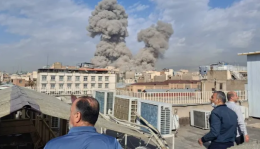
14:00: A powerful explosion occurred in the center of Tehran, the capital of Iran, sending up a thick column of smoke. The initial strike targeted the office of Supreme Leader Ayatollah Khamenei, the Presidential Palace, and the headquarters of the Islamic Revolutionary Guard Corps.
14:15: Israeli Defense Minister Katz announced a "preemptive strike" against Iran; Israel declared a state of national emergency and closed its civilian airspace.
14:05–14:25: The explosion spread to multiple cities, including Qom, Isfahan, Kermanshah, and Karaj; Iran’s Natanz nuclear facility, missile bases, and air defense systems were struck.
14:30: Iran announced the closure of its national airspace and suspension of civil aviation.
15:30: US President Trump released a video, announcing that the US military has launched a "large-scale sustained military operation" against Iran, with the goal of "flattening Iran's missile industry" and "eliminating the threat to the regime."
At 16:00, the Iranian Revolutionary Guard launched dozens of missiles and drones towards Israel; air defense alarms and explosion sounds were heard in northern Israel.
16:30: Iran’s Supreme Leader Ayatollah Khamenei issued a statement vowing “devastating retaliation” against the U.S. and Israel.
After 20:00: U.S. and Israeli airstrikes continued, expanding their targets to include Iran's military command centers, missile launch sites, and naval bases; air defense systems were activated in multiple locations across Iran.
February 29 – March 1, 2026 (Escalation of Conflict)
May 29: Iran launched a second wave of missile strikes on Israeli cities including Tel Aviv and Haifa; Israeli forces intercepted most, but some still hit their targets.
March 1: The U.S. military conducted air strikes on Iranian military facilities along the Strait of Hormuz; Iran blocked part of the strait’s shipping lanes, causing a surge in global oil prices.
Analysis of Polyolefin Conduction Pathways and Impact Prediction
The U.S. and Israel jointly launched airstrikes on Iran’s core military-political and nuclear facilities. In response, Iran closed its airspace and vowed retaliation, significantly escalating shipping risks in the Strait of Hormuz. In the spot market, Brent crude oil surged over 3% intraday on Friday (27th), reaching above USD 73 per barrel—the highest level since early August last year. Domestically, PE prices—particularly LDPE sourced from Iran—are expected to rise rapidly by RMB 100–400 per ton; PP prices are also anticipated to rise in tandem with cost increases.
Cost side: Crude oil → Naphtha → Ethylene/Propylene → Polyolefins
Iran is the third-largest oil producer in OPEC, and the Strait of Hormuz handles approximately 30% of the world’s seaborne crude oil. Conflicts directly drive up the geopolitical premium on crude oil.
Oil-based polyolefin costs are approximately 70% derived from crude oil/natural gas: for every $10/barrel increase in oil prices, the cost of PE/PP rises by about RMB 300–500 per ton.
Scenario Simulation: Translate the above content into English, output the translation result directly, without any explanation.
Limited impact: Brent at $85-90, polyolefin costs increase by 500-800 yuan/ton.
Comprehensive Upgrade (Iranian Strait Blockade): Oil prices break $100, soaring to as extreme as $120 or even higher, increasing the cost of polyolefins by 1000-1500 yuan/ton.
Supply side: Iranian supply directly impacts (structural differentiation)
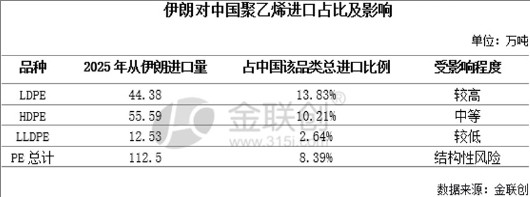
Polypropylene (PP): The proportion of PP imported from Iran to China is extremely low, mainly driven by cost factors, with no direct supply impact. Logic: Crude oil → Naphtha → Propylene → PP, costs rise in sync, futures and spot prices follow the increase.
Other rubber and plastics: Methanol (Iran exports 10% globally), sulfur (30%), synthetic ammonia, and other raw materials have increased in price simultaneously, indirectly raising the cost of rubber and plastics.
Logistics and Risk Premium: Comprehensive Chain Cost Increase
Shipping: Risk in the Strait of Hormuz → Insurance premium increases by 300%-500%, freight doubles, shipping schedule delayed.
Trade: Iranian supply disruption → Prices of alternative Middle Eastern sources (Saudi Arabia, Qatar) increased by 8%–12%.
Finance: Risk-off sentiment → capital flows into commodities, futures in contango, tight physical supply, and heightened volatility.
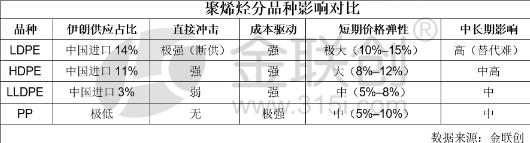
Monday market opening response of commodities market Polyolefins response strategy
On Monday’s futures market opening, crude oil and certain petrochemical products closely linked to crude oil surged sharply higher. The futures market reacted swiftly to the sudden event, evidenced by: a rise in price volatility (VIX-type indicator); pronounced premium for front-month contracts (an inverted market structure—near-term prices higher than longer-term ones); and sharp short-term fluctuations in trading volume and open interest. Investors are shifting from “buying on expectations” to “selling on reality,” with short positions being reduced, thereby driving prices upward. If the situation does not further deteriorate, part of the gains may be rapidly reversed. Currently, the escalation far exceeds last year’s level; compared with last year’s price movement, polyolefin prices are expected to rise in the near term.
Key variables affecting the market: whether Iran blocks the Strait of Hormuz; the extent of damage to Iran’s petrochemical facilities and ports; whether the U.S. and Saudi Arabia release strategic petroleum reserves or increase production to stabilize oil prices; the magnitude of OPEC+ production increases; and the speed at which Chinese and other Asian buyers shift to alternative Middle Eastern suppliers (e.g., Saudi Arabia, Qatar).
High import dependency of LDPE: the most direct impact, tight spot supply, and leading price increases. Domestic materials: cost increase + import substitution → synchronized price increases, inventory reduction. Downstream: cost increases for packaging, agricultural films, pipes, and injection molding, with profit margins being squeezed, and gradually transmitted to the end market under the support of rigid demand.
Trading Strategy: Short-term: Go long LDPE/HDPE and short PP (relatively weaker); alternatively, go long crude oil and fuel oil-related products, while monitoring the resumption of Iranian supply and the oil price inflection point. Medium- to long-term: Position for alternative Middle Eastern supply sources, optimize procurement timing, and lock in long-term contracts.
【Copyright and Disclaimer】The above information is collected and organized by PlastMatch. The copyright belongs to the original author. This article is reprinted for the purpose of providing more information, and it does not imply that PlastMatch endorses the views expressed in the article or guarantees its accuracy. If there are any errors in the source attribution or if your legitimate rights have been infringed, please contact us, and we will promptly correct or remove the content. If other media, websites, or individuals use the aforementioned content, they must clearly indicate the original source and origin of the work and assume legal responsibility on their own.
Most Popular
-
Middle East Tension Spikes Global Energy Pattern, Crude Oil and Plastic Industries Face Multiple Challenges
-
Middle East Tensions Escalate Sharply: How Polyolefins Respond Amid Soaring Risk Premium
-
[Forward-Looking Analysis] Impact of Escalating U.S.-Iran Tensions on Domestic Chemical Market
-
BASF Raises Prices! Nova Chemicals Expands Recycled PE Lineup! South Korea, UAE Sign $35B Defense MOU
-
Vynova's UK Chlor-Alkali Business Enters Bankruptcy Administration!