



Nearly 90% Winning Bids! Over 10 Billion Market Sixth Batch Medical Supplies National Procurement Results Announced Mainstream Products Widely Selected
Introduction: ① A total of 227 companies submitted bids for 496 products, with 202 companies winning bids for 440 products. Mainstream clinical products actively participated and were selected, resulting in a rich and diverse supply of products; ② While continuing to maintain true reporting and multi-round bidding, the introduction of "anchor pricing" for the first time, combined with multiple reactivation mechanisms, constrains extreme low pricing while also preserving space for price negotiation; ③ Relevant companies stated that the benefits of being selected will be reflected in their upcoming performance.

On January 13th, the sixth batch of national high-value medical consumables centralized procurement was officially launched in Tianjin. This procurement covers 12 types of clinically used consumables in two major categories: drug-coated balloons and urological interventions, involving key treatment areas such as vascular stenosis and urinary system stone surgeries. It attracted 227 companies with 496 products to compete, corresponding to an annual procurement demand of over 3.7 million (sets), with the pre-procurement market size estimated to exceed 11 billion yuan.
While continuing with the existing frameworks of real volume reporting and multiple rounds of bidding, this round of centralized procurement has introduced the "anchor price" for the first time, combined with multiple revival mechanisms. This both constrains extreme low pricing and leaves room for enterprises to negotiate prices and adjust market share. On the morning of the 14th, the selection results were announced: 227 companies submitted bids for 496 products, and 202 companies were selected for 440 products. The reporter noted that mainstream clinical products actively participated and were selected, resulting in a diverse and abundant supply of products.
Industry experts analyzed to the Financial Associated Press that, based on the results, "as long as you are willing to lower your prices, relevant authorities will leave a path for you." In the future high-value medical consumables market, leading domestic companies are expected to occupy about 70% of the mainstream market, while high-end sectors will still be dominated by foreign capital, and the remaining niche markets will be left for small and medium-sized enterprises with certain technical capabilities but limited commercialization abilities. Additionally, some winning bidders told the Financial Associated Press that the benefits of winning bids are expected to become evident starting mid-year.
227 companies compete on the same stage, with new ideas in anchor pricing and multiple reactivation rules.
On the morning of January 13, at the Liyun Hotel in Tianjin Water City, the sixth batch of centralized procurement of high-value medical consumables organized by the state was officially launched. Starting at 7:30, representatives from bidding companies entered the venue one after another to submit their application materials, and the on-site order was orderly. By 9:30, the submission of materials by companies concluded, with a total of 227 companies and 496 products completing their applications.
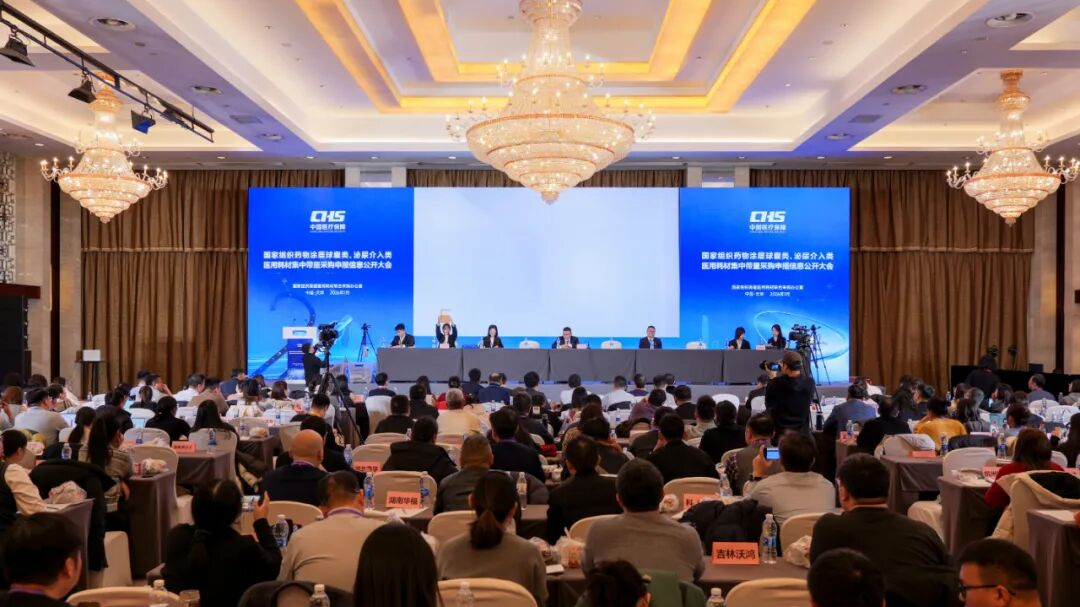
The current procurement round includes two main categories: drug-coated balloons and urological intervention devices, comprising a total of 12 subcategories. Drug-coated balloons are primarily used for the treatment of coronary and peripheral vascular stenosis, while urological intervention consumables are widely utilized in minimally invasive procedures for urinary system stones and obstructions. The clinical demand for these categories is stable, and their usage frequency is high. For a long time, there has been significant price differentiation in these products, which are regarded within the industry as an important step towards advancing the procurement of high-value consumables into deeper waters.
From the perspective of the procurement document, the sixth batch of centralized procurement continues the established path of the national organization for high-value medical consumables. It is based on the actual reported volume of medical institutions, clearly defines the annual demand scale, constrains the price space through the highest effective quoted price, and introduces a multi-round bidding mechanism to balance the reduction in prices with supply stability.
For example, in terms of demand measurement, the annual demand for drug-coated balloons in the category of coronary arteries exceeds 610,000; in the urological intervention category, products such as ureteral intervention guidewires and disposable ureteral soft endoscope catheters also reach annual demand levels in the hundreds of thousands. The large-scale and deterministic volume expectations provide a relatively clear "volume-price conversion" basis for companies' pricing.
In terms of rules, this round of centralized procurement continues to set up the initial quotation and subsequent quotation mechanism. At 11:30 a.m., the initial quotation announcement was successfully completed, and the site immediately entered the intense price calculation stage.
Compared to previous rounds of centralized procurement, the design of the rules this time is quite innovative, with the core highlight being the introduction of the "anchor price" concept for the first time and the establishment of multiple revival mechanisms, which is also the focus of attention in the industry. According to the procurement documents, the anchor price is clearly defined as "the higher value between 65% of the average price of the shortlisted enterprises' products within the same bidding unit and the lowest product price," which is an increase compared to the previous draft for comments where the standard was set at "60% of the average."
The multiple revival mechanisms further broaden the selection channels for enterprises, providing multiple opportunities for the first round of unsuccessful enterprises: For shortlisted enterprises not selected under Rule One, as well as those whose initial bid does not exceed 70% of the highest effective bid price, they can conduct a second bid under Rule Two. As long as their bid does not exceed 70% of the highest effective bid price, does not exceed 1.4 times the anchor price of the A bidding unit of the same variety, and does not exceed their initial bid, they can successfully be selected. For effective bidding enterprises not shortlisted under Rule One, if their initial bid does not exceed 70% of the highest effective bid price, and their second bid simultaneously meets the requirements of not exceeding 1.3 times the anchor price of the A bidding unit of the same variety and not exceeding their initial bid, they can obtain the selection qualification through Rule Three.
Moreover, this centralized procurement has also implemented refined adjustments to product classification, further distinguishing varieties such as ureteral access sheaths and disposable ureteral soft endoscope catheters based on whether they possess the function to measure physiological pressure at the target site or not. Differential pricing has been set separately, which fully takes into account the technical differences and clinical value of different products, highlighting the refined governance approach of "one product, one policy."
"Other rules have actually appeared before; the truly new one is the anchor price," medical device expert Wang Qiang, who has been tracking the national procurement of high-value consumables, told reporters. A total of 227 companies participated in the bidding this round, which is significantly higher than the scale of previous batches, "this number is record-breaking."
In Wang Qiang's view, the high level of participation itself indicates that the predictability of rules for enterprises is increasing, and also reflects that the centralized procurement of high-value medical consumables has gradually transitioned from the early stage of policy probing to a relatively stable stage of institutional operation. While changes to the rules are ongoing, the extent of adjustments is converging. Enterprises are more engaged in strategic games within the established framework rather than passively responding to uncertainties and shocks. "As long as you are willing to lower the price, the relevant departments will keep the path open for you."
On the 13th at 19:00, the Tianjin Medical Procurement Center announced that at 18:20, after two rounds of on-site bidding, the quotation phase for the sixth batch of state-organized high-value medical consumables procurement was completed. According to the National Healthcare Security Administration, due to the large variety of products involved and the numerous bidding and winning manufacturers, the data needs to be verified and organized, and the proposed selection results are planned to be published on January 14th.
Advance Release of Celebration Announcement: Domestic Enterprises Seize Opportunities to Break Through
On the evening of the 13th, some domestic companies have started to announce good news, revealing the selection results.
Lepu Medical (300003.SZ) announced at 18:00 on the 13th that its drug-coated balloon products have been successfully awarded in the centralized procurement. The drug-coated coronary balloon catheter (Vesselin) was awarded under Rule 1 with a bid price of 2,678 yuan, the drug-coated coronary balloon dilation catheter (VitalityMini) was awarded under Rule 1 with a bid price of 2,678 yuan, the drug-coated coronary balloon catheter (ReVas) was awarded under Rule 1 with a bid price of 1,978 yuan, the drug-coated peripheral balloon dilation catheter (PeVaDilat) was awarded under Rule 3 with a bid price of 4,438 yuan, and the paclitaxel-coated peripheral balloon dilation catheter (DilatBK) was awarded under Rule 1 (below the knee) with a bid price of 4,738 yuan.
On the 14th, a reporter from Caixin News, posing as an investor, called Lepu Medical. The company's securities department stated that the full line of participating products won bids and that the company's pricing strategy was better and more precise, indicating that the company secured the largest market share in the relevant categories. This will have a positive impact on the company's operations and future performance.
"Coronary products are already the major source of our revenue. After winning the bid, the profit margin isn't substantial, but the increased volume is still quite considerable. It is expected to be reflected in the mid-year performance after implementation." said Lepu Medical.
Weili Medical (603309.SH) also announced that its controllable bending ureteral sheath catheter and accessories A3 have been selected, ureteral balloon dilation catheter kit A1 selected, minimally invasive expansion drainage kit A3 selected, A5 (Shagong) selected, endoscopic stone basket A1 selected, urinary tract guide wire A6 selected.
Today, representatives from Wego Medical told reporters from Cailian Press that all five of the company's products were fully selected in A category bidding. The effect of increased sales for related products will be seen this year, but it is unlikely to have a significant impact on the company, as the centralized procurement does not make a big difference in our ex-factory prices. "The selection results reflect the major trend of 'import substitution', and being selected is the result of various factors such as product quality and market demand."
In addition, BD Medical's drug-coated balloon dilation catheter (LUTONIX 035 PTA), Guichuang Medical's drug-coated balloon (UltraFree), and Acotec Medical's paclitaxel drug-coated balloon (Swiftbird) have also announced their selection.
According to representatives from participating companies at the, in the first round of applications for coronary drug balloons, in Group A (6 into 4), Yinyi Biotechnology quoted 2,789 yuan, Lepu Medical quoted 2,678 yuan, Shenqi Medical quoted 3,659 yuan, B. Braun quoted 3,131 yuan, Cadno Medical quoted 1,677 yuan, and Boston Scientific quoted 3,878 yuan. In Group B (8 into 5), Ruivite Medical quoted 1,678 yuan, MicroPort Medical (00853.HK) quoted 3,688 yuan, and Yixin Medical quoted 3,913 yuan.
It is noteworthy that domestic companies are also actively utilizing the revival mechanism. Some companies that did not qualify for the A bidding unit in the first round have clearly stated that they will further lower their prices in the second round of bidding, striving to achieve "revival" through rule two or rule three, thereby expanding their market coverage.
Clearly Opposing "Involution" as Market Structure Differentiation Accelerates
On the morning of the 14th, the National Organization for Medical Consumables Joint Procurement Platform officially released the results of the selection. This procurement includes 12 types of medical consumables in two categories: drug-coated balloons and urological interventions. A total of 227 companies submitted bids for 496 products, and 202 companies had 440 products selected.
It also stated that drug-coated balloons improve vascular stenosis by dilating blood vessels and releasing medication. They can be divided into coronary balloons and peripheral vascular balloons based on the vascular location. This time they were included in the centralized procurement, effectively coordinated with the previously procured heart stents and peripheral vascular stents. A total of 42 products from 32 companies bid for the drug-coated balloons and all were selected, achieving a high degree of compatibility with clinical use while reducing the financial burden on the public. Urological interventional consumables are used for stone removal surgeries in patients with kidney stones and ureteral stones, with different types of consumables used for different surgical schemes, involving complex products, and were previously a "blank area" in centralized procurement. A total of 454 products from 195 companies bid for urological interventional consumables, and 398 products from 170 companies were selected. Additionally, manufacturers of drug notching balloons with special functions, pressure measuring soft endoscope catheters, and others were all selected, effectively meeting the needs of special clinical scenarios.
"Optimize the selection rules and clearly oppose 'involution'. Instead of simply selecting the lowest price to calculate the price difference, when the lowest price is too low, use 65% of the average price of the shortlisted products as the benchmark for price difference control. In this procurement, among the 20 competitive groups, 8 groups triggered this rule, which played an important role in preventing individual companies from quoting excessively low prices that would overall lower the product prices in the same group," emphasized the National Medical Supplies Joint Procurement Platform.
Regarding the selection results, Wang Qiang told a reporter from Cailian Press that in categories such as balloons and interventional products, which have been highly centralized in procurement, foreign companies are generally facing the reality of "unable to set prices, profit margins being flattened or even inverted." After the implementation of centralized procurement, sales have been in a continuous decline, with some companies only able to maintain selection eligibility in certain categories through aggressive pricing. Overall, foreign companies are gradually withdrawing from conventional, high-volume categories, with their business focus shifting more towards high-end niche areas that domestically have not yet fully broken through, such as fields with high technical barriers like neuroregulation and cardiothoracic covered stents.
However, this contraction does not mean a complete withdrawal. Wang Qiang analyzes that some leading foreign companies choose to maintain their participation through localized production and long-term investment. For example, Medtronic and Boston Scientific have previously established production bases in Shanghai Lingang and have demonstrated pricing strategies on certain products that are relatively close to those of leading domestic companies, indicating a long-term optimism towards the Chinese market.
From an overall perspective, the structure of "foreign companies retreating to high-end markets while domestic firms occupy the majority" in the conventional high-value consumables sector is becoming further solidified. Wang Qiang predicts that under the current pattern, leading domestic enterprises have captured about 70% of the mainstream market, while the high-end sector is still dominated by foreign companies. For instance, in the case of small vascular covered stents and cerebrospinal fluid shunt systems, foreign enterprises hold a dominant position, and domestic products have not yet overcome the technological barriers. The remaining niche segments are left to small and medium-sized enterprises that possess certain technical capabilities but have limited commercialization abilities. This "structured layering" is becoming a long-term outcome in the context of normalized centralized procurement.
According to reports, the selection results will be officially announced soon after this public announcement, and the implementation of the selected results is expected around May 2026. By then, a large number of patients will be able to access high-quality and affordable products selected through this centralized procurement.
【Copyright and Disclaimer】The above information is collected and organized by PlastMatch. The copyright belongs to the original author. This article is reprinted for the purpose of providing more information, and it does not imply that PlastMatch endorses the views expressed in the article or guarantees its accuracy. If there are any errors in the source attribution or if your legitimate rights have been infringed, please contact us, and we will promptly correct or remove the content. If other media, websites, or individuals use the aforementioned content, they must clearly indicate the original source and origin of the work and assume legal responsibility on their own.
Most Popular
-

Raw Material Supply Shortage! INEOS Phenol Declares Force Majeure on Phenol and Acetone Businesses
-

Lantiche Group To Shut Down Italian Adipic Acid Production Plant
-
Resin Market Trends Diverge: Buyers' Bargaining Advantage Hit by Geopolitical Uncertainty
-
AI Computing Power Demand Ignites Electronic Fabrics! China Jushi Hits Limit Up! Domestic Substitution Welcomes Golden Window
-
Strait of Hormuz Blocked Again, Supply-Demand Mismatch in Polyolefin Market Set to Intensify!