



Xibei Closes 102 Stores: Could These Outlets Have Been Saved Without Public Opinion Storms?
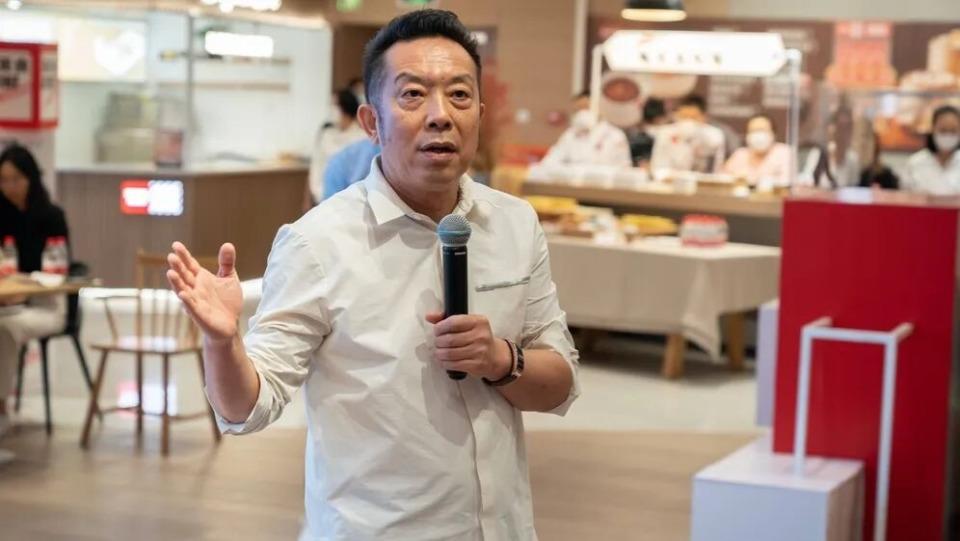
Starting on the afternoon of January 15th, news of Xibei closing 102 stores exploded in the catering industry, taking the form of a "confession" from founder Jia Guolong's WeChat Moments. This contraction, affecting over 30 cities, also marks the largest adjustment in Xibei's 38-year history.
The northwestern cuisine restaurant chain has been a hot topic in public discourse multiple times over the past four months. From the public outcry over pre-prepared dishes in September 2025 to the current store closures, after 125 days of struggle, the total number of Xibei stores will shrink from its peak of 370 to approximately 270.
In the text, Jia Guolong emphasizes that he "doesn't understand public relations" and is a "down-to-earth person who has been in real business for 38 years," mentioning the efforts of 17,000 employees over the past 125 days.
But if we set aside the discussion of whether public relations were lacking for a moment and return to a more fundamental question: without these public opinion incidents, would these 102 Xibei stores have been able to avoid closure?
Operational pressure behind the data
The 102 stores closed were all bottom-performing stores selected internally by Xibei, with hard indicators such as rental costs and foot traffic data being the main selection criteria. This decision reflects existing operational challenges that Xibei has long faced.
Xibei's single-store net profit margin is only 5%, while the fixed costs of some stores are close to 500,000 yuan per month. Based on this cost structure, a store needs to achieve 800,000 yuan in revenue per month to break even, leaving very little room for profit.
From a business logic perspective, the closure of restaurant outlets typically stems from several core factors: poor location choice, uncontrolled costs, declining customer traffic, and an unprofitable business model. Among the Xibei stores that closed this time, many were located in non-core business districts or emerging communities. While these locations might have initially attracted customers due to brand influence, in the long run, if the surrounding consumer spending power is insufficient or competition is excessive, closure is almost inevitable.
On the other hand, Xibei's long-standing high-cost operating model, including high-quality ingredients like grassland mutton, relatively high employee benefits, and strict fulfillment promises, can be sustained when store traffic is plentiful and the average transaction price is acceptable. However, in an environment where overall consumption is becoming more conservative and competition is intensifying, this model will significantly compress the profitability of individual stores. This is especially true in non-first-tier cities or non-core locations, where consumers tend to be more price-sensitive.
Based on this, combined with Jia Guolong's "question" posted on WeChat Moments: "Being the No. 1 in Chinese-style cooked meals revenue for eleven consecutive years, is it all thanks to public relations?"
That's partly true. Xibei's success today indeed relies on product labels like grassland lamb and Northwest cuisine, as well as the execution of its 17,000 employees. However, "not relying on PR" doesn't mean there's no need for communication.
In the latter half of 2025, when Xibei was embroiled in the pre-prepared meal controversy, online criticisms largely focused on: central kitchen preparation equals pre-prepared meals, and rapid freezing equals not fresh. This was an issue that could have been quickly clarified through national pre-prepared meal standards and central kitchen freshness-locking techniques. When netizens complained about Xibei's high menu prices, the company should have responded with data on the procurement costs of grassland sheep and ingredient spoilage. However, the situation ultimately devolved into an emotional confrontation of "malicious slander."
Even before the public outcry over pre-prepared meals gained momentum, the catering industry was already grappling with a slowdown in consumption recovery, and Xibei’s high-price positioning had begun to face challenges. Its core customer base, primarily consisting of families and the elderly, is highly price-sensitive. Consequently, its previous average spend of approximately 92 RMB per person offered little advantage among competitors in a market where "value for money" is king.
From the perspective of industry trends, the expansion of chain restaurants inevitably involves a process of natural selection. Xibei closed dozens of underperforming stores by the end of 2024, and this closure of 102 stores is essentially a concentrated release of operational contradictions accumulated during the earlier expansion phase.
Therefore, public opinion events only accelerated this process, rather than being the root cause of the problem.
The last straw that breaks the camel's back
The pre-prepared dish controversy in September 2025 directly impacted Xibei, which was already under pressure. After Luo Yonghao's widely circulated criticism that "Xibei is almost all pre-prepared dishes and still sells them at a high price," Xibei's daily revenue from its nationwide stores decreased by over 2 million yuan, and at its most severe point, store traffic across the country plummeted by 45%.
To address the crisis, Xibei implemented remedial measures by shifting central kitchen processing back to its storefronts and introducing items like freshly skewered lamb kebabs and handmade dumplings. The company also reduced the prices of over 30 products by nearly 20%, lowering the average spend per customer from 92 yuan to 75 yuan, while launching multiple rounds of consumer vouchers and half-price delivery promotions.
However, these actions failed to completely reverse the situation. The "perceived value" of the price cuts fell short of expectations, and the made-to-order model in stores led to longer serving times, further highlighting the conflict between cost and experience. As a result, customer traffic never fully recovered to previous levels.
After a 40% plunge in customer traffic, the 102 lowest-performing stores, already teetering on the brink of profitability, have fallen completely into a quagmire of losses. However, it needs to be clarified that the public outcry only amplified existing operational shortcomings. Even without this incident, these stores' revenue figures would have struggled to sustain their continued operation; it's just that the closures might have been delayed, and the scale perhaps reduced.
Looking at Jia Guolong's WeChat Moments, he mentioned, "Some stores that accepted New Year's Eve dinner reservations, even though closing immediately would result in smaller losses, we will honor our commitments to customers and persevere for another month."
This commitment to fulfilling obligations even at a loss truly reflects Xibei's 38-year foundation in real industry. However, against the backdrop of closing 102 stores, does this so-called "commitment" make financial sense?
Fulfillment costs in the catering industry are never isolated. Insisting on fulfilling New Year's Eve dinner orders for a month requires retaining store staff, bearing the cost of food spoilage, and paying rent for the premises. These costs could have been shared by communicating with customers in advance and transferring the New Year's Eve dinners to nearby stores, but Xibei chose to "tough it out."
Furthermore, regarding the promise of "prepaid cards being readily available and refundable immediately upon request," while this undoubtedly protects customer rights, Xibei seems to have overlooked the fact that large-scale store closures will put pressure on the remaining stores due to concentrated consumption using prepaid cards. When a large number of customers flock to a limited number of stores to redeem their prepaid cards, the table turnover rate and service quality of those stores will be affected, potentially leading to new negative reviews due to poor experiences.
Jia Guolong said, "I personally have no assets other than Xibei." While this statement is sincere, sincerity cannot solve business problems. The risk resilience of a catering enterprise never relies on the owner's moral sentiment of having "only one house," but on systemic capabilities in public opinion communication efficiency, cost control elasticity, and customer trust conversion. Not feeling guilty about closing down is the bottom line, but how to survive after closing down is a more realistic proposition.
Imbalance between Expansion and Operation
Xibei's operational pressure also stems from a long-standing mismatch between its expansion pace and operational capabilities. In the pursuit of scale growth, the location and operation of some stores have failed to keep up with the brand's development, resulting in uneven competitiveness among individual stores.
In his subsequent reflections, Jia Guolong also mentioned that he needed to "slow down expansion, shrink his desires, and operate the current 300+ stores steadily." This statement confirms the brand's previous need for adjustment in its expansion strategy. The economies of scale brought about by rapid store openings have not been simultaneously translated into improved operational efficiency. Instead, the increase in the number of stores has led to increased management difficulty, and the service quality and food stability of some stores have fluctuated.
Furthermore, Xibei's definition of "pre-prepared dishes" deviates from consumer perception, and this communication shortfall was magnified in the public opinion, but essentially reflects the brand's neglect of consumer needs. Jia Guolong later admitted that they "long neglected the voice of customers," a problem that did not emerge during the public opinion event, but rather a long-standing operational hazard.
Jia Guolong stated in his WeChat Moments, "Seventeen thousand Xibei employees have done their best," and promised that employees of closed stores would receive their full salaries, "not a penny less." These details also indicate that the store closures are a strategic contraction after careful consideration by Xibei, rather than a passive collapse.
Returning to the original question: even without the public opinion incident, the 102 bottom-performing stores would likely have struggled to survive in the long run. The public outcry merely accelerated the exposure of operational conflicts, forcing Xibei to expedite its adjustments. In the restaurant industry, where net profit margins are thin, scale is only meaningful if individual store profitability, operational efficiency, and consumer experience are solid.
In the past, competition for catering businesses was a three-dimensional game of product + location + cost. Now, the competitive dimensions have expanded to perception + emotion + social interaction. A restaurant not only needs to have delicious food, but also needs to let customers know that your food is delicious. You not only need to fulfill your promises, but also need to let customers feel your sincerity in fulfilling them. You even need to find ways to make customers willing to pay for your brand story.
According to industry insiders speaking to Huxiu, "Xibei's problem lies precisely in the absence of cognitive construction: it has good grassland lamb ingredients, but it hasn't clearly explained why the grassland lamb is worth the price. It has the good practice of closing stores to fulfill orders, but it hasn't allowed more customers to feel Xibei's business bottom line. It has a team of 17,000 employees, but it hasn't transformed its industry-leading employee benefits into a label of corporate social responsibility." In his view, Xibei is a good company, but unfortunately, the company has not made the correct communication for itself.
Whether Xibei can stabilize its position in the future with approximately 270 core stores hinges on resolving the long-standing issues of cost and pricing, and the balance between expansion and operation. This closure event also provides an insight for all chain catering brands: the premise of scale growth is built on a healthy operating foundation; otherwise, no matter how lively the expansion is, it will ultimately return to the essence of operating data.
【Copyright and Disclaimer】The above information is collected and organized by PlastMatch. The copyright belongs to the original author. This article is reprinted for the purpose of providing more information, and it does not imply that PlastMatch endorses the views expressed in the article or guarantees its accuracy. If there are any errors in the source attribution or if your legitimate rights have been infringed, please contact us, and we will promptly correct or remove the content. If other media, websites, or individuals use the aforementioned content, they must clearly indicate the original source and origin of the work and assume legal responsibility on their own.
Most Popular
-

Layoffs, Divestments, Plant Closures While Pouring Billions: BASF Undergoes Major Transformation!
-

Ascend Adipic Acid Hit By Force Majeure, Market Expects Supply Resumption In Mid-September
-

Raw Material Supply Shortage! INEOS Phenol Declares Force Majeure on Phenol and Acetone Businesses
-
South Korea initiates anti-dumping investigation against Chinese PVC suspension resin! The target is Tianjin Bohua and Wanhua Chemical. How to break through?
-

Sixth national procurement set to be implemented: A “Reshuffling” Moment for the $10-Billion Medical Device Market