



Futures Surge Violently, Polyolefin Spot Prices Rise Sharply in Tandem
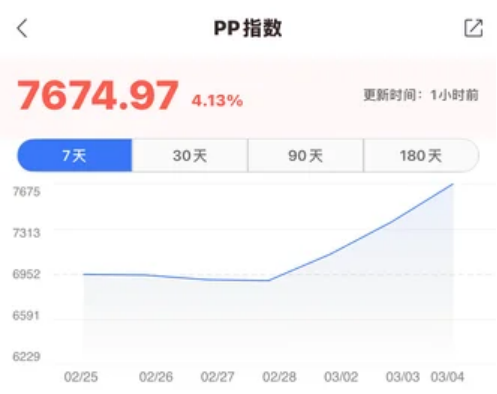
The South China PP price index is 7674.97 points, up 746.95 points from last week, an increase of 10.78%. Among them, the filament increased by 600, the fiber increased by 600, the copolymer increased by 500, the thin wall increased by 500, and the homopolymer increased by 550.
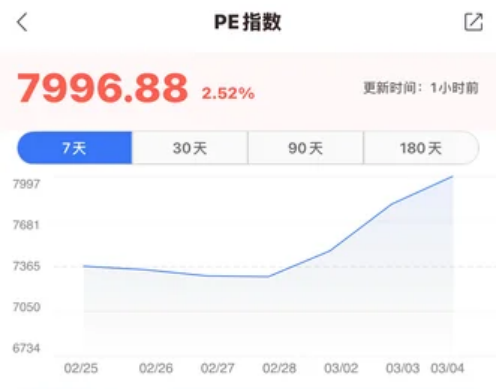
South China PE Price Index at 7996.88 points, up 612.52 points from last week, with a rise of 8.29%, among which linear increased by 700, low pressure increased by 600, and high pressure increased by 1000.
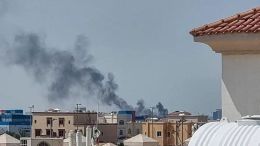
This week, the polyolefin market experienced a trend of first oscillating and declining, then significantly rebounding, with a significant increase in volatility, and market sentiment was clearly driven by geopolitical events. In the first two trading days, the market was still digesting the post-holiday inventory, and futures prices fluctuated narrowly. However, starting from February 28, with the sudden escalation of the geopolitical situation in the Middle East, market sentiment completely reversed. Driven by the surge in oil prices due to the geopolitical conflict, the significant increase in the cost end became the main driver, coupled with some plant maintenance, tight import supply, and other favorable supply-side supports, despite the slow post-holiday resumption of work downstream, weak demand, and the market mainly following a buy-as-needed approach, lacking concentrated restocking, under the impetus of capital entry and bullish sentiment, polyolefin market prices continued to rise, and the overall trend was significantly stronger than the fundamentals. It is expected that next week, the polyolefin market prices will show a significant fluctuation at a high level, and it is not ruled out that there may be sharp intraday fluctuations due to repeated news.
On the cost side, due to the escalation of the Middle East situation and the rising shipping risks in the Strait of Hormuz, WTI crude oil rose from $65.57 per barrel on February 25 to $74.56 per barrel on March 3, an increase of 13.71%, with a single-day increase of 4.67% on March 3. The London Brent crude oil futures price also rose sharply to $81.40 per barrel, an increase of 4.71%, while the Brent crude oil spot price quickly climbed to around $80 per barrel, reaching the highest level since the Russia-Ukraine conflict in 2022. Not only crude oil, but also chemical raw materials such as methanol and propane, which rely heavily on Middle Eastern supplies, saw rapid price surges. In particular, the sharp rise in propane prices severely compressed the profit margins of polypropylene produced via the PDH process, leading to reduced willingness for previously shut-down facilities to restart, and even triggering new shutdown risks, reinforcing the expectation of reduced PP supply and forming a comprehensive cost support.
On the supply side, PE supply remained ample this week, while PP supply saw a temporary relief. For PE, the new planned maintenance capacity was relatively limited, with only Zhejiang Shihua's 300,000 tons/year LLDPE unit planned for maintenance. Meanwhile, units that had been under maintenance earlier, such as Huizhou Exxon and Qilu Petrochemical, are scheduled to restart, keeping PE production at a high level. The average PE production rate reached 85.3% this week, an increase of 2.1 percentage points from last week, further intensifying domestic supply pressure. At the same time, after the Spring Festival holiday, PE production enterprises saw a significant accumulation of inventory. According to statistics, as of February 25, the inventory of polyethylene production enterprises in China reached 579,700 tons, an increase of 68.66% compared to the previous week. At the same time, the inventory in polyethylene social warehouses reached 579,900 tons, increasing by 56,200 tons for the week, a 10.73% increase compared to the previous week. For PP, the maintenance volume of PP units remained at a relatively high level. Units such as Zhenhai Refining & Chemical and Zhongjing Petrochemical entered maintenance after the Spring Festival holiday, and the first line of Jinfa also temporarily shut down for maintenance this week. In addition, PDH units continued to be maintained due to losses, involving an approximate capacity of 2.8 million tons/year. As a result, the overall PP production rate remained at 79.8%, increasing by only 0.5 percentage points from last week, with limited production recovery, temporarily easing supply pressure.
On the demand side, downstream resumption of operations has significantly lagged behind the supply side. This week, around the Lantern Festival, most downstream end-users are gradually resuming operations after the festival. Downstream demand in late February remains in a seasonally weak phase, with average operating rates for PE and PP downstream sectors staying low. Specifically, the overall operating rate for PE agricultural film has dropped to 60%, continuing a downward trend, while packaging film industry operating rates stand at only 48.2%. For PP downstream sectors, woven goods operating rates have declined to 71%, and injection molding operating rates have fallen to 59%. Only BOPP operating rates have shown some recovery. Most enterprises are still primarily consuming pre-holiday raw material inventories, resulting in weak spot market trading activity, which is mainly driven by quotations from intermediate traders. Downstream restocking willingness remains low, providing insufficient support to polyolefin prices from the demand side.
The polyolefin market is expected to show significant fluctuations at a high level next week. On the cost side, the escalation of Middle Eastern geopolitical conflicts has driven oil prices upward, increasing the cost of oil-based olefins. Import sources are constrained, leading to strong support. On the supply side, there are more PP plant maintenance activities, resulting in tight supply; PE is operating at high capacity, but inventory is gradually being reduced, easing pressure marginally. On the demand side, downstream resumption is accelerating, with the demand for plastic weaving, injection molding, and packaging improving, but overall recovery remains slow, with weak fundamentals still present.
【Copyright and Disclaimer】This article is the property of PlastMatch. For business cooperation, media interviews, article reprints, or suggestions, please call the PlastMatch customer service hotline at +86-18030158354 or via email at service@zhuansushijie.com. The information and data provided by PlastMatch are for reference only and do not constitute direct advice for client decision-making. Any decisions made by clients based on such information and data, and all resulting direct or indirect losses and legal consequences, shall be borne by the clients themselves and are unrelated to PlastMatch. Unauthorized reprinting is strictly prohibited.
Most Popular
-
Middle East Tension Spikes Global Energy Pattern, Crude Oil and Plastic Industries Face Multiple Challenges
-
Middle East Tensions Escalate Sharply: How Polyolefins Respond Amid Soaring Risk Premium
-
Middle East Polymer Export Hub Hit in Sudden Attack, Global Supply Chain Sounds Alarm
-
[Forward-Looking Analysis] Impact of Escalating U.S.-Iran Tensions on Domestic Chemical Market
-

Futures Surge Violently, Polyolefin Spot Prices Rise Sharply in Tandem